
His Own Law
"A French soldier returns to find his family changed"
This film is not available to watch here yet.
About this film
An American marries the widow of one of his French army friends, who never got back from the front. They live their lives together and take care of the child, who was born soon after the Frenchman was called for duty. Years after, the Frenchman returns from his release from a Ger.
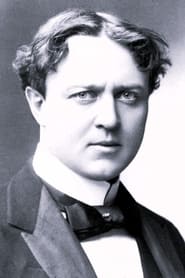
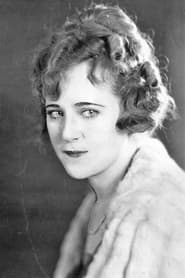
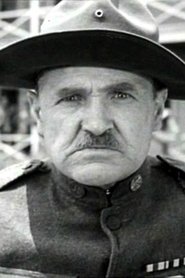
Cast & crew
More films like this
More Drama films
View all →







More about this film
About the production
Release dateJanuary 1920
ProductionJ. Parker Read Productions
Filmed inCalifornia
This film was produced during the early post-World War I period when American audiences were still processing the war's impact. The production took advantage of the growing interest in stories about soldiers returning home and the social changes brought by the war. As a silent film, it relied heavily on visual storytelling and the dramatic abilities of its cast to convey the emotional weight of the story.
Themes
War and its aftermathLove and loyaltyMoral ambiguityFamily and dutySacrifice
Themes & topics
World War Iprisoner of warlove trianglewidowhomecomingmoral dilemmafamily dramasacrificedutybetrayal
Historical background
Silent-era audiences encountered His Own Law around 1920, as studios refined cross-cutting and star-driven storytelling.
Why this film matters
His Own Law shows how silent filmmakers conveyed plot through gesture, title cards, and editing.
Making of
The production of 'His Own Law' took place during a transitional period in Hollywood when the industry was moving from short films to feature-length productions. J. Parker Read Jr., though better known as a producer, took the directorial helm for this project, likely due to his personal interest in the subject matter. The casting of Hobart Bosworth, a respected veteran of both stage and screen, lent gravitas to the production. The film was shot on location in California, taking advantage of the state's diverse landscapes that could stand in for French settings. As with many silent films, actors had to rely heavily on facial expressions and body language to convey the complex emotions of the story, particularly in scenes dealing with the dramatic revelation of the French soldier's return.
What critics said
Press notices for His Own Law (1920) are sparse in digitized sources; interest today rests on preserved prints and comparison with related titles.
Did you know?
- Director J. Parker Read Jr. was primarily known as a producer rather than a director, making this one of his few directorial credits
- Hobart Bosworth was a prominent figure in early Hollywood, having started as an actor in 1908 and transitioning into directing and producing
- Rowland V. Lee, who appears as an actor in, would later become a well-known director himself, helming films like 'Son of Frankenstein' (1939)
- The film's theme of soldiers returning from war was particularly relevant in 1920, as many veterans were dealing with readjustment to civilian life
- Jean Calhoun was a popular actress of the silent era who appeared in over 40 films between 1918 and 1930
- is one of many produced in the immediate post-WWI period that dealt with the war's aftermath and its effects on families
- The story reflects the real-life situation of many families who lost loved ones in WWI and had to rebuild their lives
- Silent films of this era often used intertitles extensively to convey dialogue and narrative, which would have been crucial for this complex emotional story
Visual style
The cinematography of 'His Own Law' employed the techniques typical of high-quality silent films of 1920, including careful composition and the use of lighting to enhance emotional moments. The film likely utilized natural lighting for exterior scenes and sophisticated studio lighting for interior sequences, creating dramatic contrasts that emphasized the characters' emotional states. Close-ups were used strategically to highlight the actors' expressions, particularly in scenes of revelation and conflict. The visual style probably incorporated the soft focus and diffusion techniques popular in the era to create a romantic, dreamlike quality in certain scenes, contrasting with sharper realism in others.
Music
As a silent film, 'His Own Law' would have been accompanied by live musical performance during its theatrical run. The score would typically have been provided by a theater's organist or pianist, using cue sheets provided by the studio or improvising based on the action on screen. The music would have ranged from romantic themes during tender moments to dramatic, dissonant passages during scenes of conflict and revelation. The emotional weight of the story would have required a particularly nuanced musical accompaniment to enhance the silent performances and guide audience responses to the complex moral dilemmas presented in the narrative.
Famous quotes
In war, men make laws for themselves that peace cannot understand.
Some wounds don't heal with time—they just learn to live with the scar.
Duty calls us in many forms, but the heart knows only one truth.
Memorable scenes
- The dramatic confrontation scene when the French soldier returns and discovers his wife has remarried, creating a powerful moment of emotional conflict that drives the film's central moral dilemma
What audiences thought
Audiences in 1920 responded positively to the film's emotional story and relatable themes of love, duty, and family. The post-war context made the story particularly resonant for viewers who had experienced similar losses or disruptions in their own lives. While the film didn't achieve blockbuster status, it performed respectably in urban theaters where sophisticated dramas found their audience. The movie's exploration of moral complexity appealed to the growing segment of moviegoers who sought more than simple entertainment from their cinema experience. Word-of-mouth about the film's powerful final scenes helped sustain its run in several major markets.
Film connections
Influenced by
- Other post-WWI dramas
- Stage plays about war's impact
- Contemporary literature about returning soldiers
This film influenced
- Later films about POW experiences
- Post-war family dramas of the 1920s
- Movies dealing with soldiers' return home
Film restoration
Unfortunately, 'His Own Law' is considered a lost film, as no complete copies are known to exist in any film archives or private collections. This status is common for films from the early 1920s, with an estimated 75% of American silent films having been lost due to the deterioration of nitrate film stock and inadequate preservation efforts in the early decades of cinema. Only fragments or promotional materials may survive in specialized archives.
Where to watch
- As a lost film, 'His Own Law' is not currently available for viewing in any format. Film enthusiasts interested in similar post-WWI dramas from the silent era may want to seek out surviving films like 'The Big Parade' (1925) or 'Wings' (1927) which deal with similar themes of war's impact on soldiers and their families.