Italienischer Bauerntanz
"Village steps for the camera"
Keys: Space play/pause · ←/→ 10s · F fullscreen · M mute · </> speed
About this film
Two children, Ploetz and Larella, perform an Italian peasant dance. Exhibitors circulated the 1895 print in short programs.
Cast & crew
More Documentary films
View all →

More from Max Skladanowsky
View all →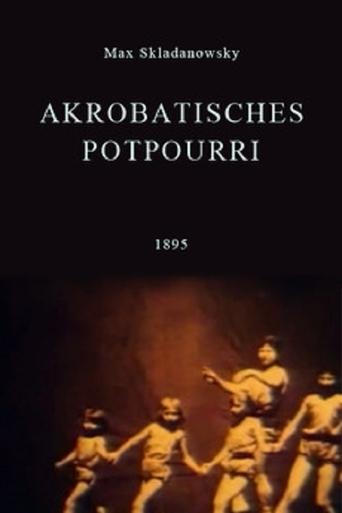
More about this film
About the production
Release dateNovember 1, 1895
ProductionSkladanowsky Brothers
Filmed inBerlin, Germany
This film was shot using the Skladanowsky brothers' Bioskop projector, which used two loops of 54mm film running simultaneously to create the illusion of movement. The production was part of a series of short films created to demonstrate the capabilities of their invention. The children were likely local performers recruited specifically for this demonstration film.
Themes
Cultural documentationPerformance artFolk traditionsChildhood innocenceEarly cinema experimentation
Themes & topics
Historical background
Italienischer Bauerntanz reached screens around 1895, produced in its country of origin. Programs then mixed actualities, dances, and staged scenes in single-reel slots.
Why this film matters
Researchers cite Italienischer Bauerntanz when tracing screen culture of its decade. Its brevity makes it useful for teaching how early narratives were staged.
Making of
The making of 'Italienischer Bauerntanz' was part of the Skladanowsky brothers' ambitious project to showcase their Bioskop invention to the public. Max and Emil Skladanowsky, working from their Berlin studio, created a series of short films to demonstrate the capabilities of their unique dual-film projection system. The production would have been extremely challenging by modern standards - the camera was large and cumbersome, the film stock was sensitive and difficult to work with, and exposure times had to be carefully calculated. The children performers would have needed to hold their positions and repeat their dance multiple times to ensure adequate footage was captured. The entire production was likely completed in a single day with minimal resources, reflecting the experimental nature of early filmmaking.
What critics said
Reviewers in 1895 weighed Italienischer Bauerntanz on clarity, pacing, and audience response rather than prestige status. No single canonical review dominates later reference works for the title.
Did you know?
- This film was part of the very first commercial film screening in Germany, which took place at the Wintergarten theatre in Berlin on November 1, 1895.
- The Skladanowsky brothers' screening predated the Lumière brothers' famous Paris screening by nearly two months, making it historically significant in cinema history.
- The film was shot on 54mm film stock, which was wider than the 35mm standard that would later become dominant in the industry.
- Max Skladanowsky and his brother Emil were both photographers and inventors who developed their own camera and projection system independently of other pioneers.
- The title 'Italienischer Bauerntanz' translates to 'Italian Peasant Dance' in English.
- Only fragments of this film are known to survive today, as many early films were lost or deteriorated due to the unstable nature of early film stock.
- The children performers Ploetz and Larella were likely stage names, as was common for performers in this era.
- This film was part of a program of eight short films shown at the Wintergarten, each lasting only a few seconds.
- The Bioskop projector required a hand crank to operate, meaning the projection speed could vary during screenings.
- Despite its historical importance, the Skladanowsky system was quickly overshadowed by more practical technologies like the Lumière Cinématographe.
Visual style
The cinematography of 'Italienischer Bauerntanz' reflects the limitations and characteristics of earliest film technology. The camera was stationary, capturing the performance from a single, fixed perspective typical of the era's 'actuality' films. The composition is simple and functional, centered on the performers with minimal background elements. The lighting would have been natural or basic artificial illumination, resulting in the high contrast and limited tonal range common to films of this period. The frame rate was likely inconsistent due to the hand-cranked nature of early cameras, resulting in somewhat jerky motion. Despite these technical limitations, the camera successfully captures the essential elements of the performance - the dancers' movements, costumes, and cultural details.
Innovations
The film represents several important technical achievements in early cinema. It was created using the Skladanowsky brothers' Bioskop system, which employed a unique dual-film mechanism using two strips of film running in parallel to create smoother motion. The 54mm film format used was wider than what would become the industry standard, demonstrating early experimentation with different technical approaches. The camera and projection system were entirely designed and built by the Skladanowsky brothers, representing independent German innovation in cinema technology. The ability to capture and project moving images at all in 1895 was a remarkable technical achievement, requiring solutions to challenges in film transport, intermittent motion, and illumination that had never been addressed before.
Memorable scenes
- The final pose where the two children, dressed in Italian peasant costumes, strike their ending position after completing their traditional dance routine, capturing a moment of cultural preservation in the earliest days of cinema.
What audiences thought
According to contemporary newspaper reports, the audience at the Wintergarten premiere was enthralled by the moving pictures. The program, including 'Italienischer Bauerntanz,' was received with enthusiasm and wonder, as most viewers had never seen moving images before. The novelty of seeing real people captured in motion was described as magical and revolutionary. Despite the primitive nature of the technology and the brief duration of each film, audiences reportedly demanded encores and additional screenings. The success of this initial screening led to further performances, though the Skladanowsky brothers' commercial success was limited by the rapid advancement of competing technologies.
Film connections
Influenced by
- Eadweard Muybridge's motion studies
- Étienne-Jules Marey's chronophotography
- Thomas Edison's Kinetoscope films
This film influenced
- Other Skladanowsky brothers films
- Early Lumière brothers actualities
- Early ethnographic films
Film restoration
The film exists only in fragmentary form. Like many early films, much of the original footage has been lost due to the unstable nature of early film stock and inadequate preservation methods. What remains is preserved in film archives, likely including the Bundesarchiv-Filmarchiv in Germany. The surviving fragments have been digitally restored where possible, but the complete original film no longer exists in its entirety.
Where to watch
- Available on some early cinema compilation DVDs
- Featured in documentary collections about the birth of cinema
- Accessible through film archive websites and specialized streaming services focusing on classic films
- Shown in museum exhibitions about early cinema history