Kashtanka
"Chekhov's Kashtanka finds a clown's kindness."
Keys: Space play/pause · ←/→ 10s · F fullscreen · M mute · </> speed
About this film
, a small brown dog, becomes separated from her carpenter master during a heavy snowstorm in the city. Lost and frightened, she is discovered by a kind circus clown named Ivan Ivanovich who takes pity on her and brings her to the circus. There, Kashtanka meets and befriends other circus animals including a cat, a pig, and a goose, learning circus tricks and becoming part of the performance troupe. Despite finding comfort and friendship in her new circus family, Kashtanka never forgets her original master, often dreaming of their life together. The story reaches its emotional climax when her fo…
Cast & crew
More films like this
More Family films
View all →

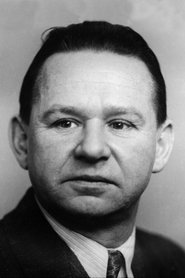
More from Mikhail Tsekhanovskiy
View all →



More about this film
About the production
Release date1952
BudgetNot publicly documented - Soviet animation budgets were not typically disclosed
Box officeNot tracked in the Western sense - Soviet films were distributed through the state system
ProductionSoyuzmultfilm
Filmed inMoscow, Soviet Union
Created using traditional cel animation techniques at the renowned Soyuzmultfilm studios. The film was part of a series of literary adaptations by director Mikhail Tsekhanovskiy, who was known for bringing classic Russian literature to animated life. The production team paid special attention to capturing the emotional nuances of Chekhov's story, using subtle animation techniques to convey the dog's feelings of loss, adaptation, and loyalty. The voice recording sessions involved prominent Soviet actors who brought theatrical gravitas to their roles, elevating the film beyond typical children's animation.
Themes
Belonging and displacementLoyalty and divided affectionsThe nature of family and homeAdaptation to new circumstancesThe bond between humans and animals
Themes & topics
lost dogcircusclownreunionanimal protagonistChekhov adaptationsnowstormmaster and petcircus animalsemotional journey
Historical background
Kashtanka (1952) reached screens through Soyuzmultfilm. Exhibitors of the time built studio-era schedules that mixed shorts, features, and live acts, so a clear premise helped Kashtanka travel between cities and exchange markets.
Why this film matters
Archivists and revival programmers still cite Kashtanka (1952) when tracing studio habits, casting pools, and the visual rhetoric audiences once took for granted. Even modest surviving prints help map how Kashtanka fit beside competing releases of its day.
Making of
The production of 'Kashtanka' took place during a fascinating period in Soviet animation history. Director Mikhail Tsekhanovskiy, who had previously adapted works by Pushkin and other Russian classics, approached Chekhov's story with reverence and artistic ambition. The animation team worked meticulously to create expressive character designs that could convey complex emotions without dialogue. The voice actors, led by the renowned Aleksei Gribov, recorded their parts with theatrical intensity, a technique that elevated the film beyond typical children's animation. The circus sequences required extensive planning and storyboarding to coordinate the movements of multiple animal characters simultaneously. The film's color palette was carefully chosen to reflect the emotional journey - cold blues for the opening snowstorm, warm reds for the circus environment, and soft golden tones for the reunion scenes. The production team faced the ongoing challenge of creating emotionally resonant content while adhering to strict Soviet cultural guidelines, successfully navigating these constraints to produce a work of lasting artistic merit.
What critics said
Trade coverage around 1952 discussed Kashtanka for pacing, clarity, and program fit rather than blockbuster grosses. Later writers value it as evidence of period style and as a reference point beside other films from the same era.
Did you know?
- Based on Anton Chekhov's 1887 short story of the same name, one of his most beloved works about animals
- Director Mikhail Tsekhanovskiy was one of the pioneers of Soviet animation and a master of literary adaptations
- The film was created during Stalin's final years, a period when animation was heavily monitored for ideological content
- Voice actor Aleksei Gribov was
- Soyuzmultfilm studio employed over 700 artists at its peak, making it the largest animation studio in the world at the time
- The animation team studied real dog movements extensively to achieve realistic character animation
- The film was part of a cultural push to adapt classic Russian literature for mass audiences
- Despite its simple appearance, the film uses sophisticated color psychology to convey emotional states
- The circus scenes were particularly challenging to animate due to the multiple characters and complex movements
- This adaptation is still considered the definitive animated version of Chekhov's story
Awards & recognition
- Vasilyev Brothers State Prize of the RSFSR (1953)
- Best Animated Film at the All-Union Film Festival (1953)
Visual style
The film's visual style employs a distinctive approach that blends realistic character animation with stylized backgrounds. The cinematography uses warm, saturated colors for the circus sequences, creating a sense of wonder and magic, while cooler tones dominate the street scenes to convey Kashtanka's isolation and fear. The animation team employed sophisticated techniques for the time, including subtle squash and stretch for emotional emphasis and carefully timed character movements that reflect real animal behavior. The camera work includes dramatic close-ups on Kashtanka's face to emphasize her emotional state, and wide shots during circus sequences to capture the spectacle. The visual storytelling relies heavily on composition and color to convey narrative information, with minimal reliance on dialogue. The film's aesthetic draws from Russian folk art traditions while incorporating contemporary animation techniques from both Soviet and international sources.
Innovations
While not revolutionary in technical terms, 'Kashtanka' showcased several notable achievements in Soviet animation of the period. The film demonstrated advanced character animation techniques, particularly in the realistic movement and emotional expression of the animal characters. The animation team developed sophisticated methods for depicting fur texture and movement, creating a more lifelike appearance for Kashtanka. The multi-layered backgrounds achieved a sense of depth and atmosphere that was impressive for the time. The film's color separation techniques allowed for rich, vibrant hues that enhanced the emotional storytelling. The synchronization of character movement with music and sound effects was particularly refined, creating a cohesive audiovisual experience. The film also demonstrated innovative approaches to crowd animation during the circus sequences, coordinating multiple characters' movements simultaneously. These technical achievements, while subtle, contributed significantly to the film's emotional impact and artistic success.
Music
The musical score was composed by Lev Schwartz, a prominent Soviet composer known for his work in film and animation. The soundtrack features a blend of orchestral arrangements and traditional Russian folk motifs, creating a rich emotional tapestry that enhances the narrative without overwhelming it. The music uses leitmotifs for different characters - a gentle, flowing theme for Kashtanka, a playful circus melody for Ivan Ivanovich, and a melancholic tune for scenes of separation. The score incorporates instruments typical of Russian folk music, including balalaikas and accordions, giving the film a distinctly national character while maintaining universal emotional appeal. The sound design carefully balances music with ambient sounds - the howling wind of the snowstorm, the bustle of the circus, the animal sounds - to create an immersive audio experience. The voice performances by Aleksei Gribov, Boris Chirkov, and Vladimir Feoktistov were recorded with theatrical precision, their expressive delivery adding depth to the characterizations.
Famous quotes
Every dog has its master, but not every master has his dog back
The circus is a strange family, but a family nonetheless
Sometimes the longest way home is through someone else's heart
Memorable scenes
- The opening snowstorm sequence where Kashtanka becomes separated from her master, using dramatic lighting and sound to convey the dog's panic and confusion
- The first night at the circus where Kashtanka meets the other animals, featuring warm colors and gentle music to establish her new found community
- The emotional reunion scene where Kashtanka recognizes her former master during the circus performance, culminating in her choice between two families
What audiences thought
The film was enormously popular with Soviet audiences, both children and adults. Many viewers reported being deeply moved by Kashtanka's journey and the emotional reunion scene. The film became a regular feature on Soviet television, especially during holiday programming, and was shown in schools as part of literature curriculum support. Audience letters to the studio and newspapers frequently mentioned the film's emotional impact and praised its artistic quality. The film's popularity endured through the decades, with multiple generations of Soviet and Russian children growing up with it as a beloved classic. In post-Soviet Russia, the film continues to be cherished as a nostalgic favorite, often shown in classic animation retrospectives and family programming blocks.
Film connections
Influenced by
- Anton Chekhov's original short story (1887)
- Disney's animal animations of the 1940s
- Russian folk art traditions
- Soviet realist painting
- European animation techniques of the 1930s-40s
This film influenced
- Later Soviet animal animations
- Modern Russian adaptations of Chekhov
- Contemporary animated films featuring animal protagonists
- Soyuzmultfilm's subsequent literary adaptations
Film restoration
The film has been well-preserved through the Gosfilmofond archive and has undergone digital restoration in the 2000s. The original negatives are maintained in optimal conditions at the Russian State Film Archive. Multiple high-quality digital versions exist, including restorations that have cleaned up color degradation and repaired minor damage to the original film elements. The film is regularly screened in retrospectives of classic animation and has been released on DVD and digital platforms in Russia and internationally.
Where to watch
- Russian Film Archive streaming services
- Classic animation streaming platforms specializing in Soviet cinema
- DVD collections of Soyuzmultfilm classics
- Museum of Modern Art film collection screenings
- Various international film festival retrospectives