
No Poster
King Lear
"Hand-tinted Italian verison of the Shakespeare Classic King Lear"
Keys: Space play/pause · ←/→ 10s · F fullscreen · M mute · </> speed
About this film
Hand-tinted Italian verison of the Shakespeare Classic King Lear.
Cast & crew
More films like this
More Drama films
View all →







More about this film
About the production
Release date1910 (exact date unknown, likely released in the latter half of the year)
Box officeNo box office records available from 1910 Italian cinema
ProductionFilm d'Arte Italiana
Filmed inRome, Italy
This film was notable for its extensive use of hand-tinting, a labor-intensive process where each frame was manually colored. The production was part of Film d'Arte Italiana's ambitious project to adapt classic literature for the screen, aiming to elevate cinema's cultural status. The film was shot on location in Rome, utilizing the city's architectural heritage to evoke the ancient British setting. Hand-tinting was particularly complex for this production due to the film's length and the need for consistent color application across multiple scenes.
Themes
Themes & topics
Historical background
Released in 1910 during the silent era's formative years, King Lear reached audiences when exhibitors were still defining programming conventions. The narrative hook—Hand-tinted Italian verison of the Shakespeare Classic King Lear—reflects what contemporary producers thought would draw viewers.
Why this film matters
King Lear remains discussed by archivists tracing how screen stories of its period represented work, desire, conflict, and social order. Its central situation—Hand-tinted Italian verison of the Shakespeare Classic King Lear—still prompts questions about genre conventions and audience expectations.
Making of
The production of King Lear represented a significant artistic and technical achievement for early Italian cinema. Director Gerolamo Lo Savio, working with the renowned stage actor Ermete Novelli, faced the challenge of translating Shakespeare's complex drama to the silent medium. The casting of Novelli was a major coup, as he was considered one of the greatest theatrical interpreters of Shakespeare in Italy. The hand-tinting process involved teams of artists carefully applying color to each frame by hand, a technique that required immense patience and skill. Francesca Bertini, who played Cordelia, was relatively new to cinema but would soon become one of Italy's most celebrated film stars. The production team had to overcome technical limitations of the era, including the inability to record dialogue, which meant they relied heavily on Novelli's expressive acting and intertitles to convey the story's emotional complexity. The film was shot on location in Rome, with sets designed to evoke ancient Britain while utilizing the city's classical architecture.
What critics said
Trade and newspaper notices for King Lear generally emphasized casting, spectacle, and program fit rather than extended aesthetic argument. Retrospective screenings and archival notes continue to shape how viewers evaluate King Lear today.
Did you know?
- Ermete Novelli was one of Italy's most celebrated stage actors of the late 19th and early 20th centuries, making his film debut in this production at age 58
- The hand-tinting process used in this film was extremely labor-intensive, requiring artists to manually apply color to each individual frame
- This was one of the earliest feature-length adaptations of Shakespeare's work, coming just 15 years after the birth of cinema
- Film d'Arte Italiana was a subsidiary of the French company Film d'Art, established specifically to produce literary adaptations for Italian audiences
- The film's survival status is uncertain, with only fragments believed to exist in various film archives
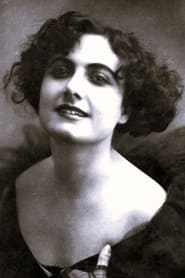
- Francesca Bertini, who played Cordelia, would become one of Italy's biggest silent film stars, known as the 'Italian diva'
- The production coincided with the golden age of Italian cinema, when Italy was one of the world's leading film-producing nations
- Hand-tinting was particularly expensive and time-consuming, making this a high-budget production for its time
- The film was likely accompanied by live musical performance during its original theatrical run
- This adaptation was part of a trend of 'cinema of quality' that sought to legitimize film as an art form by adapting respected literary works
Visual style
The cinematography of this 1910 adaptation utilized the techniques and technology available in early cinema while pushing artistic boundaries. The hand-tinting process was the most distinctive visual feature, with colors carefully applied to enhance emotional impact and differentiate scenes. The camera work was relatively static, typical of the era, but employed careful composition to frame the dramatic performances. Lighting was natural or simple studio lighting, used primarily to ensure visibility rather than for artistic effect. The film likely used medium shots and close-ups to capture the actors' expressions, particularly Novelli's portrayal of Lear's descent into madness. The visual style emphasized theatricality over naturalism, reflecting the influence of stage performance on early film acting and direction.
Innovations
The most significant technical achievement of this 1910 King Lear was its extensive use of hand-tinting, a labor-intensive process that represented the cutting edge of color technology before true color film processes were developed. Each frame had to be manually colored by skilled artists, requiring tremendous patience and attention to detail. The film also demonstrated early mastery of narrative structure in cinema, successfully adapting a complex Shakespearean tragedy within the time constraints of early feature films. The production showcased advanced techniques for conveying emotion and story through visual means without dialogue, relying on acting, intertitles, and visual composition. The film's survival, even in fragmentary form, is itself a technical achievement given the fragility of early film stock and the challenges of preservation.
Music
As a silent film, King Lear would have been accompanied by live musical performance during its original theatrical run. The exact musical selections are not documented, but theaters typically used classical pieces or specially composed scores appropriate to the film's dramatic tone. The music would have been performed by a pianist, organist, or small orchestra depending on the theater's resources. The score likely emphasized the tragic elements of the story and helped convey emotional beats that could not be expressed through dialogue. Musical accompaniment was essential to silent film exhibition, and for a prestigious production like this adaptation of Shakespeare, the musical component would have been carefully chosen to match the film's artistic ambitions.
Famous quotes
'Nothing will come of nothing.'
'How sharper than a serpent's tooth it is to have a thankless child!'
'Blow, winds, and crack your cheeks!'
'I am a man more sinned against than sinning.'
'The wheel is come full circle.'
Memorable scenes
- The division of the kingdom scene where Lear demands declarations of love from his daughters
- Lear's rage and disowning of Cordelia
- The storm scene where Lear rages against the elements on the heath
- The reconciliation scene between Lear and Cordelia
- The tragic final scene showing the deaths of Cordelia and Lear
What audiences thought
Contemporary audience reception appears to have been favorable, particularly among educated viewers who would have recognized the significance of adapting Shakespeare to the new medium of cinema. The presence of the celebrated stage actor Ermete Novelli likely drew theater-goers curious to see how the great actor would perform on screen. The film's length and serious subject matter positioned it as a prestige attraction rather than mass entertainment. The visual spectacle of the hand-tinted sequences would have been particularly impressive to audiences of 1910, who were still experiencing the novelty of color in motion pictures. Modern audiences, when able to view surviving fragments, tend to appreciate the film primarily for its historical value and as an example of early cinematic artistry.
Film connections
Influenced by
- William Shakespeare's play 'King Lear'
- Italian theatrical tradition
- Stage acting conventions of the early 20th century
This film influenced
- Later silent Shakespeare adaptations
- Italian literary adaptations of the 1910s-1920s
- Later King Lear film adaptations including Orson Welles' 1953 version and Akira Kurosawa's 'Ran'
Film restoration
The preservation status of this 1910 King Lear is uncertain and concerning. Like many films from this early period, it is believed to be partially or completely lost. Some film archives report holding fragments or clips, but a complete print has not been confirmed to exist. The Cineteca Nazionale in Italy and other major film archives have searched for this title as part of efforts to preserve early Italian cinema heritage. The film's survival is threatened by the natural deterioration of nitrate film stock used in 1910 and the loss of many early film prints during World War II and subsequent decades.
Where to watch
- Due to its lost/partially lost status, this film is not commercially available. Potential viewing opportunities would be limited to special archival screenings or film festival presentations if fragments exist. Researchers may be able to access materials through the Cineteca Nazionale in Rome, the British Film Institute, or other major film archives that may hold fragments. The film is not available on streaming platforms or home video.