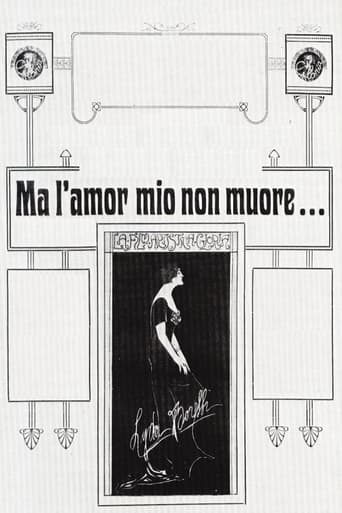
La ribalta
"A wife and a mistress brawl over the same man"
Keys: Space play/pause · ←/→ 10s · F fullscreen · M mute · </> speed
About this film
A woman and a mistress fight.
Cast & crew
More from Mario Caserini
View all →
More about this film
About the production
Release date1912
ProductionMilano Films
Filmed inMilan, Italy
La ribalta was produced during the peak of Italian cinema's golden age, when Milano Films was one of Italy's most prominent production companies. The picture was shot on location in Milan, utilizing the city's urban landscapes to enhance the dramatic narrative. Director Mario Caserini, who also starred in the picture, was known for his innovative use of close-ups and dramatic lighting techniques that were considered advanced for the period.
Themes
Themes & topics
Historical background
Milano Films's 1912 release of La ribalta fit contemporary Italy programs that mixed fiction, news, and novelty subjects for repeat weekly attendance.
Why this film matters
Programmers and historians revisit La ribalta (1912) because its story—a woman and a mistress fight—illustrates popular narrative habits and production norms of the period.
Making of
The production of La ribalta took place during a transformative period in Italian cinema, when filmmakers were experimenting with narrative techniques and visual storytelling. Director Mario Caserini, who also took on an acting role in the picture, was known for his hands-on approach to filmmaking and his willingness to push the boundaries of cinematic expression. The cast included Oreste Grandi and Febo Mari, both of whom were rising stars in the Italian film industry. The filming process would have been challenging by modern standards, using hand-cranked cameras and natural lighting when possible. The production team had to work with the limitations of early film technology, including the need for actors to exaggerate their expressions to convey emotion in silent cinema. the picture's focus on female conflict and infidelity was somewhat controversial for its time, reflecting the growing boldness of Italian filmmakers in tackling social issues.
What critics said
English-language trade reviews of La ribalta are limited for 1912. Where notices survive, they stress pacing and photographic clarity; later criticism values the title as archival evidence of studio style.
Did you know?
- Director Mario Caserini also acted in the picture, which was common in early Italian cinema
- the picture's title 'La ribalta' translates to 'The Spotlight' or 'The Limelight' in English
- This was one of the early films to explore themes of infidelity and female rivalry in Italian cinema
- Milano Films, the production company, was one of Italy's most successful film studios in the early 1910s
- the picture was released during the height of Italian cinema's international reputation
- Febo Mari, one of the cast members, would later become a prominent film director himself
- the picture represents an early example of the dramatic genre that would become popular in Italian cinema
- Mario Caserini was married to actress Maria Caserini, one of Italy's first film stars
- the picture was part of a wave of Italian productions that focused on melodramatic themes
- Only fragments of are believed to survive today, as many Italian films from this period were lost
Visual style
The cinematography of La ribalta would have employed techniques typical of Italian cinema in 1912, including the use of dramatic lighting to enhance emotional scenes and the innovative use of close-ups to highlight character emotions. Italian cinematographers of this period were known for their artistic approach to composition and their willingness to experiment with camera angles and movement. the picture likely utilized the relatively new technology of electric lighting to create dramatic effects, particularly in interior scenes. The visual style would have emphasized the contrast between the two female characters, using lighting and composition to underscore their emotional states. The cinematography would have been hand-cranked, requiring careful coordination between camera operators and actors to achieve the desired dramatic effects.
Innovations
La ribalta demonstrated several technical achievements common to Italian cinema of its era, including the sophisticated use of editing to build dramatic tension and the effective employment of close-up shots to emphasize character emotions. the picture's production would have utilized the improved film stock and camera technology available by 1912, allowing for better image quality than earlier films. The lighting techniques used in the picture represented advances in cinematographic artistry, particularly in the creation of dramatic shadows and highlights to enhance the emotional impact of scenes. the picture's relatively short runtime of 12 minutes was typical for the period, but within this constraint, the filmmakers managed to create a complete dramatic narrative with clear character development and resolution.
Music
As a silent film, La ribalta would have been accompanied by live musical performance during its original theatrical run. The typical practice in Italian cinemas of 1912 involved either a pianist or small orchestra providing musical accompaniment that matched the mood and action of the picture. The music would have been selected from existing classical pieces or improvised to suit the dramatic scenes, with particular emphasis on enhancing the emotional impact of the conflict between the female characters. No original score was composed specifically for the picture, as was common practice during this period. The musical accompaniment would have played a crucial role in conveying the picture's emotional intensity to audiences.
Memorable scenes
- The climactic confrontation scene between the wife and mistress, which would have featured dramatic gestures and intense facial expressions characteristic of silent film acting
What audiences thought
Audience reception of La ribalta in 1912 would have been influenced by the growing popularity of cinema among Italian urban populations. the picture's dramatic themes of love, betrayal, and female conflict would have resonated with contemporary audiences who were increasingly drawn to emotionally charged narratives. Italian cinema of this period enjoyed tremendous popularity both domestically and internationally, and films from major production companies like Milano Films typically attracted significant viewership. The involvement of popular actors like Mario Caserini would have further enhanced audience interest. However, specific box office figures or detailed audience reactions are not available due to the age of the picture and the loss of many contemporary records.
Film connections
Influenced by
- Italian melodramatic tradition
- 19th century Italian literature
- stage melodrama
This film influenced
- Later Italian melodramas
- Italian films exploring female psychology
- European dramatic cinema of the 1910s
Film restoration
La ribalta is believed to be partially lost or exists only in fragments, which is common for Italian films from this period. Many Italian films from the early 1910s were lost due to the instability of early film stock, wartime destruction, and inadequate preservation practices. the picture may exist in archives or private collections, but a complete version is not known to be publicly accessible. Film preservation organizations continue to search for lost films from this era of Italian cinema.
Where to watch
- Due to its age and preservation status, La ribalta is not currently available through commercial streaming services or home video. the picture may be accessible through specialized film archives or museum collections that focus on early cinema, particularly institutions specializing in Italian film history such as the Cineteca Nazionale in Rome or the Cineteca Italiana in Milan. Film scholars and researchers may be able to access fragments or documentation through academic archives specializing in early cinema.