
Little Nemo
"McCay's cartoon figures leap from the page"
Keys: Space play/pause · ←/→ 10s · F fullscreen · M mute · </> speed
About this film
Cartoon figures announce, via comic strip balloons, that they will move - and move they do, in a wildly exaggerated style. Also known as "Winsor McCay, the Famous Cartoonist of the N.Y. Herald and His Moving Comics".
Cast & crew
More films like this
More Animation films
View all →

More from Winsor McCay
View all →
More about this film
About the production
Release dateApril 8, 1911
Box officeNot recorded - box office tracking was not standard practice in 1911
ProductionVitagraph Studios
Filmed inNew York City, New York
McCay drew approximately 4,000 individual frames on rice paper, each requiring meticulous hand-drawing. The animation process took months of work, with McCay often working late into the night. The film was initially created as part of McCay's vaudeville act to demonstrate the possibilities of animation to live audiences. Some versions of the film were hand-colored frame by frame, a painstaking process that added significant production time.
Themes
The power of imaginationThe magic of artistic creationThe boundary between dreams and realityTechnology as a tool for artThe artist as magician
Themes & topics
Historical background
Made during the nickelodeon years around 1911, Little Nemo reached audiences through theatrical programs, fairground booths, or specialized distribution channels typical of its generation. Cartoon figures announce, via comic strip balloons, that they will move - and move they do, in a wildly exaggerated. Historians now read such works for what they reveal about production methods, national taste, and the expanding vocabulary of screen narrative.
Why this film matters
Archivists and programmers still screen Little Nemo when tracing how popular entertainment evolved. Its subject—cartoon figures announce, via comic strip balloons, that they will move - and move they do, in a—gives later viewers tangible evidence of what drew crowds in the silent period. Home video, restorations, and festival sidebars keep the title circulating among students of film history.
Making of
The creation of 'Little Nemo' was a labor-intensive process that occupied McCay for months. Working in his home studio, McCay developed a systematic approach to animation by drawing each frame on separate sheets of rice paper, which he then mounted on cardboard for stability. The live-action introduction was filmed at Vitagraph Studios, where McCay was under contract, and featured real colleagues from the newspaper world. McCay would often work through the night, fueled by coffee, to complete the thousands of drawings required. The film's premiere was held at a private screening for newspaper executives and Vitagraph executives, who were astonished by the fluidity of the animation. McCay's wife often assisted by in-betweening drawings and helping with the hand-coloring process for special presentations.
What critics said
Original trade coverage treated Little Nemo as routine program filler rather than a landmark production—common for shorts. Later criticism emphasizes preservation, stylistic comparison with contemporaries, and whatever cast or crew names later gained prominence. Contemporary writing is mostly historical: assessing completeness, influence, and place in a director's or studio's catalog.
Did you know?
- This was the first animated film to feature characters from a popular newspaper comic strip
- McCay drew each frame individually on rice paper, a technique he developed himself
- The film required approximately 4,000 separate drawings to complete
- McCay initially showed the film as part of his vaudeville stage performances
- The opening live-action sequence was groundbreaking for showing the artist at work
- Some prints were hand-colored using stencils, making them among the first color animations
- The film was created to win a bet with McCay's colleagues who claimed animation was impossible
- McCay's animation technique involved tracing previous drawings to ensure smooth movement
- The character transformations in the finale were inspired by the dream sequences in the comic strip
- This film predates Disney's first animated works by over a decade
- McCay never patented his animation techniques, believing they should be freely shared
- The film's success led directly to McCay's more famous work 'Gertie the Dinosaur' (1914)
Visual style
The live-action portions were photographed using standard cameras of the era, but the animation sequences required specialized equipment. McCay designed his own animation stand using a modified camera that could photograph individual drawings frame by frame. The cinematography emphasized clarity and stability, with careful attention to consistent lighting across thousands of frames. The animation camera was mounted on a custom-built rostrum that allowed precise positioning of each drawing. The hand-colored versions required multiple exposures with different color filters, a technically demanding process for the time.
Innovations
McCay pioneered several animation techniques that would become industry standards, including key frame animation, in-betweening, and the use of registration holes to maintain consistency. His method of drawing on translucent rice paper allowed for tracing previous poses while maintaining fresh linework. The film introduced the concept of character personality through movement, with each character displaying distinct mannerisms. The transformation sequences demonstrated early morphing techniques through gradual shape changes. McCay's approach to timing and spacing created the illusion of weight and momentum, principles still taught in animation schools today.
Music
The original film was silent, as all films were in 1911. During theatrical presentations, it was accompanied by live musical performance, typically a pianist or small orchestra playing popular tunes of the era. For vaudeville presentations, McCay often commissioned original musical compositions that synchronized with the on-screen action. Modern restorations have been scored with period-appropriate music, including ragtime and popular songs from 1911. Some contemporary screenings feature improvised accompaniment by silent film musicians.
Famous quotes
'I can make my drawings move!' - Winsor McCay (in the film's opening sequence)
'Watch as the little figures come to life!' - Original promotional text
'The impossible becomes possible through the art of animation!' - Contemporary review
Memorable scenes
- The opening sequence where McCay bets his colleagues he can animate his drawings
- The first appearance of animated Little Nemo characters walking and moving
- The climactic transformation sequence where characters morph and stretch in impossible ways
- The scene where McCay's hand is shown drawing the characters, bringing them to life
What audiences thought
Audiences in 1911 were reportedly mesmerized by the film, with many believing McCay had discovered some form of cinematic magic. The film became a sensation in vaudeville theaters, where McCay would personally introduce it and sometimes perform live drawing alongside the projection. Newspaper accounts describe audiences gasping and applauding during the transformation sequences, with some viewers returning multiple times to study the technique. The film's popularity helped establish McCay as a celebrity performer, and he toured extensively with the work. Modern audiences viewing restored prints continue to be impressed by the sophistication of the animation, particularly considering its 1911 origin date.
Film connections
Influenced by
- Little Nemo in Slumberland comic strip by Winsor McCay
- Early magical lantern shows
- Vaudeville performance traditions
- Flip books and optical toys
- Émile Cohl's early animated works
This film influenced
- Gertie the Dinosaur (1914)
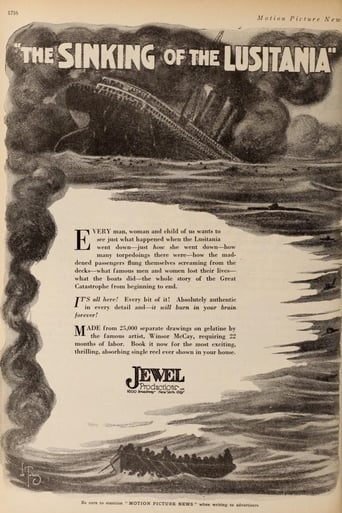
- The Sinking of the Lusitania (1918)
- Felix the Cat cartoons
- Disney's early Alice Comedies
- Looney Tunes and Merrie Melodies series
Film restoration
The film survives in multiple archives including the Library of Congress and the Museum of Modern Art. Several versions exist, including both black-and-white and hand-colored prints. The film has been digitally restored by various preservation organizations, with the most complete versions running approximately 2 minutes. Some original nitrate prints were lost to decomposition, but enough material survives to present the film in its entirety. The restoration efforts have stabilized the surviving elements and removed much of the deterioration common in films of this era.
Where to watch
- Available on DVD collections of early animation
- Streaming on The Criterion Channel
- YouTube (public domain versions)
- Library of Congress National Screening Room
- Museum of Modern Art film screenings
- Various public domain animation compilation DVDs