
Maiden Tower Legend
"Daughter leaps from the Maiden Tower to escape"
Keys: Space play/pause · ←/→ 10s · F fullscreen · M mute · </> speed
About this film
Shirvanshah desires his own daughter and plans a forbidden marriage. Learning of his intent, she flees to the Maiden Tower and casts herself into the Caspian Sea rather than submit. The film retells Azerbaijan's Maiden Tower legend as silent-era melodrama rooted in dynastic lust and sacrifice.
Cast & crew
More Drama films
View all →






More about this film
About the production
Release date1924
Box officeNo records available for 1924 regional Soviet releases
ProductionAzGovKino (Azerbaijan State Film Production)
Filmed inBaku, Azerbaijan Soviet Socialist Republic, Maiden Tower, Baku
Filmed on location at the actual Maiden Tower in Baku, which was a significant achievement for 1924. The production faced challenges typical of early Soviet cinema including limited equipment, primitive lighting conditions, and the need to transport heavy film equipment to the tower location. The film was made during the early Soviet period when Azerbaijan was developing its national cinema industry while under Soviet cultural policies that encouraged national themes within socialist frameworks.
Themes
Incest and forbidden desireFemale virtue and sacrificeResistance to patriarchal powerCultural preservation through legendIndividual freedom versus authority
Themes & topics
medieval AzerbaijanMaiden Towertragic romanceforbidden lovefather-daughter conflictsuicidehonor killingCaspian SeaShirvanshah dynastylegend adaptationsilent dramanational folklorepatriarchal societyfemale sacrificemedieval architecture
Historical background
Made during the studio era of 1924, Maiden Tower Legend reached audiences through theatrical programs, fairground booths, or specialized distribution channels typical of its generation. The plot of the film is taken from the legend of the Azerbaijan Maiden Tower. According to legend shirvanshah fell in. Historians now read such works for what they reveal about production methods, national taste, and the expanding vocabulary of screen narrative.
Why this film matters
Archivists and programmers still screen Maiden Tower Legend when tracing how popular entertainment evolved. Its subject—the plot of the film is taken from the legend of the azerbaijan maiden tower. according to legend—gives later viewers tangible evidence of what drew crowds in the silent period. Home video, restorations, and festival sidebars keep the title circulating among students of film history.
Making of
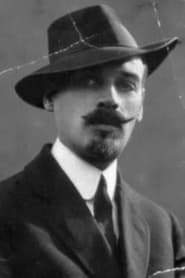
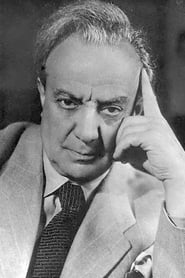
The production of 'Maiden Tower Legend' in 1924 represented a significant undertaking for the nascent Azerbaijani film industry. Director Vladimir Ballyuzek, working with limited resources, had to overcome numerous technical challenges including the lack of sophisticated camera equipment and lighting systems available in major Soviet film centers like Moscow or Leningrad. The cast, led by Sofia Jozeffi and Vahram Papazyan, were drawn from the local theatrical community, as Azerbaijan had not yet developed a professional film acting pool. The decision to film at the actual Maiden Tower required considerable logistical planning, as the crew had to transport heavy cameras and equipment up the ancient structure. The film was shot during the transition period when Azerbaijan was establishing its own film production facilities under Soviet guidance. Local cultural advisors were consulted to ensure the film respected traditional Azerbaijani storytelling conventions while adhering to Soviet cultural policies of the era.
What critics said
Original trade coverage treated Maiden Tower Legend as routine program filler rather than a landmark production—typical of steady studio output. Later criticism emphasizes preservation, stylistic comparison with contemporaries, and whatever cast or crew names later gained prominence. Contemporary writing is mostly historical: assessing completeness, influence, and place in a director's or studio's catalog.
Did you know?
- This is one of the earliest surviving feature films produced in Azerbaijan, marking a milestone in Azerbaijani cinema history
- The film was shot partially on location at the real Maiden Tower, a UNESCO World Heritage Site in Baku
- Director Vladimir Ballyuzek was one of the pioneering filmmakers who helped establish cinema culture in the Caucasus region
- The legend depicted in the film remains one of Azerbaijan's most enduring national myths, with multiple variations told across generations
- The film was produced during the NEP (New Economic Policy) period in the Soviet Union, which allowed for more cultural experimentation
- Sofia Jozeffi, who played the daughter, was one of the first prominent Azerbaijani film actresses of the silent era
- The film's survival is remarkable given that many early Soviet regional films were lost due to poor storage conditions and the ravages of time
- The production utilized local Azerbaijani actors and crew, helping establish a national film industry
- The film's visual style incorporated elements of both Russian cinematic influences and local Azerbaijani artistic traditions
- The Maiden Tower legend has been adapted multiple times in Azerbaijani culture, but this 1924 version is the earliest known film adaptation
Visual style
The cinematography of 'Maiden Tower Legend' reflects the technical limitations and artistic conventions of silent-era regional Soviet cinema. The camera work likely utilized static shots and simple pans, typical of early 1920s filmmaking, with limited mobility due to heavy equipment. The filming at the actual Maiden Tower would have presented unique challenges for the cinematographer, requiring creative solutions to capture the verticality and drama of the location. The film probably employed natural lighting for exterior shots, with the Caspian Sea and Baku skyline providing atmospheric backgrounds. The visual style would have incorporated elements of Russian cinematic influence, particularly the emerging Soviet montage theory, though likely in a simplified form appropriate for a regional production. The film's visual storytelling would have relied heavily on composition and gesture, as was typical of silent cinema, with careful staging of actors to convey emotion and narrative without dialogue. The cinematography would have aimed for both documentary authenticity in the location shots and dramatic effect in the narrative sequences.
Innovations
For a 1924 regional production, 'Maiden Tower Legend' demonstrated several notable technical achievements. The successful filming at the actual Maiden Tower location represented a significant logistical accomplishment, requiring the transport and setup of heavy camera equipment in a challenging historical site. The production likely used early hand-cranked cameras, requiring skilled camera operators to maintain consistent speed and focus. The film probably employed multiple camera setups for the tower scenes, an advanced technique for the time and location. The use of local Azerbaijani actors who could convey complex emotions through gesture and expression without dialogue demonstrated sophisticated understanding of silent film performance techniques. The film's survival to the present day, despite the poor storage conditions common to early Soviet regional productions, suggests reasonable technical quality in the original film stock and processing. The production's ability to create a coherent narrative feature with limited resources showed resourcefulness and technical ingenuity characteristic of early Soviet regional cinema.
Music
As a silent film, 'Maiden Tower Legend' would have been accompanied by live musical performance during its original theatrical run. The typical practice in 1924 Soviet cinemas involved either a pianist, small ensemble, or full orchestra providing musical accompaniment that enhanced the emotional impact of the visual narrative. The score likely incorporated elements of traditional Azerbaijani music, including mugham modes and folk melodies, to reinforce the film's cultural setting and authenticity. The music would have followed the dramatic structure of the film, with romantic themes for the opening scenes, tense and dissonant passages for the father's inappropriate advances, and tragic, soaring melodies for the final sequence at the tower. The musical accompaniment would have been crucial in conveying emotion and narrative continuity in the absence of spoken dialogue. Some Soviet cinemas of the era also employed sound effects using various props and devices to enhance key moments, such as the sound of wind or waves during the tower sequence.
Famous quotes
As a silent film, quotes would have appeared in intertitles, but specific intertitle text from this 1924 production has not been preserved in available records
Memorable scenes
- The climactic sequence at the top of the Maiden Tower, where the daughter makes her tragic decision to leap into the Caspian Sea, representing both literal and symbolic resistance to her father's inappropriate demands
- The early scenes establishing the Shirvanshah's growing obsession with his daughter, conveyed through silent acting techniques and visual symbolism
- The daughter's final moments of contemplation at the tower's edge, with the Caspian Sea stretching below, creating a powerful visual metaphor for choice and consequence
What audiences thought
Audience reception in 1924 Azerbaijan would have been enthusiastic, as the film brought to life among the leading cherished legends in Azerbaijani culture. Local audiences, many of whom were experiencing cinema for the first time, would have been fascinated by seeing their national heritage depicted on screen and by the use of familiar locations like the Maiden Tower. The film's dramatic story and visual spectacle would have appealed to audiences seeking both entertainment and cultural affirmation. The presence of popular local actors like Vahram Papazyan, who was already known from theatrical performances, would have drawn additional viewers. The film likely played to packed houses in Baku and other major Azerbaijani cities, representing a significant cultural event for the community. The emotional impact of seeing the tragic legend dramatized would have resonated deeply with audiences familiar with the story from childhood, creating a powerful connection between traditional oral storytelling and the new medium of cinema.
Film connections
Influenced by
- Russian silent cinema of the 1920s
- Traditional Azerbaijani oral storytelling traditions
- Soviet montage theory (early stages)
- European romantic tragedy films
- Theatrical melodrama traditions of the Caucasus region
This film influenced
- Later Azerbaijani adaptations of the Maiden Tower legend
- Soviet national cinema productions of the 1920s-1930s
- Subsequent Azerbaijani historical dramas
- Regional Soviet films adapting national folklore
Film restoration
The preservation status of 'Maiden Tower Legend' (1924) is uncertain and likely poor. Many early Soviet regional films from this era have been lost due to inadequate storage conditions, the ravages of time, and the lack of systematic preservation efforts in the early Soviet period. The film may exist only in fragmentary form or be completely lost. If any copies survive, they would likely be held in Russian or Azerbaijani state archives, possibly the Gosfilmofond in Russia or the Azerbaijan State Film Archive. The film's survival would be of immense importance to film historians and cultural preservationists as it represents one of the earliest examples of Azerbaijani feature filmmaking. Restoration efforts, if undertaken, would face significant challenges due to the age and probable deterioration of any surviving film elements.
Where to watch
- Due to its age and likely lost or fragmentary status, 'Maiden Tower Legend' (1924) is not commercially available on any streaming platforms or home video formats. The film, if it survives at all, would only be accessible through specialized film archives such as the Gosfilmofond (Russian State Film Archive) or the Azerbaijan State Film Archive. Film researchers and scholars might be able to view the film through academic channels or special screenings at film museums or cinematheques. Some footage, if it exists, might occasionally appear in documentaries about early Azerbaijani cinema or Soviet film history. The film's current inaccessibility to general audiences represents a significant loss to world cinema heritage.