Also available on: Archive.org
McQuade of the Traffic Squad

McQuade of the Traffic Squad

1915 United States
romantic rivalryjealousyprofessional dutyurban modernitypolice authority

Plot

Policeman Patrick McQuade serves on the traffic squad and is romantically involved with Nora, a young woman who clearly favors him over his rival, Policeman Flynn. Flynn, jealous of McQuade's standing with Nora, makes it his business to undermine Patrick's reputation and turn Nora against him. The rivalry escalates through a series of comic and melodramatic complications characteristic of early 1910s police-and-romance shorts, with McQuade forced to prove both his professional worth and his personal sincerity. As the conflict develops, the film plays on the contrast between duty and courtship, using the traffic-squad setting as a backdrop for rivalry, public embarrassment, and eventual vindication. The surviving plot descriptions indicate a straightforward comic-drama built around jealousy, police duty, and romantic competition rather than a complex procedural narrative.

About the Production

Release Date 1915
Production Kalem Company

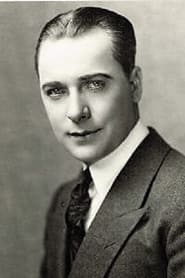
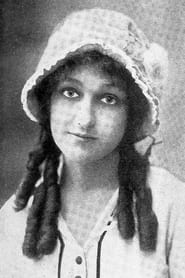
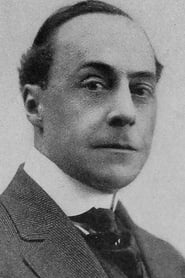
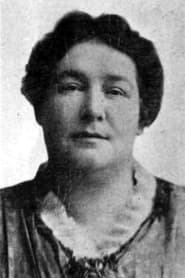
This is an American silent short released in the mid-1910s, a period when Kalem was producing numerous compact one-reel dramas and comedies for the commercial market. Surviving documentation is limited, and no detailed production ledger, shooting notes, or budget information is generally cited in standard references for this title. The film is associated with director Eugene Nowland and cast members Pat O'Malley, Bessie Learn, and Yale Benner, indicating a small, efficient production typical of the studio's short-subject output. Because many Kalem films of this era survive only in fragmentary records, exact production circumstances, locations, and original marketing materials are not well documented.

Historical Background

McQuade of the Traffic Squad was made in 1915, a moment when the American film industry was rapidly transitioning from brief one-reel subjects to longer, more elaborate feature films. Urban policing, street traffic, and modern city life were common subjects in early cinema because they gave audiences recognizable contemporary settings and built-in movement, confusion, and visual business. The film also reflects the silent-era tendency to use simple romantic rivalry as a narrative engine, relying on expressive performance and clear situation comedy rather than dialogue. In historical terms, it belongs to the pre-World War I American studio system, when companies like Kalem were producing high volumes of shorts for theaters that still relied on mixed programs.

Why This Film Matters

Although not a landmark title in film history, the film is culturally interesting as an example of how early American cinema portrayed police officers as both civic authorities and figures of comic or romantic interest. Its traffic-squad setting points to the increasing visibility of automobiles, street congestion, and modern urban regulation in popular entertainment during the 1910s. The film is also representative of the thousands of short silent productions that formed the everyday fabric of moviegoing but are now often lost, underdocumented, or little seen. For historians, such titles help map the careers of actors like Pat O'Malley and the industrial practices of studios such as Kalem.

Making Of

Very little detailed behind-the-scenes information survives for McQuade of the Traffic Squad, which is typical of a large portion of 1910s short films. What can be said with confidence is that it was made in the context of Kalem's efficient production system, where compact narratives were staged quickly for weekly release schedules. The film's casting of Pat O'Malley, Bessie Learn, and Yale Benner suggests a small ensemble and a studio-style approach rather than location-heavy production. No widely cited accounts of unusual stunts, on-set incidents, or special production challenges have been preserved in commonly used film-reference sources.

Visual Style

Specific cinematographic credits and technical camera notes are not commonly preserved for this film in standard databases. As a silent Kalem short, it was likely photographed in a straightforward, stage-centered style with static or minimally mobile cameras, medium shots, and clear framing designed to keep the action readable in the absence of sound. The visual approach would have emphasized performance, gesture, and spatial clarity, especially in scenes involving street traffic, police business, and interpersonal rivalry. If extant, the film would be expected to reflect the clean, functional visual grammar typical of mid-1910s American one-reel productions.

Innovations

The film does not appear to be associated with any documented technical innovation. Its value lies instead in the industrial and narrative norms it exemplifies: concise storytelling, silent-screen physical performance, and efficient production of contemporary urban subjects. If preserved, it would be of interest for the craft of early studio-era staging and the representation of movement and authority in street scenes. There is no evidence in standard references of special effects, color processes, or other noteworthy technical experimentation.

Music

As a silent film, McQuade of the Traffic Squad had no synchronized recorded soundtrack. Like most films of its era, it would have been presented with live musical accompaniment in theaters, often selected by the exhibitor or house musician to match the tone of the scenes. No original cue sheet or published score is commonly cited in surviving reference material. Any music associated with current screenings would be a later archival or exhibition accompaniment rather than an original recorded soundtrack.

Memorable Scenes

  • The rivalry between McQuade and Flynn over Nora, which drives the central conflict and provides the film's main dramatic tension.
  • The traffic-squad setting, which likely offers street-based business and public-policing visual comedy typical of the era.
  • The sequences in which Flynn attempts to depreciate McQuade in Nora's eyes, a classic silent melodrama device built around misunderstanding and social embarrassment.

Did You Know?

  • The film is a silent short from 1915, belonging to the large body of one-reel releases that dominated American exhibition before feature-length films became universal.
  • It is directed by Eugene Nowland, a filmmaker associated with early studio-era short subjects rather than prestige features.
  • Pat O'Malley appears in the lead role as Policeman Patrick McQuade, an early-career screen appearance for an actor who later worked widely in both silent and sound eras.
  • The plot centers on a romantic rivalry between two policemen, a setup that mixes comedy, melodrama, and workplace rivalry in a very early cinematic style.
  • The title suggests a traffic-squad picture, reflecting the era's fascination with urban life, modern policing, and street-level public order.
  • Bessie Learn, listed among the cast, was one of the many actors active in the silent period whose work survives largely through scattered credits and trade-paper references.
  • The film is cataloged under its exact 1915 title and should not be confused with later police melodramas or similarly titled productions.
  • Like many Kalem shorts, it was likely designed for quick exhibition turnover and programmed alongside other short subjects rather than as a stand-alone feature attraction.
  • The known plot description is brief, suggesting that surviving information may come from a synopsis in period documentation or archival cataloging rather than a full continuity script.
  • Its survival status is not clearly documented in standard online summaries, making it one of many early silent films that may be lost or only incompletely preserved.

What Critics Said

No substantial surviving critical reception is widely cited for this specific film in modern reference sources, and contemporary reviews have not been frequently reproduced in the standard summaries available today. As a result, its initial critical response is best understood as part of the general trade reception for short melodramas and comic-police narratives rather than as a separately documented event. In the present day, the film is primarily of historical rather than critical interest, valued for cast and studio research, silent-era programming history, and the reconstruction of early cinema exhibition practices. Because it is obscure and minimally documented, there is little evidence of a modern critical reappraisal beyond archival catalog descriptions.

What Audiences Thought

Audience response is not specifically recorded in the commonly accessible sources for this title. As a 1915 short, it would have been consumed as part of a varied theater bill, where audience enjoyment depended on quick pacing, recognizably comic situations, and the appeal of familiar studio performers. Films of this type were generally designed for broad popular appeal and efficient turnover rather than prestige exhibition. Today, audience awareness is limited because the film is obscure and not widely available for viewing.

Film Connections

Influenced By

  • Early 1910s urban melodramas
  • Silent-era comic police stories
  • One-reel studio shorts about contemporary city life

Film Restoration

Preservation status is uncertain in widely used public references. The film is obscure enough that no widely circulated restoration information is commonly cited, and it may survive only in incomplete archival records or not at all. If a print exists, it is not among the best-known restored Kalem titles. In practical database terms, it should be treated as of unknown survival status unless an archive record confirms extant elements.

Themes & Topics

policemantraffic squadrivalrysweetheartjealousyurban street liferomancesilent short