

One Week
"A wedding-house kit assembled all wrong"
Keys: Space play/pause · ←/→ 10s · F fullscreen · M mute · </> speed
About this film
Newlyweds receive a build-it-yourself house as a wedding gift—and the house can, supposedly, be built in "one week". A rejected suitor secretly re-numbers packing crates, and the husband struggles to assemble the house according to this new 'arrangement' of its parts.
Cast & crew
More films like this
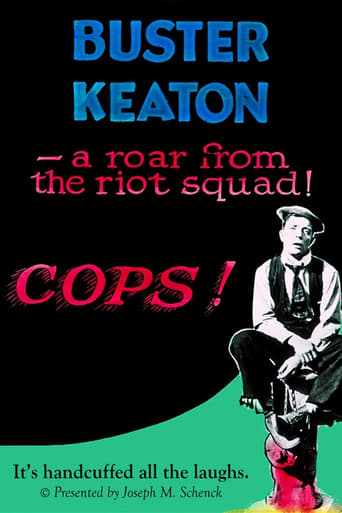
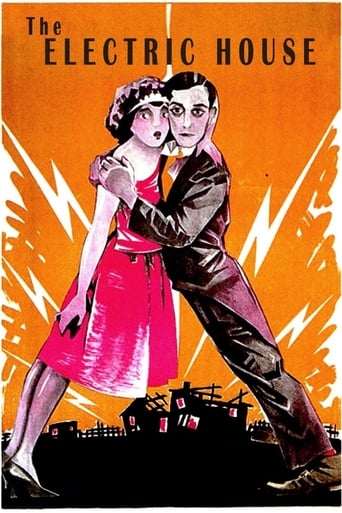

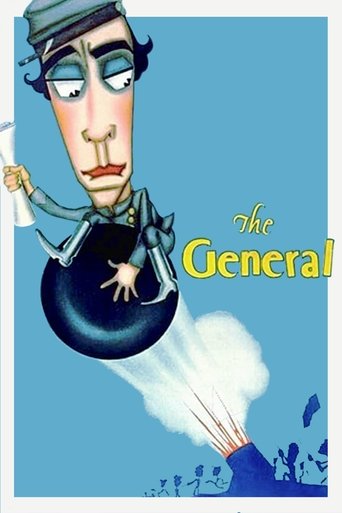
More Comedy films
View all →







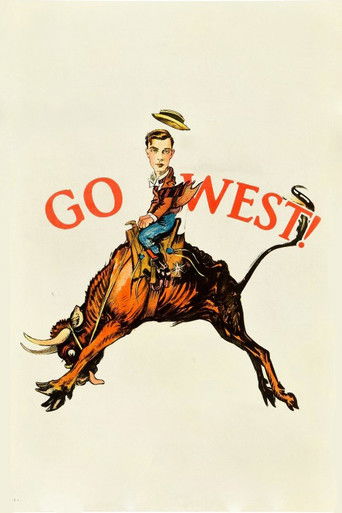
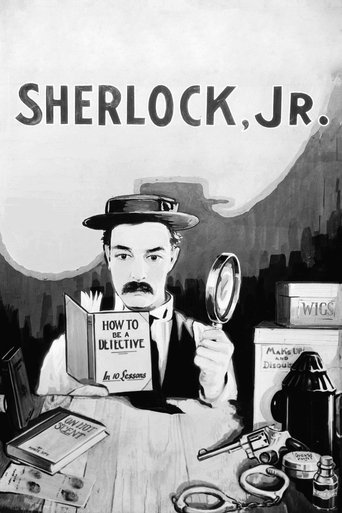
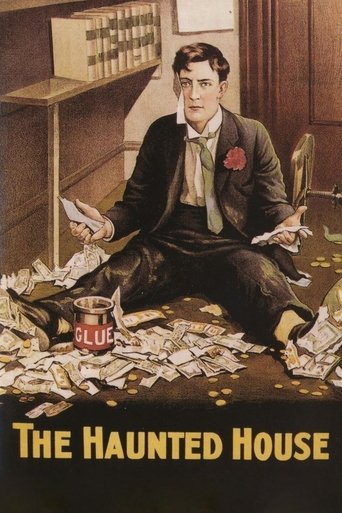
More from Buster Keaton
View all →


More about this film
About the production
Release dateSeptember 1, 1920
Box officeExact figures unknown, but was highly successful and profitable for its time
ProductionComique Film Corporation, Metro Pictures Corporation
Filmed inLos Angeles, California, Burbank, California
The house was actually built on a rotating platform to create the spinning effect during the windstorm sequence. The final scene where the house is transported by train was achieved by building a full-scale house on a flatbed train car. Many of the dangerous stunts were performed by Buster Keaton himself without doubles or safety equipment.
Themes
Man versus technologyThe American dream of homeownershipMarriage and domestic lifeChaos versus orderModernization and progress
Themes & topics
newlywedsconstructionhousewedding giftsabotagemistakechaosdisasterslapsticksilent comedyphysical comedypractical jokemovingtrainwindstorm
Historical background
Made in 1920, One Week reflects production norms of late silent cinema and the transition toward sound—shorter runtimes, regional audiences, and limited preservation infrastructure.
Why this film matters
Historians reference One Week (1920) when discussing 1920 film directed by Eddie Cline and Buster Keaton.
Making of
One Week marked Buster Keaton's debut as an independent filmmaker after his successful partnership with Roscoe 'Fatty' Arbuckle ended. Keaton formed his own production company, Comique Film Corporation, and signed a distribution deal with Metro Pictures. The film was shot quickly on a modest budget but showcased Keaton's innovative approach to comedy and technical filmmaking. The famous falling wall stunt was meticulously rehearsed with precise measurements to ensure Keaton's safety, though he still performed it himself. The rotating house mechanism was an engineering marvel for its time, requiring a custom-built turntable that could support the weight of the full-scale house set. Keaton's attention to detail extended to authentic period construction techniques, and he consulted actual carpenters to ensure the building sequences, however chaotic, were based on real construction principles. The film's success established Keaton as a major comedy star in his own right and set the template for his independent productions throughout the 1920s.
What critics said
Modern write-ups on One Week (1920) tend to focus on preservation status, stylistic choices, and placement within director or studio filmographies.
Did you know?
- This was the first film that Buster Keaton made independently after leaving his partnership with Fatty Arbuckle
- The house-building kit was based on real 'ready-cut' home kits that were popular in the 1910s and 1920s
- Sybil Seely's dress accidentally came off during a scene where she's hanging laundry, but Keaton kept the take in the film as it was funny and not revealing (she was wearing a full body suit underneath)
- The film features one of Keaton's most dangerous stunts: a wall falls on him, but he passes through an open window space - this stunt has been copied by many comedians since
- The train sequence required coordination with actual railroad companies and was filmed on working tracks
- Keaton reportedly broke several ribs during filming but continued working without medical attention
- The film was shot in just six days, ironically matching the 'one week' theme
- Many of the tools and building materials shown were authentic period pieces
- The house design was so memorable that it was recreated for museum exhibitions
- This film established Keaton's signature 'stone face' persona and his theme of man versus technology/machines
Awards & recognition
- National Film Registry (inducted 2008) - Library of Congress
- AFI's 100 Funniest American Movies (nominated 2000)
Visual style
The cinematography in One Week, credited to Elgin Lessley and Buster Keaton (uncredited), showcases remarkable technical innovation for its time. The film employs creative camera angles to emphasize the absurdity of the misconstructed house, with low angles making the crooked walls appear even more distorted. The most technically impressive sequence involves the spinning house during the windstorm, which required a custom-built rotating platform and careful choreography between camera movement and the house's rotation. The camera work during the train sequence was particularly challenging, as it required tracking shots alongside a moving train carrying an actual house. Lessley and Keaton used multiple cameras to capture some of the more dangerous stunts, ensuring they could capture the action from the most effective angles. The film also makes effective use of deep focus to keep both foreground and background action in sharp detail, allowing for complex visual jokes that play out across the entire frame. The cinematography perfectly complements Keaton's physical comedy, always positioned to maximize the impact of each gag while maintaining clarity and visual coherence.
Innovations
One Week showcased several groundbreaking technical achievements for 1920. The most impressive was the rotating house mechanism, which allowed an entire house set to spin 360 degrees while maintaining structural integrity. This engineering feat required precise calculations of weight distribution and center of gravity. The film also featured innovative use of miniatures and forced perspective in the train sequence, creating the illusion of a full-sized house being transported. The famous falling wall stunt required exact mathematical precision - the window opening had to be perfectly aligned with Keaton's position to ensure his safety. The film's editing was ahead of its time, using rapid cuts during the construction montage to create a sense of chaotic energy. Multiple camera techniques were employed to capture complex action sequences, particularly during scenes involving both foreground and background action. The production also pioneered safety techniques for dangerous stunts that would become standard in the industry. These technical innovations, combined with Keaton's meticulous planning and execution, resulted in a film that was both entertaining and technically impressive, pushing the boundaries of what was possible in cinema at the time.
Music
As a silent film, One Week was originally accompanied by live musical performance in theaters. The typical score would have been provided by a theater organist or small orchestra, using compiled music from various sources to match the on-screen action. The music would have been lively and upbeat during the construction sequences, more romantic during the couple's tender moments, and dramatic during the windstorm and train sequences. Modern restorations of the film have featured newly composed scores by various artists, including organist Gaylord Carter and composer Robert Israel. These contemporary scores attempt to recreate the spirit of the original accompaniments while taking advantage of modern recording techniques. Some versions feature jazz-influenced scores that reflect the 1920s musical styles, while others use more classical approaches. The absence of synchronized dialogue actually enhances the film's universal appeal, as the visual comedy translates perfectly across cultures and time periods without the barrier of language.
Famous quotes
Build your house in ONE WEEK! (title card)
The Happy Couple (title card introducing Buster and Sybil)
A Wedding Present (title card)
Number 1 - Begin here (misleading instruction on crate)
The rejected suitor (title card introducing the villain)
He's numbered the crates all wrong! (realization moment)
A week later (title card showing time passage)
The finished house (ironic title card before revealing chaos)
Memorable scenes
- The iconic falling wall stunt where Keaton stands in exactly the right spot as a wall collapses around him, passing safely through an open window space
- The spinning house sequence during the windstorm, where the entire house rotates wildly while the couple struggles to maintain their balance
- The piano sliding down the stairs and out the door in the crooked house
- The final train sequence where the completed house is accidentally loaded onto a flatcar and transported away
- The construction montage showing Buster following the wrong numbers and creating impossible architectural configurations
What audiences thought
One Week was an immediate commercial success upon its release in 1920, playing to packed houses across America and establishing Buster Keaton as a bankable star in his own right. Audiences were particularly delighted by the film's relatable premise of domestic struggles and the increasingly absurd situations. The spinning house sequence became so popular that audiences would often cheer when it appeared on screen. In the decades since, the film has maintained its popularity through film retrospectives, home video releases, and online platforms. Modern audiences continue to respond enthusiastically to its timeless humor and impressive physical comedy. The film frequently appears in 'best of' lists voted by film enthusiasts and maintains high ratings on platforms like IMDb and Letterboxd. Its universal themes of marriage, homeownership, and man versus technology continue to resonate with viewers nearly a century after its release.
Film connections
Influenced by
- Charlie Chaplin's construction comedies
- Fatty Arbuckle's visual gag style
- Harold Lloyd's everyman character
- Mack Sennett's Keystone comedy techniques
- American vaudeville traditions
This film influenced
- The Home Builder (1927)
- Housing Problems (1935)
- Mr. Blandings Builds His Dream House (1948)
- The Money Pit (1986)
- Home Alone (1990)
- Meet the Parents (2000)
Film restoration
One Week is well-preserved and has been restored multiple times. The original nitrate negative is stored in the Museum of Modern Art's film archive. The film was selected for preservation in the United States National Film Registry in 2008 for being 'culturally, historically, or aesthetically significant.' Several high-quality digital restorations have been completed, including versions by The Criterion Collection and Kino Lorber. The film survives in complete form with all original titles intact, making it readily accessible for modern audiences. Multiple 35mm and 16mm prints exist in archives worldwide, ensuring its long-term preservation.
Where to watch
- The Criterion Channel (streaming)
- Kino Now (digital rental/purchase)
- YouTube (public domain versions)
- The Criterion Collection DVD/Blu-ray 'The Buster Keaton Collection'
- Kino Lorber DVD/Blu-ray releases
- Archive.org (free streaming)
- Amazon Prime Video (various editions)
- Google Play Movies (digital rental/purchase)