Keys: Space play/pause · ←/→ 10s · F fullscreen · M mute · </> speed
Plot
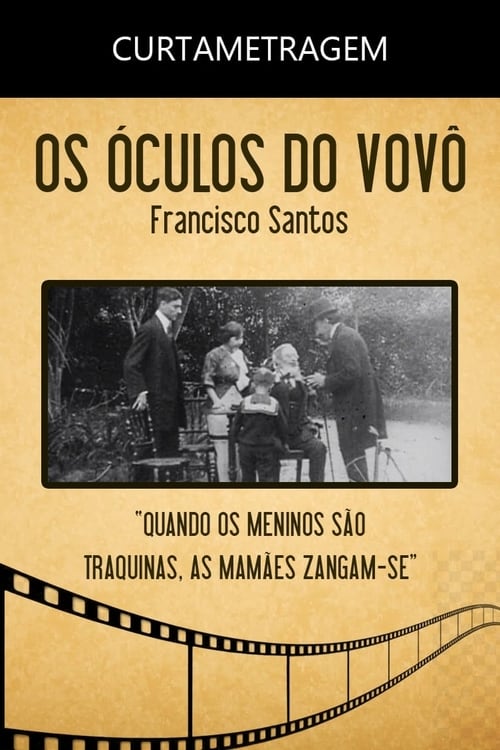
In this early Brazilian comedy, a mischievous young boy decides to play a prank on his sleeping grandfather by carefully painting the lenses of his glasses black. When the elderly man awakens and puts on his glasses, he is horrified to find himself completely blind, leading to panic and confusion throughout the household. The grandfather's desperate attempts to navigate his home while believing he has lost his sight create a series of humorous situations and misunderstandings with family members. The film culminates in the eventual discovery of the boy's prank, bringing relief and laughter to the family. This simple premise was executed with physical comedy typical of the silent film era, showcasing early Brazilian cinematic storytelling.
About the Production
Release Date 1913
Box Office Unknown - box office tracking was not standardized in Brazil during the early cinema period
Production Photografia Brasileira
Filmed In Rio de Janeiro, Brazil
The film was shot on location in Rio de Janeiro using primitive camera equipment available in Brazil during the early 1910s. Production was challenging due to limited technical resources and the nascent state of Brazilian film infrastructure. Director Francisco Santos had to work with extremely basic lighting conditions and hand-cranked cameras, requiring multiple takes for simple scenes. The cast consisted largely of amateur actors drawn from local theater circles, as professional film actors did not yet exist in Brazil.
You Might Also Like

More Comedy Films
View all →







Themes & Topics
Historical Background
The year 1913 represented a crucial moment in Brazilian cultural history, as the country was undergoing rapid modernization and urbanization, particularly in cities like Rio de Janeiro and São Paulo. Cinema had arrived in Brazil in the late 1890s, but until this point, most films shown were either foreign imports or documentary-style actualities capturing Brazilian life. The Brazilian film industry was virtually nonexistent, with no established studios, trained technicians, or distribution networks. 'Os Óculos do Vovô' emerged during this transitional period when Brazilian entrepreneurs began attempting to create a domestic film culture. The film was produced just before World War I would severely disrupt international film supplies and distribution, effectively halting the development of Brazilian cinema for several years. This period also saw Brazil transitioning from the early Republican era to a more urban, industrialized society, with a growing middle class hungry for cultural entertainment that reflected their own experiences rather than imported European or American stories.
Why This Film Matters
As Brazil's first fiction film, 'Os Óculos do Vovô' holds immense cultural and historical importance despite its current lost status. The film marked the birth of Brazilian narrative cinema and demonstrated that domestic stories could resonate with local audiences. Its domestic setting and family-oriented themes represented a shift away from the foreign-dominated film market that had characterized Brazilian cinema until this point. The film's success, however brief, proved that there was both an audience and a market for Brazilian-made fiction films, inspiring subsequent productions in the 1910s. The film also represents an early example of Brazilian humor and family dynamics on screen, themes that would continue to appear throughout Brazilian cinema history. Its destruction has made it somewhat mythical in Brazilian film circles, symbolizing both the fragility of early cinema and the lost potential of Brazil's first attempts at creating a national film industry. The film remains a subject of academic study and cultural memory, representing what might have been for Brazilian cinema had early efforts been better preserved and supported.
Making Of
The production of 'Os Óculos do Vovô' was a modest affair by modern standards, but revolutionary for its time in Brazil. Director Francisco Santos, working with the newly formed Photografia Brasileira company, assembled a small crew of technicians who had learned their craft through trial and error. The cast, led by Jaime Cardoso as the grandfather, were primarily stage actors adapting to the new medium of film. The famous glasses-painting scene reportedly required multiple takes due to the difficulty of showing the paint application clearly on black-and-white film. The production faced numerous technical challenges, including unpredictable Rio de Janeiro weather that often interrupted outdoor shooting, and the constant need to hand-crank the camera at the correct speed to ensure proper playback. The film's simple domestic setting was chosen both for its relatability to Brazilian audiences and the practical limitation of not having access to elaborate sets or locations.
What Critics Said
Contemporary critical reception for 'Os Óculos do Vovô' was generally positive, with Rio de Janeiro newspapers praising the film as a successful Brazilian attempt at fiction filmmaking. Critics of the time noted particularly the film's humor and relatable family situations, which they felt would appeal to domestic audiences. Some reviewers commented on the technical limitations but acknowledged these were understandable given Brazil's primitive film infrastructure. The film was often compared favorably to imported European comedies, with critics expressing pride that Brazil could produce similar entertainment. Modern critical assessment is necessarily limited due to the film's lost status, but film historians universally acknowledge its pioneering role in Brazilian cinema. Some contemporary scholars have suggested that the film's simple premise and execution represented an appropriate starting point for Brazilian fiction filmmaking, neither overreaching technically nor underestimating its audience. The film is now primarily studied through historical records and the few surviving fragments, with critics lamenting what has been lost to Brazilian film heritage.
Did You Know?
- This is widely considered Brazil's first fiction film, marking a pivotal moment in Brazilian cinema history
- The film was completely destroyed in a fire at the Cinematografia Brasileira's storage facility in the 1920s
- Only a few fragmented frames and still photographs from the production survive today
- Director Francisco Santos was actually a Portuguese immigrant who brought cinematic knowledge from Europe to Brazil
- The film was shot on 35mm film stock imported from Europe, as Brazil did not yet have film manufacturing capabilities
- The title translates to 'Grandfather's Glasses' in English, though some historical references also list it as 'The Old Man's Spectacles'
- The film was initially shown in traveling exhibitions throughout Rio de Janeiro before being distributed to other Brazilian cities
- Contemporary newspaper accounts suggest the film was particularly popular with middle-class Brazilian audiences
- The film's success inspired a brief wave of domestic fiction film production in Brazil before the industry collapsed during World War I
- Some historians believe the film may have been inspired by similar European comedy shorts that were popular in Brazil at the time
More film details Visual style, music, quotes, restoration, and more
Visual Style
The cinematography of 'Os Óculos do Vovô' was typical of early 1910s filmmaking, utilizing static camera positions and basic lighting techniques. The film was likely shot using a hand-cranked camera, requiring careful attention to maintain consistent frame rates. Visual composition would have been influenced by theatrical staging, with actors positioned to maximize visibility within the limited frame. The black-and-white film stock of the era would have presented challenges for clearly showing the painted glasses, a key plot element that required careful lighting and possibly makeup techniques to ensure visibility. Interior scenes were probably filmed using available light from windows supplemented by basic reflectors, as electrical lighting for film was still primitive and expensive. The camera work would have been straightforward, with few if any movements, as dollies and other mobile equipment were not yet standard in Brazilian productions. Despite these limitations, the cinematography successfully served the story's comedic needs, allowing clear visibility of the physical humor and character reactions that drove the narrative.
Innovations
While 'Os Óculos do Vovô' was technically primitive by modern standards, it represented several important achievements for early Brazilian cinema. The film demonstrated that fiction filmmaking was possible in Brazil despite limited resources and infrastructure. The production successfully coordinated multiple actors in a narrative sequence, a step beyond the simple actualities that had characterized most Brazilian filmmaking until this point. The film's use of close-ups or medium shots to show the glasses being painted would have been technically challenging with the equipment available in Brazil at the time. The production also managed to create coherent continuity editing, ensuring that the story progressed logically despite the technical limitations of the era. Perhaps most significantly, the film proved that Brazilian productions could compete with imported films for audience attention, despite the technical superiority of foreign productions. These achievements, while modest, laid important groundwork for the future development of Brazilian cinema and demonstrated the potential for domestic film production in the country.
Music
As a silent film, 'Os Óculos do Vovô' would have been accompanied by live musical performance during theatrical exhibitions. The specific musical selections are not documented, but typical practice in Brazil during this period involved a pianist or small ensemble playing popular Brazilian songs, classical pieces, or improvised music that matched the on-screen action. For comedic scenes like those in this film, musicians would likely have chosen lively, upbeat pieces to enhance the humor. Some theaters may have used Brazilian popular music of the era, such as maxixe or choro rhythms, to give the film a local flavor. The musical accompaniment would have been crucial to the viewing experience, providing emotional cues and helping to maintain audience engagement during the silent narrative. In smaller venues, a single pianist might have provided the entire score, while larger theaters in Rio de Janeiro could have employed small orchestras. The lack of a standardized score meant that musical accompaniment varied significantly between different exhibition venues and performances.
Famous Quotes
No direct quotes survive from the film due to its lost status and silent nature
Memorable Scenes
- The pivotal scene where the young boy carefully paints his grandfather's glasses while the elderly man sleeps, a moment that sets the entire comedic plot in motion and represents one of the earliest examples of visual storytelling in Brazilian cinema
What Audiences Thought
According to contemporary newspaper accounts and exhibition records, 'Os Óculos do Vovô' was well-received by Brazilian audiences, particularly in Rio de Janeiro where it premiered. The film's domestic setting and family-oriented humor resonated with middle-class viewers who were eager to see Brazilian stories on screen for the first time. Audience reactions were reportedly enthusiastic, with laughter during the grandfather's confusion scenes and appreciation for the familiar cultural context. The film reportedly ran for multiple weeks in Rio de Janeiro cinemas, an impressive run for the period, before traveling to other major Brazilian cities. Some historical accounts suggest the film became a talking point among Rio's cultural circles, with many Brazilians expressing pride in their country's ability to produce fiction films. The success of the film apparently led to increased demand for Brazilian-made content, though the industry's technical limitations prevented this from being immediately fulfilled. Audience reception was particularly notable given that Brazilian viewers had previously been exposed almost exclusively to foreign films, making 'Os Óculos do Vovô' a novel and refreshing experience for many.
Film Connections
Influenced By
- European comedy shorts
- Early American slapstick films
- Brazilian theatrical traditions
- Family melodrama conventions
This Film Influenced
- Subsequent Brazilian domestic comedies of the 1910s-1920s
- Early Brazilian sound comedies featuring family situations
Film Restoration
The film is considered lost/destroyed. Only a few fragmented frames and production still photographs survive, held in Brazilian film archives. The complete film was destroyed in a fire at the Cinematografia Brasileira storage facility in the 1920s, along with many other early Brazilian films. These surviving fragments are occasionally shown in film retrospectives and academic presentations about early Brazilian cinema.
Where to Watch
- The complete film is not available for viewing due to its lost status. Surviving fragments and still photographs can sometimes be seen in Brazilian film archives, museum exhibitions about early cinema, or academic presentations on Brazilian film history. Some fragments may be included in documentary features about the history of Brazilian cinema.