Keys: Space play/pause · ←/→ 10s · F fullscreen · M mute · </> speed
Plot
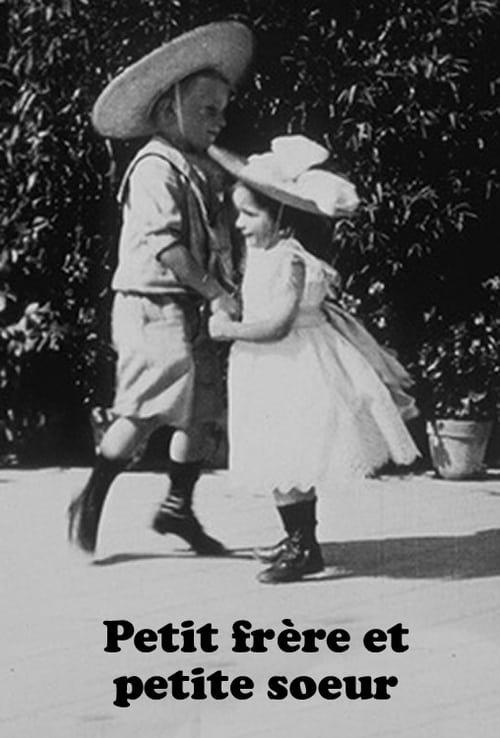
In this brief yet charming Lumière actuality film, two young children, identified as Marcel Koehler and Madeleine Koehler, are captured in a natural outdoor setting. The small boy and girl dance together in what appears to be a grove or garden area, their movements spontaneous and childlike. The children hold hands and twirl around, their simple dance conveying innocence and joy. The entire scene is captured in a single continuous shot, typical of early Lumière productions, with the camera positioned to capture the full action of the children's playful interaction. The film concludes as naturally as it began, with the children continuing their dance without any artificial ending or narrative resolution.
Director
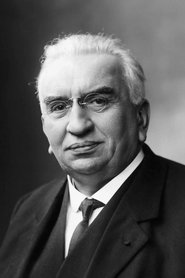 Louis Lumière
About the Production
Release Date 1897
Box Office Not tracked in 1897 - early films were shown as part of variety programs
Production Lumière Company
Filmed In La Ciotat, France (likely) - Lumière family property
This film was shot using the Lumière Cinématographe, which served as both camera and projector. The Koehler children were likely family friends or acquaintances of the Lumière family. The film exemplifies Louis Lumière's philosophy of capturing 'life itself' rather than staging theatrical performances. The outdoor setting provided natural lighting, essential for early film technology. The entire film was probably shot in one take, as editing capabilities were virtually nonexistent in 1897.
More Documentary Films
View all →
More from Louis Lumière
View all →

Themes & Topics
childrendancingoutdoorsbrothersisterplayinnocencenaturefamilyjoy
Historical Background
In 1897, cinema was still in its infancy, having only been publicly demonstrated by the Lumière brothers in late 1895. This period marked the transition from scientific curiosity to popular entertainment. The Lumière brothers were competing with other pioneers like Georges Méliès, who was beginning to explore more fantastical and narrative-driven films. 1897 was also a year of significant technological advancement in film, with improvements in camera stability and film stock quality. The film was created during the Belle Époque in France, a period of cultural and artistic flourishing. Cinema was initially presented as a novelty at fairs, cafés, and music halls, with programs consisting of multiple short films showing various aspects of daily life, travel scenes, and occasional staged performances.
Why This Film Matters
This film represents a crucial moment in the development of documentary cinema and the moving image as a medium for capturing real life. Unlike the staged performances that would later dominate early cinema, Lumière's actualities like 'Petit frère et petite sœur' established the foundation for documentary filmmaking. The film's focus on ordinary people, particularly children, in natural settings helped establish cinema as a medium capable of preserving authentic moments of human experience. It also demonstrates how early filmmakers recognized the universal appeal of childhood innocence and play. The film contributes to our understanding of late 19th-century childhood, clothing, and social behavior, serving as both entertainment and historical document. Its simplicity and authenticity contrast sharply with the increasingly complex narratives that would soon dominate cinema, making it an important reference point in film history.
Making Of
The filming of 'Petit frère et petite sœur' exemplifies the Lumière brothers' documentary approach to early cinema. Louis Lumière likely positioned his Cinématographe on a tripod to capture the children's dance in a single, uninterrupted take. The Koehler children were probably not given specific instructions but were allowed to play naturally while being filmed. The outdoor location was chosen both for aesthetic reasons and practical necessity, as early film equipment required significant natural light. The film was processed and developed at the Lumière factory in Lyon, where the brothers had established their film production facilities. The entire process from filming to development could be completed within a day, allowing for rapid production of new films for their growing catalog of actualities.
What Critics Said
Contemporary critical reception of Lumière films in 1897 was generally positive, with newspapers and magazines marveling at the technology's ability to capture movement with such clarity and realism. Critics often commented on the 'lifelike' quality of the images and the novelty of seeing real people and places projected on a screen. 'Petit frère et petite sœur' would have been appreciated for its charming depiction of childhood innocence. Modern film historians and critics view this film as an important example of early documentary practice and the Lumière brothers' contribution to establishing cinema as a medium for capturing reality. The film is often cited in academic discussions about the origins of documentary film and the distinction between Lumière's realistic approach and Méliès' fantastical style.
Did You Know?
- This film is one of approximately 1,422 films produced by the Lumière brothers between 1895 and 1905
- The Koehler children were not professional actors but ordinary children captured in a moment of play
- The film demonstrates Louis Lumière's preference for documenting real life rather than creating fictional narratives
- Like many Lumière films, it was likely shown as part of a program of 10-15 short films at public screenings
- The film's title in English is 'Little Brother and Little Sister'
- This film represents one of the earliest examples of children captured on film in a natural setting
- The Lumière brothers' films were initially called 'animated photographs' rather than movies
- The dancing children theme became a popular subject in early cinema, with several similar films produced by different pioneers
- The film was shot on 35mm film at approximately 16 frames per second
- Marcel and Madeleine Koehler were among the many non-professional subjects who appeared in Lumière films
More film details Visual style, music, quotes, restoration, and more
Visual Style
The cinematography in 'Petit frère et petite sœur' exemplifies early Lumière style: a single, static camera position capturing the action in a continuous take. The composition is straightforward, with the children positioned centrally in the frame against the natural background of the grove. The camera was likely mounted on a tripod at approximately eye level with the children, creating an intimate perspective. Natural lighting illuminates the scene, creating soft shadows and highlighting the children's movements. The depth of field captures both the children and their surroundings, placing the action in context. The framing is balanced and symmetrical, reflecting Louis Lumière's compositional sensibilities. The camera work demonstrates the technical limitations and aesthetic choices of early cinema, where simplicity and clarity were paramount.
Innovations
While 'Petit frère et petite sœur' may appear simple by modern standards, it represented several significant technical achievements for its time. The film was shot using the Lumière Cinématographe, a revolutionary device that combined camera, printer, and projector in one unit. The film stock was perforated 35mm celluloid, an innovation that allowed for smoother projection and better image stability. The ability to capture outdoor scenes with adequate lighting demonstrated improvements in film sensitivity and camera technology. The film's preservation of movement with relative clarity was remarkable for 1897, showcasing the Lumière brothers' technical expertise. The single-take approach, while partly born of technical limitations, also demonstrated mastery of timing and composition in capturing spontaneous action.
Music
This film was produced during the silent era and had no synchronized soundtrack. During original screenings, the film would have been accompanied by live music, typically a pianist or small ensemble playing appropriate music to match the mood of the scene. For a film like 'Petit frère et petite sœur,' the accompaniment would likely have been light, cheerful music, possibly popular songs or classical pieces of the period. Some venues might have used sound effects created manually, such as bells or other instruments to enhance the viewing experience. The absence of recorded sound was standard for all films of this period, and audiences of 1897 were accustomed to silent presentations with musical accompaniment.
Memorable Scenes
- The opening shot shows the two children standing together in the grove, holding hands and beginning their dance. The children twirl and move with natural, unchoreographed grace, their small figures contrasting with the larger trees and natural surroundings. The scene captures a moment of pure childhood joy, with the children completely absorbed in their play, unaware of being filmed. The continuous shot allows viewers to observe the subtle interactions and spontaneous movements that characterize authentic childhood behavior.
What Audiences Thought
Early cinema audiences in 1897 were captivated by the novelty of moving images, and films showing everyday scenes like children playing were particularly popular. The sight of children dancing on screen would have been both entertaining and emotionally resonant for viewers. Audiences were often amazed by the realism and clarity of the images, with many reports of viewers ducking or reacting physically to films, believing the images to be real. The film's innocent subject matter would have made it suitable for family audiences and helped establish cinema as a form of entertainment for all social classes. The brief runtime of approximately 42 seconds was typical for the period, as audiences were still acclimating to the new medium and preferred shorter, easily digestible content.
Film Connections
Influenced By
- Lumière brothers' philosophy of capturing reality
- Early documentary tradition
- Photography's influence on composition
- Theater's influence on staging
- French cultural emphasis on family and childhood
This Film Influenced
- Other Lumière actualities featuring children
- Early documentary films
- Family scenes in early narrative cinema
- Children's films of the silent era
Film Restoration
The film is preserved in the Lumière Institute archives in Lyon, France. Digital copies have been made and are available through various film archives and educational institutions. The film has survived in relatively good condition considering its age, though some deterioration is typical for films from this period. The Lumière Company's careful preservation practices have helped maintain many of their early films, including this one.
Where to Watch
- Lumière Institute archives
- YouTube (various public domain uploads)
- Film archives and museum collections
- Educational film databases
- The Criterion Collection (potentially in early cinema compilations)
- British Film Institute archive
- Museum of Modern Art film collection