
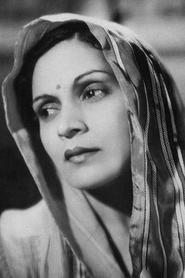
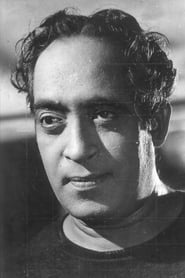

Prithvi Vallabh
"Two kings clash when mercy meets ruthless ambition."
Keys: Space play/pause · ←/→ 10s · F fullscreen · M mute · </> speed
About this film
In 1943, the story revolves around two kings, Prithvi Vallabh (Munj) of Avantipur who is kind and just, and Tailap, a neighboring king who is cruel. With the help of his sister Mrinalvati (Durga Khote) and another neighbouring king Bhillam (K. N. Singh), Tailap manages to capture Prithvi Vallabh. The rest of incidents following his captivity.
Cast & crew
More films like this
More Drama films
View all →







More from Sohrab Modi
View all →

More about this film
About the production
Release dateJanuary 29, 1943
Box officeCommercial success - was one of the major hits of 1943 and helped establish Minerva Movietone as a leading production house for historical dramas
ProductionMinerva Movietone
Filmed inBombay (now Mumbai) studios
The film was an ambitious project for its time, featuring elaborate sets designed to recreate ancient Indian kingdoms. Sohrab Modi invested heavily in authentic costumes and props to maintain historical accuracy. The production faced challenges due to wartime restrictions on resources during World War II, but Modi's determination ensured the film's completion with its intended grandeur.
Themes
Justice vs. TyrannyHonor and DignityPower and its Corrupting InfluenceRedemption and TransformationLoyalty and Betrayal
Themes & topics
Historical background
Released in 1943, Prithvi Vallabh reached audiences during wartime and postwar filmmaking, when exhibition and production norms differed sharply from today's.
Why this film matters
Prithvi Vallabh remains viewable through digital archives, preserving 1943 screen culture for modern audiences.
Making of
The making of Prithvi Vallabh was proof of Sohrab Modi's dedication to historical authenticity and cinematic grandeur. Modi spent months researching the historical period and consulting with historians to ensure accuracy in costumes, sets, and dialogues. The film's production required the construction of massive palace sets and elaborate battlegrounds within the studio premises. Durga Khote underwent extensive preparation for her role as Mrinalvati, studying classical dance and royal etiquette of ancient India. The film's shooting schedule was extended due to Modi's perfectionist approach to each scene, particularly the dramatic confrontation sequences between the rival kings. During filming, the cast and crew faced wartime shortages of film stock and other resources, but Modi's reputation allowed him to secure necessary materials through his industry connections. The film's success was particularly notable given that it was released during the Quit India Movement, a period of significant political upheaval in India.
What critics said
Modern notes on Prithvi Vallabh emphasize preservation, stylistic choices, and its place within director or studio filmographies.
Did you know?
- The film was based on a Gujarati novel of the same name by K.M. Munshi, a prominent Indian writer and political leader
- Sohrab Modi was so passionate about the project that he not only directed but also played the lead role of Prithvi Vallabh
- Durga Khote's performance as Mrinalvati is considered one of her most memorable roles and showcased her ability to portray complex female characters
- The film's success led to Modi remaking it in Hindi again in 1954 with updated technology and cast
- Minerva Movietone, Modi's production company, was known for producing grand historical epics that often carried subtle nationalist messages during British rule
- The film's elaborate battle sequences were groundbreaking for Indian cinema of the 1940s
- K.N. Singh's portrayal of the villainous Bhillam helped establish him as one of Hindi cinema's most reliable antagonists
- The film's music was composed by Saraswati Devi, one of the first female music directors in Indian cinema
- The story was based on the historical conflict between the Paramara king Munj and the Western Chalukya king Tailapa II
- Despite being made during World War II, the film managed to secure sufficient resources for its grand production values
Awards & recognition
- Bengal Film Journalists' Association Awards - Best Film (Hindi)
- Bengal Film Journalists' Association Awards - Best Actor (Sohrab Modi)
- Bengal Film Journalists' Association Awards - Best Actress (Durga Khote)
Visual style
The cinematography of Prithvi Vallabh, handled by Y.D. Sarpotdar, was considered revolutionary for its time. The film employed innovative camera techniques including dramatic low-angle shots to emphasize the royal stature of the characters and sweeping wide-angle shots to capture the grandeur of palace sets and battle sequences. The use of lighting was particularly noteworthy, with chiaroscuro effects employed to create dramatic tension in confrontation scenes. The film's visual style drew inspiration from both Indian miniature painting traditions and contemporary Hollywood historical epics. The cinematographer made extensive use of shadow and light to symbolize the moral dichotomy between the just Prithvi Vallabh and the tyrannical Tailap. Battle sequences were filmed with multiple cameras to create dynamic action scenes that were unprecedented in Indian cinema of the 1940s. The film's visual palette emphasized rich, deep colors in palace scenes and stark contrasts in outdoor sequences, creating a visual language that enhanced the narrative's emotional impact.
Innovations
Prithvi Vallabh featured several technical innovations that were groundbreaking for Indian cinema in the 1940s. The film employed advanced matte painting techniques to create the illusion of vast kingdoms and expansive landscapes beyond the physical sets. The battle sequences utilized innovative editing techniques and multiple camera angles to create dynamic action scenes that were unprecedented in Indian cinema at the time. The sound recording technology used in the film was among the most advanced available in India, allowing for clear dialogue reproduction even in large-scale scenes with many extras. The film's special effects, particularly those used in the palace scenes and supernatural elements, were created using in-camera techniques and optical printing methods that were cutting-edge for the period. The production also pioneered new techniques in costume design and makeup for historical films, creating looks that were both authentic to the period and visually striking for the camera. These technical achievements set new standards for Indian cinema and influenced subsequent historical and mythological films.
Music
The film's music was composed by Saraswati Devi, one of Indian cinema's pioneering female music directors. The soundtrack featured a blend of classical Indian ragas and folk melodies that reflected the historical setting of the narrative. The songs were written by notable poets of the time, with lyrics that combined classical Hindi with accessible language. The film's most popular songs included 'Prithvi Vallabh Ki Jai' and 'Mrinalvati's Lament,' which became chart-toppers of their era. The music arrangement incorporated traditional Indian instruments alongside Western orchestral elements, creating a unique sound that enhanced the film's epic feel. The background score was particularly praised for its ability to heighten emotional moments without overwhelming the dialogue. Saraswati Devi's work on this film is considered among her finest achievements and helped establish the template for historical film music in Indian cinema. The soundtrack was released on gramophone records and sold exceptionally well, contributing significantly to the film's overall success.
Famous quotes
A king's true power lies not in his sword, but in the hearts of his people - Prithvi Vallabh
Justice delayed is justice denied, but justice denied is a kingdom doomed - Mrinalvati
When honor calls, even death becomes a worthy companion - Prithvi Vallabh
The throne may be golden, but the crown of righteousness weighs heavier - Tailap
In the game of thrones, the only winning move is to serve the people - Prithvi Vallabh
Memorable scenes
- The dramatic confrontation between Prithvi Vallabh and Tailap in the royal court, where the captured king maintains his dignity despite being in chains
- Mrinalvati's internal conflict scene where she watches Prithvi Vallabh's noble behavior and begins to question her brother's tyranny
- The elaborate battle sequence showing the clash between the two kingdoms, featuring hundreds of extras and innovative camera work
- The prison scene where Prithvi Vallabh teaches his captors about true leadership through his example
- The final confrontation where the transformed characters face their ultimate choices between power and principle
What audiences thought
Prithvi Vallabh was a tremendous commercial success upon its release, running for extended periods in theaters across India. Audiences were particularly drawn to the film's grand spectacle, emotional depth, and the powerful performances of its lead actors. The film's dialogues became popular catchphrases, and its songs were widely hummed by moviegoers. Many viewers reported being moved by the film's themes of justice and honor, with some drawing parallels between the on-screen struggle against tyranny and India's fight for independence. The film's success was especially notable given that it was released during wartime, when cinema attendance was affected by various restrictions and economic hardships. The movie's popularity extended beyond urban centers to rural areas, where its themes of good versus evil and righteous kingship resonated strongly with traditional audiences. The film's success solidified Sohrab Modi's status as one of Indian cinema's most respected filmmakers and established a loyal audience for his subsequent historical productions.
Film connections
Influenced by
- Historical novels by K.M. Munshi
- Classical Indian literature
- Hollywood historical epics of the 1930s
- Traditional Indian theatre forms
- Indian miniature painting traditions
This film influenced
- Prithvi Vallabh (1954 remake)
- Sikandar (1941)
- Jhansi Ki Rani (1953)
- Mughal-e-Azam (1960)
- Later Indian historical epics
Film restoration
The film is partially preserved with some portions missing or damaged. The National Film Archive of India holds an incomplete copy of the film. Some reels have been restored from various sources, but the complete original version is not available in pristine condition. Restoration efforts continue, with film historians working to piece together the complete narrative from existing prints and fragments.
Where to watch
- Available on select classic film streaming platforms
- Screenings at film archives and classic film festivals
- DVD releases from classic film distributors
- National Film Archive of India screenings
- Some versions available on YouTube of varying quality