Repas en famille
"Mother and two children"
Keys: Space play/pause · ←/→ 10s · F fullscreen · M mute · </> speed
About this film
A French family consisting of father, mother and two children, sitting around a table and eating a meal.
Cast & crew
More films like this
More Documentary films
View all →


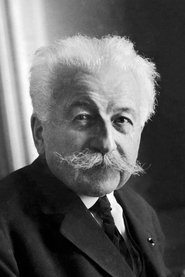
More from Auguste Lumière
View all →
More about this film
About the production
Release date1896
ProductionLumière Company
Filmed inLa Ciotat, France
Filmed using the Lumière Cinématographe, which was both a camera and projector. The film was shot in a single continuous take with a fixed camera position, typical of early Lumière productions. The Koehler family were friends or associates of the Lumière brothers, who often used acquaintances as subjects for their films. This was one of many actualité films (realities) that the Lumières produced to demonstrate their new technology.
Themes
Family lifeDomesticityEveryday realityObservationTime preservation
Themes & topics
Historical background
Contemporary records classify Repas en famille (1896) as 1896 film by louis lumière, placing it within the earliest years of projected motion pictures.
Why this film matters
Repas en famille (1896) helps trace genre evolution, performer careers, and the material conditions of silent exhibition.
Making of
The filming of 'Repas en famille' took place in 1896, likely in or around La Ciotat where the Lumière family had interests. Auguste Lumière operated the Cinématographe himself, as was common in the early days of their filmmaking. The Koehler family, consisting of parents and their children, were probably acquaintances of the Lumière brothers who agreed to be filmed during their meal. The production would have been remarkably simple by modern standards - a single camera setup, no artificial lighting (relying on natural light), and no retakes possible due to the limitations of early film equipment. The family would have been instructed to act naturally, though the presence of the bulky Cinématographe must have been noticeable. This film was part of the Lumières' effort to create a catalog of actualité films to demonstrate their invention and sell Cinématographes to interested buyers worldwide.
What critics said
Modern write-ups on Repas en famille (1896) tend to focus on preservation status, stylistic choices, and placement within director or studio filmographies.
Did you know?
- This film is one of the earliest examples of documentary filmmaking, capturing a real family meal rather than a staged performance.
- The Lumière brothers, Auguste and Louis, are considered among the first filmmakers in history, with their first public screening in 1895.
- The Cinématographe camera used to film this could shoot, develop, and project film, making it a revolutionary all-in-one device.
- At only 42 seconds, this film represents the typical length of early cinema shorts, which were often brief glimpses of reality.
- The film was part of the Lumière brothers' catalog of over 1,400 films produced between 1895 and 1905.
- Unlike many early films that showed public scenes, this provides a rare intimate view of domestic life in the 1890s.
- The Koehler family members shown in the film were likely local residents of La Ciotat, where the Lumières had a factory.
- This film demonstrates the Lumière philosophy of 'life caught unawares' rather than the theatrical approach of their contemporary Georges Méliès.
- The simple act of filming a family meal was revolutionary in 1896, as no technology had previously been able to capture such moments.
- Early films like this were often shown as part of variety programs, with multiple short films screened in one session.
Visual style
The cinematography of 'Repas en famille' is characteristic of early Lumière films, featuring a single, static camera position that captures the scene from a fixed perspective. The composition is straightforward and centered, with the family arranged around the dining table in the center of the frame. The lighting is entirely natural, likely coming from windows in the room, creating soft shadows and authentic illumination. The depth of field captures the entire family group clearly, demonstrating the technical capabilities of the Cinématographe lens. The camera work is unobtrusive and observational, allowing the subjects to move naturally within the frame without following their actions. This approach creates a sense of authenticity and removes any sense of directorial intervention, making viewers feel like invisible observers of a private moment. The black and white imagery, while technically limited by the period, provides remarkable clarity and detail for the era.
Innovations
This film represents several important technical achievements of early cinema. The use of the Lumière Cinématographe, which could shoot at approximately 16 frames per second, was groundbreaking for its time. The film demonstrates the ability to capture movement with reasonable clarity and stability, a significant improvement over earlier motion picture devices. The 35mm film format used would eventually become the industry standard for decades. The single-take, continuous shooting approach showed the technical capability of the camera to record extended sequences without interruption. The natural lighting captured in the film demonstrates the sensitivity of early film stock to available light. Perhaps most importantly, this film showcases the technical achievement of preserving a moment of reality - the ability to capture and replay an actual event, however mundane, was revolutionary in 1896 and laid the foundation for all documentary filmmaking that would follow.
Music
As a silent film from 1896, 'Repas en famille' was originally presented without any synchronized soundtrack. During early cinema exhibitions, musical accompaniment would have been provided live, typically by a pianist or small orchestra playing appropriate background music. The choice of music would have been left to the individual theater or exhibitor, often consisting of popular classical pieces or improvisations. No original score was composed specifically for this film, as the concept of synchronized sound in cinema was still decades away. Some modern screenings of early Lumière films may feature contemporary musical scores, but these are not part of the original presentation. The silence of the film actually enhances its documentary quality, focusing attention entirely on the visual documentation of the family meal.
Famous quotes
Life caught unawares - Lumière brothers' filmmaking philosophy
Memorable scenes
- The entire 42-second sequence showing the Koehler family seated around their dining table, engaged in the natural act of eating while occasionally interacting with each other, providing an authentic window into 19th-century domestic life.
What audiences thought
Audiences in 1896 were typically mesmerized by any moving image, making 'Repas en famille' a popular subject in early film screenings. The novelty of seeing real people captured on film was enough to draw crowds, regardless of the simple content. Viewers reportedly reacted with wonder and sometimes disbelief at the lifelike quality of the images. The domestic subject matter would have been particularly relatable to audiences of the time, who might have seen aspects of their own family lives reflected on screen for the first time. Early cinema programs often mixed various types of short films, and a scene of family dining would have provided a familiar, comforting contrast to more exotic or spectacular subjects. The film's brevity and simplicity made it accessible to all viewers, regardless of class or education, contributing to cinema's early appeal as a democratic entertainment medium.
Film connections
Influenced by
- Photography
- Scientific observation
- Documentary tradition
- Realist philosophy
- Industrial Revolution technology
This film influenced
- Other Lumière actualités
- Early documentary films
- Cinema verité movement
- Reality television
- Home movies
- Ethnographic films
Film restoration
The film is preserved in the Lumière Institute archives in Lyon, France. As one of the early Lumière productions, it has been carefully maintained and restored by film preservationists. Digital copies exist and are occasionally screened at film festivals and museums specializing in early cinema. The film is considered part of the world's cinematic heritage and is protected by various film preservation organizations.
Where to watch
- Lumière Institute museum screenings
- Film archives and museums
- Some online film archives specializing in early cinema
- Educational film collections
- Cinematheque screenings