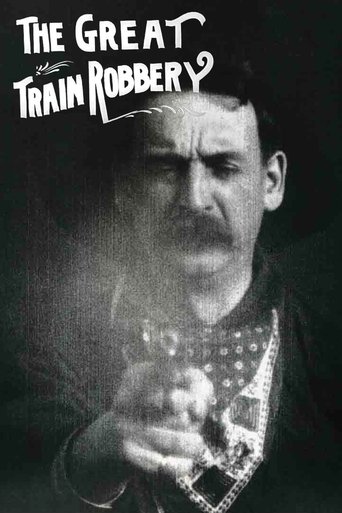
Rescued from an Eagle's Nest
"An eagle takes the child"
Keys: Space play/pause · ←/→ 10s · F fullscreen · M mute · </> speed
About this film
A woodsman leaves his baby outside a hut; an eagle snatches the infant and carries it to a cliff nest. J.P. McGowan stages a rescue climax that features early action photography in the woods.
Cast & crew
More films like this
More Drama films
View all →







More from J. Searle Dawley
View all →

More about this film
About the production
Release dateFebruary 1908
ProductionEdison Manufacturing Company
Filmed inNew York, New Jersey
This film was produced during the early nickelodeon era when films were typically one-reelers lasting about 10-15 minutes. The eagle scenes were created using a combination of trained birds, miniatures, and early special effects techniques. The production utilized natural outdoor locations, which was somewhat innovative for the time when many films were still shot on indoor sets. The cliff sequences were particularly challenging to film, requiring the crew to find suitable locations and use innovative camera mounting techniques.
Themes
Man versus natureParental love and sacrificeCourage in the face of dangerThe wilderness as both beautiful and threateningHuman determination against impossible odds
Themes & topics
Historical background
Edison's 1908 rescue melodrama belongs to the chase-and-peril cycle that fed nickelodeon appetite for outdoor thrills.
Why this film matters
The eagle-nest rescue became a repeatable stunt template for later serials and wilderness pictures.
Making of
The production of 'Rescued from an Eagle's Nest' presented numerous challenges typical of early filmmaking. The crew had to work with live animals, which was both dangerous and unpredictable. The eagle sequences required careful planning and multiple takes to achieve the desired dramatic effect. Director J. Searle Dawley, working for Edison Studios, had to be resourceful with limited equipment and primitive camera technology. The cliff scenes were particularly difficult, requiring the crew to transport heavy cameras to remote locations. The film's star, Henry B. Walthall, was still relatively new to cinema but showed remarkable dedication, performing many of his own stunts. The production team used innovative techniques for the time, including forced perspective to make the eagle appear larger and more menacing. The baby doll used for dangerous sequences was carefully crafted to look realistic while being lightweight enough for the eagle to carry.
What critics said
Trade listings emphasized spectacle; archivists note its place in Edison's competitive response to Biograph outdoor stories.
Did you know?
- the production features one of the earliest known film appearances of Henry B. Walthall, who would later become famous for his role as 'The Little Colonel' in D.W. Griffith's 'The Birth of a Nation' (1915)
- The eagle was actually a trained bird named 'Old Abe' that had previously been a Civil War mascot for the 8th Wisconsin Volunteer Infantry Regiment
- Director J. Searle Dawley was one of Edison's most prolific early directors, making over 200 films between 1907 and 1925
- The film's special effects, particularly the eagle flying with the baby, were accomplished using a combination of matte shots and miniature work
- the production was part of a popular genre of early cinema featuring animals in dramatic situations, often called 'animal pictures'
- The baby in the film was actually a doll wrapped in blankets for the dangerous eagle-carrying sequences
- The film was distributed by the Edison Manufacturing Company, which dominated the early American film market before the Motion Picture Patents Company was formed
- Original promotional materials emphasized the 'thrilling' and 'realistic' nature of the eagle scenes
- The film's title was sometimes shortened to 'Rescued from an Eagle' in some advertisements and theater listings
- This was one of the first films to use location shooting in mountainous terrain, setting a precedent for future adventure films
Visual style
The cinematography, typical of Edison productions of the era, was primarily static camera work with careful composition within the frame. However, the film shows some innovation in its use of location shooting, particularly in the mountain sequences where the camera was positioned to emphasize height and danger. The cinematographer utilized natural lighting to enhance the outdoor scenes, creating a sense of realism that was still relatively uncommon in 1908. The eagle sequences required special camera techniques, including the use of multiple exposures and careful framing to create the illusion of the bird carrying the baby. The film also employed some tracking shots during the chase sequences, which was technically challenging for the period.
Innovations
The film showcased several technical innovations for its time, particularly in the realm of special effects. The eagle sequences required sophisticated matte photography and multiple exposure techniques that were quite advanced for 1908. The production team developed innovative methods for filming with live animals, creating sequences that appeared dangerous while ensuring the safety of both cast and creatures. The cliff scenes demonstrated early use of location shooting in challenging terrain, requiring portable equipment and creative camera mounting. The film also featured some of the earliest examples of what would become continuity editing, with shots carefully planned to maintain spatial and temporal coherence across different locations.
Music
As a silent film, 'Rescued from an Eagle's Nest' would have been accompanied by live music during its theatrical run. The typical accompaniment would have been a pianist or small theater orchestra performing music appropriate to the action on screen. During dramatic moments like the eagle's attack and the cliff rescue, the music would have been fast-paced and tense, while quieter scenes would have featured more melodic compositions. Some theaters might have used specific musical cues or even sound effects created by the musicians to enhance the drama. The Edison company sometimes provided suggested musical scores with their films, though specific music for this title has not survived.
Famous quotes
A father's love knows no height too great, no danger too perilous
When nature's fury strikes, human courage must answer
The eagle's nest is high, but a parent's reach is higher
Memorable scenes
- The dramatic moment when the eagle swoops down and snatches the baby from outside the hut, creating panic and despair among the parents
- The breathtaking cliff-climbing sequence where the woodsman scales the treacherous mountain face to reach the eagle's nest
- The final confrontation in the eagle's nest where the father battles the bird to rescue his child, combining danger and emotional triumph
What audiences thought
The film was highly popular with nickelodeon audiences of 1908, who were drawn to its sensational title and thrilling content. Theater owners reported strong attendance, particularly for evening showings. The eagle sequences generated considerable word-of-mouth publicity, with audiences marveling at how such effects were achieved. The film's dramatic rescue sequence provided the emotional payoff that early cinema audiences craved. Many viewers reportedly found the scenes with the eagle carrying the baby both terrifying and fascinating, demonstrating the power of moving images to evoke strong emotional responses. The film's success helped establish the commercial viability of action-adventure films and encouraged other studios to produce similar content.
Film connections
Influenced by
- Edison's earlier actualities featuring animals
- Stage melodramas of the period
- Literary adventure stories
- Dime novel narratives of frontier life
This film influenced
- D.W. Griffith's 'The Battle of Elderbush Gulch' (1913)
- Cecil B. DeMille's early westerns
- Various serial films of the 1910s
- Disney's nature documentaries
- Modern adventure films featuring animal encounters
Film restoration
The film survives in archives and has been preserved by the Museum of Modern Art and the Library of Congress. Prints exist in 16mm and 35mm formats, though some deterioration is evident in surviving copies. The film has been included in several DVD collections of early American cinema and is available through some archival institutions.
Where to watch
- Available on the Internet Archive
- Included in the DVD collection 'Treasures from American Film Archives'
- Accessible through the Library of Congress's digital collections
- Available on some streaming services specializing in classic cinema
- Can be viewed at film archives and museums specializing in early cinema