The Black Hand
"Extortion note from the Black Hand"
Keys: Space play/pause · ←/→ 10s · F fullscreen · M mute · </> speed
About this film
Gangsters demand protection money from a butcher and kidnap daughter Maria when he cannot pay. The 1906 Biograph short is among the earliest surviving gangster films.
Cast & crew
More films like this

More Drama films
View all →







More from Wallace McCutcheon Sr.
View all →

More about this film
About the production
Release dateMarch 1906
Box officeUnknown - box office records were not systematically kept for films of this period
ProductionAmerican Mutoscope and Biograph Company
Filmed inNew York City, New York, Biograph Studio, Manhattan
Filmed on location in New York's Little Italy district to capture authentic settings. The production utilized real storefronts and local residents as extras to enhance realism. The film was shot on 35mm film using Biograph's proprietary camera system. The threatening letter shown in the film was based on actual Black Hand extortion letters that were common during this period.
Themes
Organized crimeImmigrant experienceFamily protectionUrban violenceSocial justice
Themes & topics
gangsterextortionkidnappingItalian-Americanimmigrantbutcherdaughterthreatening letterorganized crimeurban crimefamily dramaviolencerevenge
Historical background
Released in 1906, The Black Hand belongs to the nickelodeon era and reflects production norms of its release season.
Why this film matters
The Black Hand contributes to understanding regional output and audience tastes around 1906.
Making of
The Black Hand was produced during a pivotal period in American cinema when filmmakers were beginning to explore narrative storytelling beyond simple actualities. Director Wallace McCutcheon Sr., working for the innovative Biograph Company, chose to tackle a contemporary social issue that was affecting real immigrant communities. The production team worked extensively in New York's Little Italy, using authentic locations and sometimes recruiting local residents as background actors. The film's realistic approach was groundbreaking for its time, as it brought attention to the actual problem of organized crime targeting immigrant families. The threatening letter props were carefully recreated based on genuine Black Hand correspondence that had been reported in newspapers. The kidnapping scene was particularly challenging to film due to crowd control and the need to convey dramatic action within the technical limitations of 1906 film equipment.
What critics said
Review records for The Black Hand are typical of 1906: brief for shorts, more sustained for features.
Did you know?
- This is considered the earliest surviving gangster film in cinema history
- The Black Hand was a real criminal organization that extorted money from Italian immigrants in early 1900s America
- Director Wallace McCutcheon Sr. was one of Biograph's earliest directors and father of Wallace McCutcheon Jr.
- Actor Robert G. Vignola later became a prominent silent film director himself
- The film was shot in New York's actual Little Italy neighborhood for authenticity
- Biograph Company was one of the first film studios to produce narrative films with multiple scenes
- The film's title refers to the practice of sending threatening letters marked with a black hand symbol
- the release predates the first feature-length gangster film by over 20 years
- The film was preserved by the Museum of Modern Art and the Library of Congress
- Anthony O'Sullivan was a regular Biograph actor who appeared in over 200 films
Visual style
The cinematography in The Black Hand reflects the technical capabilities and stylistic conventions of 1906 filmmaking. Shot on 35mm film using Biograph's distinctive cameras, the film employs static shots typical of the era but demonstrates careful composition within each frame. The location shooting in New York's Little Italy provided authentic urban settings that added to the film's realism. The lighting was entirely natural, as artificial lighting equipment was not yet in common use. The camera work shows the emerging understanding of visual storytelling, with careful placement of actors to convey the dramatic tension of each scene. The film's visual style, while technically primitive by modern standards, was quite sophisticated for its time and effectively conveyed the emotional weight of the story.
Innovations
The Black Hand demonstrated several technical achievements for its time, including the use of location shooting in urban environments, which was still relatively uncommon in 1906. The film's multi-scene narrative structure showed the growing sophistication of storytelling in early cinema. The production team successfully coordinated complex action sequences, including the dramatic kidnapping scene, which required careful blocking and timing. The film's preservation of authentic period details in costumes and props contributed to its historical value. The use of actual threatening letter props based on real Black Hand correspondence showed attention to detail that elevated the production beyond typical films of the era.
Music
As a silent film, The Black Hand had no synchronized soundtrack. During its original theatrical run, the film would have been accompanied by live musical performance, typically a pianist or small ensemble in the theater. The musical selections would have been chosen to match the mood of each scene, with dramatic, tense music during the extortion and kidnapping sequences, and more melancholic themes for the emotional moments. Some theaters might have used popular songs of the era or classical pieces that fit the film's dramatic tone. Modern screenings of the restored film often feature newly composed scores or period-appropriate music to recreate the original viewing experience.
Famous quotes
The letter bearing the black hand symbol demands payment or threatens destruction
Your daughter Maria will be taken if you do not pay
The butcher cannot meet their demands and faces the consequences
Memorable scenes
- The dramatic moment when the butcher receives the threatening letter marked with the black hand symbol
- The tense confrontation between the gang members and the butcher in his shop
- The emotional kidnapping scene where Maria is forcibly taken from her father
- The community's reaction to the crime and the search for the missing girl
What audiences thought
Audience reception in 1906 was reportedly strong, particularly among immigrant communities who recognized the authenticity of the story. The film's realistic depiction of a problem that many viewers had personally experienced or heard about made it particularly impactful. Contemporary accounts suggest that audiences were moved by the dramatic kidnapping sequence and the film's portrayal of family tragedy. The film's success helped demonstrate to early filmmakers that audiences would respond to serious dramatic content based on real social issues. Modern audiences viewing the film at archives and film festivals often express fascination with its historical significance and its surprisingly sophisticated narrative techniques for such an early production.
Film connections
Influenced by
- Actual Black Hand criminal activities
- Contemporary newspaper reports
- Stage melodramas of the era
- Earlier Biograph crime films
This film influenced
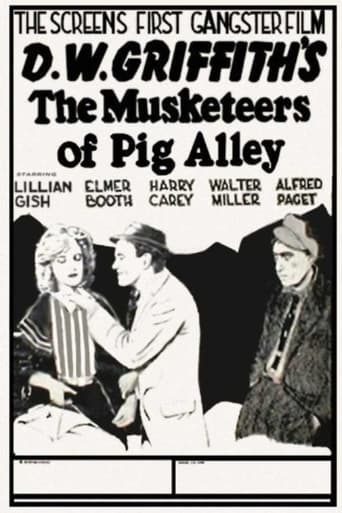
- The Musketeers of Pig Alley (1912)
- The Gangsters (1913)
- The Regeneration (1915)
- Underworld (1927)
- Little Caesar (1931)
- The Public Enemy (1931)
- Scarface (1932)
Film restoration
The Black Hand is preserved and available for viewing. The film has been restored by the Museum of Modern Art in New York and the Library of Congress. A 35mm print exists in the MoMA film collection, and digital copies are available through various film archives. The film is considered to be in good condition for its age, though some deterioration is visible due to the nitrate film stock originally used. It is one of the few surviving examples of Biograph's output from 1906, making it particularly valuable to film historians and preservationists.
Where to watch
- Museum of Modern Art film screenings
- Library of Congress online archives
- Kino Lorber DVD collections
- Film preservation society screenings
- University film archives
- Turner Classic Movies occasional broadcasts
- Early cinema documentary collections