

The Card Game
"Cards, wine, and a single take"
Keys: Space play/pause · ←/→ 10s · F fullscreen · M mute · </> speed
About this film
Three men play écarté at a table while a servant pours wine after the hand ends. Auguste and Louis Lumière recorded the everyday scene in a single fixed shot, part of their catalogue of documentary views.
Cast & crew
More Comedy films
View all →






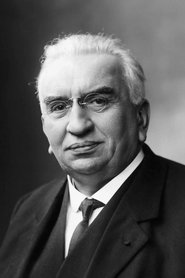
More from Louis Lumière
View all →


More about this film
About the production
Release date1896
ProductionLumière Company
Filmed inLa Ciotat, France
This film was shot in a single continuous take using the Cinématographe, an all-in-one camera, projector, and developer invented by the Lumière brothers. The scene was likely staged in the garden of the Lumière family home or at their factory in La Ciotat. The film exemplifies the Lumière brothers' preference for capturing actualité scenes - everyday moments of life - rather than the fantastical elements favored by their contemporary Georges Méliès.
Themes
Leisure and recreationSocial class dynamicsDomestic lifeFrench cultureFamily and friendship
Themes & topics
Historical background
The Card Game (1896) belongs to the Lumières' first year of commercial cinematography, when fifty-second actualities demonstrated the apparatus to curious crowds.
Why this film matters
Such domestic tableaux circulated as proof of the Cinématographe's ability to capture ordinary life without theatrical staging.
Making of
The film was directed by Louis Lumière, who personally operated the Cinématographe camera. The cast included family members and factory workers, with Antoine Lumière (the brothers' father) appearing as one of the card players. The scene was carefully composed to demonstrate the new medium's ability to capture realistic human interaction. The production required no special effects or elaborate sets, relying instead on the novelty of capturing a moment of everyday life. The inclusion of the servant serving drinks was a deliberate choice to add narrative progression to what might otherwise have been a static scene. the production was part of the Lumière brothers' strategy to create a diverse catalog of short films that would appeal to different audiences and demonstrate various aspects of their new technology.
What critics said
Exhibitors listed it among standard program fillers; archivists now value it as a pristine example of Lumière composition.
Did you know?
- the production is also known by its French title 'Partie de cartes' and is sometimes referred to as 'The Card Players'
- One of the men in the film is Antoine Lumière, father of the Lumière brothers, making this a family production
- The film was one of the first to show a domestic servant, providing insight into class structures of the time
- Écarté, the card game being played, was extremely popular in French high society during the 19th century
- The film was included in the Lumière brothers' first public film screening on December 28, 1895, at the Grand Café in Paris
- This was among the earliest films to depict a leisure activity, showing the new medium's ability to capture everyday life
- The servant's appearance with drinks demonstrates early use of narrative progression in cinema
- The film was shot outdoors, utilizing natural lighting, which was typical of early Lumière productions
- Like most early Lumière films, it was shot at 16 frames per second
- The film was part of a series of domestic scenes the Lumière brothers produced to showcase the possibilities of their invention
Visual style
The film was shot using the Cinématographe, which served as both camera and projector. The composition is static, with the camera positioned to capture the entire scene in a single wide shot. Natural lighting was used, as was typical for outdoor Lumière productions. The depth of field allows all three characters to remain in focus simultaneously. The framing creates a sense of intimacy while still showing enough of the environment to establish context. The 45-second runtime reflects the limitations of early film stock, which could only capture brief sequences. The visual style emphasizes clarity and realism over artistic flourishes, consistent with the Lumière brothers' documentary approach.
Memorable scenes
- The moment when the domestic servant enters the frame carrying drinks, creating a natural narrative progression and demonstrating early cinematic storytelling through simple action and movement.
What audiences thought
Early audiences were reportedly amazed by the film's realism, with many initially believing they were watching live performers behind a screen. The inclusion of the serving element added a surprise element that delighted viewers of the time. The film's depiction of a familiar social activity made it particularly relatable to French audiences of the 1890s. As part of the Lumière brothers' traveling exhibitions, the film was shown to diverse audiences across Europe and America, where it was consistently praised for its clarity and naturalistic quality. The simple, universal nature of the scene made it accessible to international audiences, contributing to the global appeal of early cinema.
Film connections
Influenced by
- Photography
- Theater
- French genre painting
- Social realist literature
This film influenced
- Workers Leaving the Lumière Factory (1895)
- The Sprinkler Sprinkled (1895)
- Baby's Lunch (1895)
- Arrival of a Train (1896)
Film restoration
The film is preserved in the archives of the Lumière Institute in Lyon, France. It has been restored and digitized as part of the Lumière brothers' complete film collection. Multiple copies exist in film archives worldwide, including the Cinémathèque Française and the Library of Congress. The film remains accessible to the public through various digital platforms and film history collections.
Where to watch
- YouTube (Lumière Institute official channel)
- Criterion Collection
- Kanopy streaming service
- Museum of Modern Art film collection
- British Film Institute archive
- National Film Registry website