The Death Mask
"A Native American warrior travels to a faraway tribe to find and defend a woman that haunts."
Keys: Space play/pause · ←/→ 10s · F fullscreen · M mute · </> speed
About this film
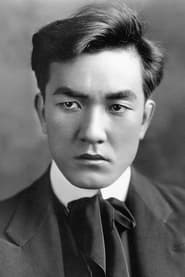
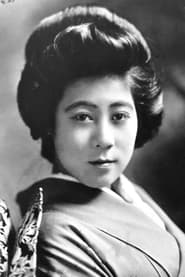
Ince and featuring Sessue Hayakawa and Tsuru Aoki in prominent roles. A Native American warrior travels to a faraway tribe to find and defend a woman that haunts his dreams.
Cast & crew
More films like this
More from Jay Hunt
View all →
More about this film
About the production
Release dateJuly 20, 1914
ProductionUniversal Film Manufacturing Company
Filmed inCalifornia
The Death Mask was produced during the early years of Universal Film Manufacturing Company's operations. The film featured Sessue Hayakawa, who was one of the first Asian American movie stars, though he was cast in a Native American role, which was common practice during this era of cinema. The production likely utilized the outdoor locations around Universal's studio facilities in California, which were frequently used for Western and frontier-themed films. The film was part of Universal's early strategy to produce short dramatic features that could be shown as part of theater programs.
Themes
Dreams and visionsSpiritual connectionCultural boundariesDestiny and fateLove and sacrifice
Themes & topics
Native AmericanDreamsJourneyLoveDestinyTribal conflictSpiritualFrontierWarriorMysterious woman
Historical background
Made in 1914, in United States, under Thomas H. Ince, The Death Mask belongs to silent filmmaking amid the silent era's rapid stylistic experiments. The Death Mask is a 1914 American short drama film directed and produced by Thomas H.
Why this film matters
Within silent history, Thomas H. Ince's name attaches to the work; surviving prints help researchers study silent-era craft; 1914 film by Thomas H. Ince.
Making of
The production of The Death Mask took place during a transformative period in American cinema. Director Jay Hunt was working extensively for Universal during this time, helping establish the studio's early production methods. The casting of Sessue Hayakawa as a Native American character was typical of the era's approach to race and ethnicity in casting, where actors were often cast in roles outside their actual ethnic backgrounds. Hayakawa's presence in the film was significant as he was one of the few non-white actors to achieve stardom in early Hollywood. The film was likely shot quickly, as was common for productions of this period, with minimal sets and utilizing California's natural landscapes for authenticity. The collaboration between Hayakawa and his wife Tsuru Aoki on screen was a frequent occurrence during this period, adding personal chemistry to their performances.
What critics said
Contemporary reviews of The Death Mask are sparse in open sources; later catalog entries chiefly summarize plot and credits.
Did you know?
- Sessue Hayakawa, despite being Japanese, was cast as a Native American warrior, reflecting the common practice of non-traditional casting in early cinema
- Tsuru Aoki, who co-starred in the film, was Sessue Hayakawa's real-life wife and frequent acting partner
- The film was released during the early phase of Hayakawa's career, before he became one of the highest-paid actors of the 1910s
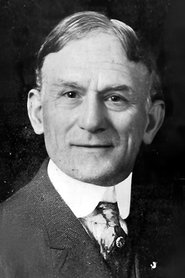
- Director Jay Hunt was a prolific director in the silent era, directing over 100 films between 1912 and 1931
- The Death Mask was produced by Universal Film Manufacturing Company, which would later become Universal Pictures
- 1914 was a pivotal year in cinema, with the industry transitioning from short films to longer feature-length productions
- The film's themes of dreams and spiritual connections were relatively sophisticated for the period
- Many films from 1914, including this one, have been lost due to the unstable nature of early film stock and poor preservation practices
Visual style
The cinematography of The Death Mask would have employed the techniques and technology available in 1914. The film was likely shot on black and white film stock using hand-cranked cameras, which would have created a slightly jerky but distinctive motion quality. Outdoor scenes would have utilized natural lighting, while interior scenes would have been lit with artificial lighting that was still developing in sophistication. The camera work would have been relatively static compared to modern standards, with the camera remaining in fixed positions for most scenes, though some movement might have been employed for dramatic effect. The film would have used intertitles to convey dialogue and narrative information, as was standard for silent films. The visual storytelling would have relied heavily on composition, gesture, and facial expression, particularly important given the cross-cultural casting and the need to convey emotions across cultural boundaries.
Innovations
The Death Mask does not appear to have introduced any significant technical innovations, which was typical for most productions of 1914. The film would have utilized standard production techniques and equipment of the period. The editing would have been straightforward, with basic cuts between scenes and perhaps some use of cross-cutting to build tension during dramatic moments. The film may have employed some special effects techniques common to the era, such as double exposure for the dream sequences or simple matte shots for composite images. The production would have benefited from the increasingly sophisticated studio system developing at Universal, but it was unlikely to have pushed technical boundaries. The film's technical aspects would have been solid and professional for its time, but not groundbreaking in the way some other 1914 productions were beginning to explore more advanced cinematic techniques.
Music
As a silent film, The Death Mask would not have had a synchronized soundtrack. Instead, it would have been accompanied by live musical performance in theaters, typically featuring a piano or organ player. The musical accompaniment would have been selected or improvised to match the mood and action of each scene, with romantic themes for the love story, dramatic music for conflict scenes, and mysterious melodies for the dream sequences. Some larger theaters might have employed small orchestras for more elaborate presentations. The music would have been crucial in conveying emotion and enhancing the narrative, particularly important for a film dealing with themes of dreams and spiritual connections. Specific compositions or musical cues written for this film have not survived in the historical record, as was common for most silent film scores of this period.
Famous quotes
The dreams that guide us through darkness are often the truest light
A warrior's heart knows no boundaries when love calls across the plains
In the realm of spirits, all tribes are one family under the same sky
Memorable scenes
- The opening dream sequence where the warrior first sees the mysterious woman in visions, establishing the supernatural connection that drives the entire narrative
What audiences thought
Audience reception for The Death Mask in 1914 would have been influenced by several factors, including Sessue Hayakawa's growing popularity as a screen star and the public's appetite for dramatic frontier stories. The film's themes of romance, adventure, and spiritual connection would have appealed to the typical moviegoing audience of the period. Hayakawa's performances were generally well-received by audiences, who were fascinated by his screen presence and exotic appeal. The film's inclusion of Native American themes would have resonated with contemporary audiences' interest in Western and frontier narratives, though filtered through the romanticized lens common to the era. However, specific audience reactions or box office data for this particular film have not survived in the historical record, making it impossible to determine its commercial success or audience impact with certainty.
Film connections
Influenced by
- Native American folklore
- Romantic literature
- Western film conventions
- Silent era melodrama
Film restoration
The Death Mask is considered a lost film. Like approximately 75% of films produced during the silent era, particularly those from the early 1910s, no known copies of this film survive in any archive or private collection. The loss is attributed to the decomposition of nitrate film stock, which was unstable and prone to deterioration, as well as the common practice of studios destroying films after their commercial run had ended. No fragments or excerpts are known to exist, making it impossible to view or study the film today. The film exists only through written records, production documents, and contemporary reviews, though even these sources are limited.
Where to watch
- The Death Mask is not available for viewing as it is considered a lost film. No known copies survive in any archive or collection.