The Fall of the House of Usher
"Love, loss, and in"
Keys: Space play/pause · ←/→ 10s · F fullscreen · M mute · </> speed
About this film
By nightfall, Jazz Age life, in a decaying castle surrounded by a dank, mirrored lake live the morbidly nervous Roderick Usher and his sickly twin sister, Madeline. Their tale is told and dimly comprehended by the unnamed narrator, a boyhood friend whom Roderick has summoned. When Madeline soon dies—or seems
Cast & crew
More films like this
More Horror films
View all →

More about this film
About the production
Release date1928
Box officeUnknown (limited art house/avant-garde circuit release)
ProductionThe Cinema Guild
Filmed inRochester, New York
This experimental film was shot on a minimal budget with a small crew, utilizing innovative techniques such as superimposition, distorted angles, and rapid editing to create psychological effects. The filmmakers constructed miniature sets and used mirrors extensively to achieve the film's disorienting visual style. The production took place over several months in 1927-1928, with the directors experimenting with various optical effects in their home studio.
Themes
Psychological deterioration and madnessThe decay of aristocratic families and traditionsThe duality of human natureThe inescapable nature of family cursesThe thin line between life and death
Themes & topics
gothic horrortwin siblingsfamily cursepremature burialpsychological horrormadnessdecaying mansionstormdeathsupernatural
Historical background
Audiences in 1928 encountered The Fall of the House of Usher at a point when the Jazz Age was reshaping what movies could say and show. The movie was co-directed by James Sibley Watson and Melville Webber, and starred Herbert Stern, Hildegarde Watson, and Melville Webber (who also wrote the screenplay). It a brother and sister who live under a family curse.
Why this film matters
The Fall of the House of Usher continues to attract interest because it captures a distinctive Jazz Age approach to character and spectacle.
Making of
The Fall of the House of Usher was a labor of love created by two medical professionals who were passionate about avant-garde cinema. James Sibley Watson and Melville Webber worked outside the Hollywood studio system, funding the project themselves and experimenting with cinematic techniques that were far ahead of their time. The directors shot the film in Watson's home and nearby locations, using whatever materials they could find to create the Gothic atmosphere. They employed multiple superimpositions, distorted perspectives, and rapid editing to convey the psychological horror of Poe's story. The cast consisted mainly of friends and family members rather than professional actors, with Watson's wife Hildegarde playing Madeline Usher. The filmmakers spent months perfecting their visual effects, often using household items like mirrors, prisms, and textured glass to achieve their desired look. Despite its short runtime, the film required extensive post-production work to create its dreamlike, nightmarish quality.
What critics said
Later criticism frames The Fall of the House of Usher through restoration quality and its director or studio filmography.
Did you know?
- This is one of the earliest American avant-garde films, created by two doctors - James Sibley Watson was a publisher and physician, while Melville Webber was a surgeon
- The film was not intended for commercial release but was shown primarily in art circles and film societies
- Only one copy of the original 35mm print is known to exist, preserved at the Museum of Modern Art
- The directors used innovative techniques including multiple exposures, slow motion, and distorted images to convey psychological states
- Herbert Stern, who played Roderick Usher, was not a professional actor but a friend of the directors
- The film's visual style was heavily influenced by German Expressionist cinema and the Surrealist art movement
- The entire film was shot in Rochester, New York, using makeshift sets and props
- The filmmakers created special effects by photographing through textured glass and using prisms
- This adaptation condenses Poe's lengthy story into just 13 minutes while maintaining its Gothic atmosphere
- The film was considered so experimental that it was rarely screened in commercial theaters
Visual style
The cinematography of The Fall of the House of Usher was revolutionary for its time, employing numerous experimental techniques to create a dreamlike, nightmarish atmosphere. The filmmakers used multiple superimpositions to layer images and create ghostly effects, particularly in scenes depicting Madeline's supernatural presence. Distorted camera angles and Dutch tilts were used to convey psychological unease and the disintegration of reality. The cinematography frequently employed mirrors and reflections to create a sense of duality and fragmentation, echoing the twin relationship at the story's core. Slow motion was used selectively to emphasize moments of psychological crisis, while rapid cutting created a sense of mounting terror. The visual style was heavily influenced by German Expressionism, with its use of dramatic shadows, unusual camera angles, and distorted perspectives. The filmmakers also experimented with filming through textured glass and using prisms to create visual distortions that represented mental states. The black and white photography emphasized the Gothic atmosphere, with deep shadows and high contrast lighting creating a sense of dread and decay.
Innovations
The Fall of the House of Usher achieved numerous technical innovations that were ahead of their time. The film's extensive use of superimposition and multiple exposure techniques was particularly advanced for 1928, creating layered visual effects that represented psychological states rather than physical reality. The filmmakers developed methods for creating distorted images using mirrors, prisms, and textured glass placed in front of the camera lens. The rapid editing techniques employed in the film prefigured the montage theories that would become more widely discussed in the 1930s. The production also pioneered the use of miniature models and forced perspective to create the illusion of vast, decaying spaces on a limited budget. The film's visual effects were achieved entirely in-camera rather than through post-production, demonstrating remarkable technical ingenuity. The cinematography employed unusual camera movements and angles that would become more common in later decades. The filmmakers also experimented with different film stocks and processing techniques to achieve specific visual textures. These technical achievements were particularly impressive given that the film was made independently, outside the studio system with limited resources and equipment.
Music
As a silent film, The Fall of the House of Usher had no synchronized soundtrack, but it would have been accompanied by live musical performance during its original screenings. The type of musical accompaniment would have varied depending on the venue - from a solo piano in smaller theaters to a small orchestra in more prestigious venues. The music likely drew from classical composers known for their dark, atmospheric works, such as Liszt, Mussorgsky, or Debussy, to complement the film's Gothic mood. Some screenings might have featured original compositions or improvisations designed to enhance the film's psychological intensity. The film's rhythmic editing and visual pacing would have influenced the musical choices, with faster sequences requiring more agitated music and contemplative moments calling for more subdued passages. Modern restorations and screenings of the film often feature newly composed scores by contemporary musicians who specialize in silent film accompaniment, ranging from classical piano to experimental electronic music.
Famous quotes
We have put her living into the tomb!
Hearken! and observe how healthily—how calmly I can tell you the whole story.
The radiance was to be seen but not to be understood.
There was a iciness, a sinking, a sickening of the heart.
Memorable scenes
- The final terrifying sequence where Madeline, emaciated and shrouded, appears in Roderick's study and falls upon him in a death embrace, causing both to die as the house itself splits apart and sinks into the dark waters below
- The superimposed shots of Madeline's ghostly figure floating through the castle corridors, achieved through multiple exposure techniques that created an ethereal, dreamlike quality
- The storm sequence with rapid cutting between lightning flashes, cracking sounds from the crypt, and Roderick's increasingly panicked expressions
- The opening shots of the decaying castle reflected in the dark, mirror-like lake, establishing the Gothic atmosphere through distorted camera angles and deep shadows
What audiences thought
Due to its avant-garde nature and limited distribution, The Fall of the House of Usher was seen by relatively few audiences upon its initial release. Those who did see it were primarily members of art societies, film clubs, and intellectual circles who appreciated experimental cinema. General audiences in 1928 would have found the film's non-linear narrative and abstract visual style challenging compared to mainstream Hollywood productions. Over time, as the film gained recognition in film history circles, it found appreciative audiences among students of cinema, experimental film enthusiasts, and fans of early horror. Modern audiences who discover the film through film festivals or museum screenings often respond to its striking visual imagery and psychological intensity, though some find its abstract approach difficult to follow. The film's brief 13-minute runtime makes it more accessible to contemporary viewers than many other experimental films of its era.
Film connections
Influenced by
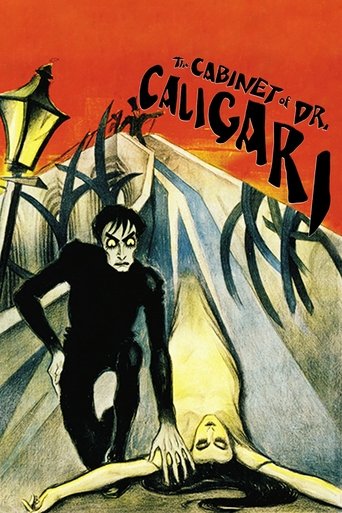
- German Expressionist cinema (particularly 'The Cabinet of Dr. Caligari')
- French Surrealist films
- Edgar Allan Poe's original short story
- The visual arts of Salvador Dalí and other Surrealists
- Early horror films from Universal Studios
- Literary Gothic tradition
- Psychological theories of Sigmund Freud
This film influenced
- Later avant-garde and experimental films of the 1930s-1950s
- Psychological horror films of the 1960s
- The visual style of Roger Corman's Poe adaptations
- Modern music videos that use superimposition and distortion
- Contemporary experimental horror films
- The visual techniques used in David Lynch's films
- Art horror films that prioritize atmosphere over narrative
Film restoration
The Fall of the House of Usher is preserved at the Museum of Modern Art in New York, which holds the only known surviving 35mm print of the film. The film has been restored and is considered to be in good condition for its age. The preservation status is secure, though the film remains relatively rare due to its avant-garde nature and limited original distribution. The Museum of Modern Art periodically includes the film in its retrospectives of early American avant-garde cinema. Digital copies have been made for archival purposes and for inclusion in film history collections. The preservation of this film is particularly important given its significance as an early example of American experimental cinema and its innovative visual techniques that were ahead of their time.
Where to watch
- Museum of Modern Art film screenings and retrospectives
- Avant-garde film festivals and experimental cinema showcases
- University film studies programs and academic institutions
- The Criterion Collection (potential future release)
- Specialized streaming services dedicated to classic and experimental cinema
- Film archives and cinematheques that specialize in avant-garde works
- Educational DVD collections of early experimental films