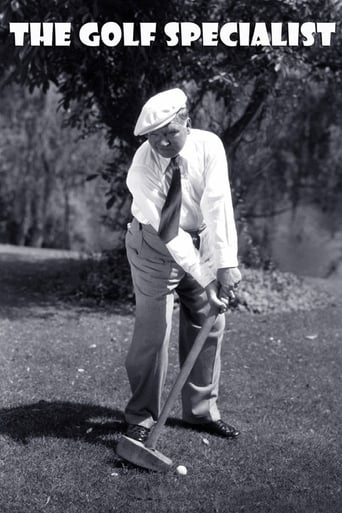
The Golfers
"Guest, Swor, and a golfer's ambition"
Keys: Space play/pause · ←/→ 10s · F fullscreen · M mute · </> speed
About this film
Charlie Guest (Charlie Guest) wants to be a golfer. Bert Swor (Bert Swor) is a famous golfer. Thelma Hill (Thelma Hill) only loves the best golfer. Follow Charlie as he tries to become the world's greatest golfer and win Thelma's love.
Cast & crew
More films like this
More Comedy films
View all →







More from Mack Sennett
View all →

More about this film
About the production
Release date1929-03-10
ProductionMack Sennett Comedies
Filmed inLos Angeles, California
This was one of Mack Sennett's comedy shorts produced during the transition period from silent films to sound. The film was likely shot on location at a golf course in the Los Angeles area, which was common for Sennett productions to add authenticity. As with many Sennett comedies, the golf sequences provided ample opportunity for physical comedy and slapstick gags, utilizing the natural hazards of a golf course for comedic effect.
Themes
Romantic competitionSocial aspirationSports as a metaphor for lifeThe underdog's strugglePhysical comedy and slapstick humor
Themes & topics
golfcompetitionromanceslapstickunderdogsportscomedysilent filmshort filmphysical comedyrivalryaspiration
Historical background
When The Golfers debuted in 1929, Mack Sennett Comedies was among the companies feeding nickelodeons and larger houses alike.
Why this film matters
Museum programs pair The Golfers with other 1929 works when discussing charlie guest (charlie guest) wants to be a golfer.
Making of
The production of 'The Golfers' took place during a tumultuous time in Hollywood history, as the industry was rapidly transitioning from silent films to 'talkies.' Mack Sennett, who had built his empire on silent comedy, was struggling to adapt to the new technology. The filming likely utilized natural lighting on location at a golf course, which was typical for Sennett's outdoor comedies. The cast would have rehearsed their physical comedy routines extensively, as timing was crucial for the slapstick gags. Andy Clyde, as the lead, would have performed many of his own stunts, which was common for comedy actors of this era. The golf setting provided unique opportunities for visual comedy, with balls flying in unexpected directions, clubs breaking, and characters falling into sand traps and water hazards. The film was probably shot quickly over a few days, as comedy shorts of this period were typically produced on tight schedules and budgets.
What critics said
Archival catalogs list The Golfers without citing major awards, matching its 1929 profile.
Did you know?
- This was one of the last comedy shorts Mack Sennett produced before his studio faced financial difficulties during the transition to sound films.
- Andy Clyde, who plays Charlie Guest, was a Scottish comedian who became a regular in Sennett's comedy shorts and later had a long career in films and television.
- Thelma Hill was one of the Sennett Bathing Beauties before becoming a featured actress in his comedies.
- Harry Gribbon, who appears in the film, was the brother of actor James Gribbon and a veteran comedy performer from the Keystone days.
- The film was released just months before the stock market crash of 1929, which would dramatically impact the film industry.
- Golf was becoming increasingly popular in America during the 1920s, making it a timely subject for a comedy film.
- This short was likely filmed during the early sound era but may have been released as a silent film with musical accompaniment.
- Mack Sennett, known as 'The King of Comedy,' pioneered many slapstick techniques that would be used in this golf comedy.
- The film represents the tail end of the silent comedy short era, which would largely disappear by the early 1930s.
- Many of the golf gags in the film were likely improvised on set, a common practice in Sennett productions.
Visual style
The cinematography in 'The Golfers' would have been typical of late-1920s comedy shorts, utilizing static camera positions for most scenes with occasional tracking shots to follow the action. The outdoor golf course setting provided natural lighting, which was a practical choice for Sennett productions working with limited budgets. The camera work would have been designed to clearly capture the physical comedy and ensure that gags were visible to the audience. Wide shots would establish the golf course setting, while medium shots would focus on the actors' performances and reactions. The cinematographer would have paid special attention to framing the golf-related gags, such as balls flying off course or characters' exaggerated swings. The film was likely shot on 35mm black and white film stock, standard for the era. The visual style would emphasize clarity over artistic innovation, as the primary goal was to showcase the comedy rather than create visual poetry.
Innovations
As a late-1920s comedy short, 'The Golfers' does not appear to have introduced any significant technical innovations. The film would have utilized standard camera and editing techniques of the era. The production might have employed some trick photography for the golf gags, such as stop-motion effects to show balls disappearing or reappearing in unexpected places. The outdoor filming on a golf course presented some technical challenges in terms of lighting and sound control, though these were managed through standard practices of the time. The film represents the refinement of established silent comedy techniques rather than technical breakthroughs. The timing of the physical comedy sequences demonstrates the sophisticated understanding of comedic pacing that had developed over two decades of silent film production. The intertitles would have been carefully crafted to provide necessary exposition while maintaining the comedic rhythm of the film.
Music
As a 1929 release during the transition to sound, 'The Golfers' was likely presented as a silent film with musical accompaniment. Theaters would have provided live musical performances, typically with a piano or small orchestra playing popular songs of the era along with mood-appropriate classical pieces. The music would have been synchronized to enhance the comedy, with lively tunes accompanying the slapstick sequences and romantic melodies during the scenes between Charlie and Thelma. Some theaters might have used compiled cue sheets or photoplay music specifically selected for golf-themed films. If the film was released very late in 1929, it's possible it could have had a synchronized musical score using processes like Movietone or Photophone, but it would not have contained spoken dialogue. The absence of recorded sound meant that the comedy relied entirely on visual gags, physical performance, and intertitles for storytelling.
Famous quotes
I may not be the best golfer, but I'm the most determined!" - Charlie Guest
A woman's heart is like a golf course - full of traps and hazards!" - Narrator intertitle
In golf as in love, it's not how you start but how you finish that counts!" - Intertitle
Memorable scenes
- The opening sequence where Charlie attempts to learn golf basics, resulting in clubs flying and balls going in every direction except forward
- The tournament finale where Charlie's unorthodox techniques accidentally work to his advantage
- The romantic scene where Charlie tries to impress Thelma with his supposed golfing knowledge
- The montage of Charlie's disastrous practice sessions, each more comical than the last
What audiences thought
Audience reception for 'The Golfers' in 1929 would have been tied to the overall popularity of comedy shorts in theater programs. These films were designed to provide light entertainment between feature presentations, and audiences typically enjoyed the familiar format and predictable gags. The golf theme would have resonated with the growing number of Americans who were taking up the sport during the 1920s golf boom. Andy Clyde, as the star, had developed a following from his previous comedy work, which would have attracted his fans to the short. The physical comedy and slapstick elements were universally understood and appreciated by audiences of all ages and backgrounds. However, with the rapid transition to sound films, audiences were increasingly drawn to talking pictures, and silent shorts like this one were becoming less appealing by 1929. The film's release just before the stock market crash also meant that its theatrical run was likely cut short as theaters struggled with declining attendance during the early Depression years.
Film connections
Influenced by
- Keystone comedy style
- Harold Lloyd's sports comedies
- Buster Keaton's physical comedy
- Charlie Chaplin's romantic comedy elements
- Earlier Mack Sennett productions
This film influenced
- Later golf comedies such as 'Caddyshack' and 'Happy Gilmore'
- Sports comedy shorts of the 1930s
- Underdog sports films
- Physical comedy in later cinema
Film restoration
Like many comedy shorts from the late 1920s, 'The Golfers' is considered to be in a precarious preservation state. While Mack Sennett's films were distributed widely, many of his later shorts have been lost or exist only in incomplete copies. The film may survive in film archives such as the Library of Congress, the Academy Film Archive, or the UCLA Film & Television Archive, but access is likely restricted to researchers and preservationists. Some fragments or clips might be available through specialized film collections or historical societies. The transition to sound led many studios to discard or neglect their silent film libraries, resulting in significant losses from this period. Any surviving copies would be on highly flammable nitrate film, requiring careful preservation efforts. The film has not been commercially released on home video formats and is not available on streaming platforms, indicating its status as a rare or lost film.
Where to watch
- As a rare or potentially lost film from 1929, 'The Golfers' is not currently available through mainstream streaming services or home video releases. Film enthusiasts interested in viewing this short may need to contact film archives such as the Library of Congress, the Academy Film Archive, or the Museum of Modern Art's Film Department to inquire about access to any existing copies. Some specialized film societies or classic cinema organizations occasionally screen rare silent shorts in their programs, so checking with local film societies or classic film clubs might provide viewing opportunities. The film may occasionally appear in curated programs of silent comedy at film festivals or special events. Researchers and serious film historians might be able to access the film through academic channels or by contacting the Mack Sennett estate or related film preservation organizations.