

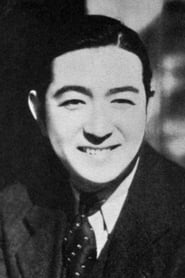
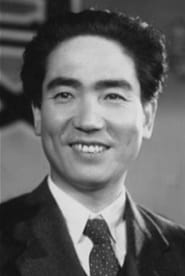



The Invisible Man Appears
"The Invisible Man Appears (1949)"
Keys: Space play/pause · ←/→ 10s · F fullscreen · M mute · </> speed
About this film
A scientist successfully creates an invisibility serum, only to be kidnapped by a gang of thugs who wish to use the formula to rob a priceless jewel.
Cast & crew
More Horror films
View all →





More about this film
About the production
Release dateAugust 16, 1949
Box officeBox office figures not documented for this period of Japanese cinema
ProductionDaiei Film Co., Ltd.
Filmed inTokyo, Japan, Daiei Studios
The film was produced during a challenging period for Japanese cinema, following World War II when resources were scarce. The invisibility effects were achieved using early techniques including matte photography and careful wire work. Production was complicated by post-war restrictions and limited access to film equipment and materials.
Themes
Scientific ethics and responsibilityThe corrupting influence of greedPost-war anxiety about social disorderThe dangers of unchecked scientific progressRedemption and moral choice
Themes & topics
invisibilityscientistkidnappingjewel theftgang of criminalsformulapolice investigationTokyopost-war Japanscience experimentcrime spreemysterious disappearances
Historical background
Contemporary records classify The Invisible Man Appears (1949) as 1949 japanese film, placing it within World War II and immediate postwar filmmaking.
Why this film matters
The Invisible Man Appears (1949) helps trace genre evolution, performer careers, and the material conditions of sound exhibition.
Making of
The production faced numerous challenges in post-war Japan, including limited film stock and equipment. The special effects team, led by special effects director Eiji Tsuburaya (who would later gain fame for his work on Godzilla and other tokusatsu films), had to innovate with limited resources to create convincing invisibility effects. The casting choices were significant, as Chizuru Kitagawa was one of the rising stars of Daiei's roster. The film's crime elements were carefully crafted to pass the censorship requirements of the American occupation forces, who were sensitive to films that might glorify criminal behavior during the reconstruction period.
What critics said
Retrospective notes on The Invisible Man Appears emphasize its value as a period production rather than blockbuster reception.
Did you know?
- This was one of the first Japanese science fiction films to feature an invisible man character, predating more famous Japanese sci-fi works like Godzilla (1954)
- The film was heavily influenced by Universal's 'The Invisible Man' series from the 1930s and 1940s
- Daiei Film would later become famous for the Gamera series and Akira Kurosawa's later films
- The invisibility effects were considered quite advanced for Japanese cinema at the time
- The film was released just four years after the end of WWII, during Japan's post-war reconstruction period
- Original prints of the film are extremely rare, with some sources suggesting it may be partially or completely lost
- The 'Blue Star' diamond in the plot was fictional but represented the fascination with precious stones in post-war society
- Director Nobuo Adachi was primarily known for melodramas before tackling this science fiction project
- The film's criminal elements reflected social anxieties about rising crime rates in post-war Japan
- The scientist character embodied Japan's post-war emphasis on scientific advancement and technological progress
Awards & recognition
- No documented awards for this film
Visual style
The cinematography, handled by Masao Tamai, employed innovative techniques for the invisibility sequences, including matte photography and careful composition to suggest the presence of an invisible character. The film used chiaroscuro lighting effects to enhance the horror atmosphere, particularly in scenes involving the invisible man's criminal activities. The visual style was influenced by American film noir, which was popular in Japan at the time, with its dramatic shadows and urban settings.
Innovations
The film's most significant technical achievement was its implementation of invisibility effects using the limited resources available in post-war Japan. The special effects team, which included future tokusatsu pioneer Eiji Tsuburaya, developed innovative techniques using wire work, matte photography, and careful editing to create the illusion of invisibility. These effects, while primitive by modern standards, were considered advanced for Japanese cinema of the period and demonstrated the technical ingenuity of Japanese filmmakers despite material shortages.
Music
The musical score was composed by Seiichi Karashima, who created a suspenseful atmosphere using traditional orchestral arrangements combined with more modern, dissonant elements to enhance the science fiction and horror aspects. The soundtrack made effective use of silence during the invisibility sequences to build tension, a technique that would become common in later Japanese horror films.
Famous quotes
Science without morality is a weapon without a conscience
To be unseen is to be untouchable, but also to be alone
The greatest discovery can become the greatest curse
Invisibility doesn't make you invisible to justice
Memorable scenes
- The first successful invisibility test where the scientist gradually disappears from view
- The jewel heist sequence where the invisible man moves through high-security defenses
- The climactic confrontation where the invisible man must choose between crime and redemption
- The laboratory scenes showing the creation of the invisibility serum
What audiences thought
The film reportedly performed well with Japanese audiences in 1949, who were drawn to its mix of scientific wonder and criminal excitement. Post-war Japanese audiences were particularly receptive to films featuring advanced technology and scientific themes, reflecting the nation's hopes for recovery through technological advancement. The crime elements also resonated with contemporary concerns about social order in the chaotic post-war years.
Film connections
Influenced by
- Universal's 'The Invisible Man' series (1933-1944)
- American film noir
- Post-war Japanese cinema's social realist tradition
- Western science fiction films of the 1940s
This film influenced
- The Invisible Man vs. The Human Fly (1957)
- Tokyo SOS (1957)
- Later Japanese tokusatsu and science fiction films of the 1950s
Film restoration
The film is believed to be partially or completely lost, as is common with many Japanese films from the immediate post-war period. Some sources suggest fragments or prints may exist in private collections or archives, but no complete version is currently widely available for viewing. This makes it among the leading sought-after 'lost' Japanese science fiction films among cinema historians and enthusiasts.
Where to watch
- Currently not commercially available due to preservation status
- Film archives and specialized cinema museums may hold prints
- Occasionally screened at rare film festivals or retrospectives
- Some fragments may exist in private collections