

The Joe Louis Story
"The life and career of Heavyweight Champion Joe Louis."
Keys: Space play/pause · ←/→ 10s · F fullscreen · M mute · </> speed
About this film
The life and career of Heavyweight Champion Joe Louis, who held the title for 12 years--longer than any other boxer in history--and who had to not only battle opponents inside the ring and racism outside it.
Cast & crew
More films like this
More Drama films
View all →







More from Robert Gordon
View all →
More about this film
About the production
Release dateMarch 1953
ProductionUnited Artists, Edward Small Productions
Filmed inHollywood, California
The film was produced by Edward Small, known for producing biographical films about famous personalities. Coley Wallace, who portrayed Joe Louis, was himself a former heavyweight boxer who had actually fought Joe Louis in an exhibition match. The production faced challenges in recreating famous boxing matches from different eras while maintaining authenticity. The film was made on a relatively modest budget typical of B-movie biographical dramas of the early 1950s.
Themes
Racial discrimination and prejudiceThe burden of being a symbol for one's raceThe American DreamSports as a vehicle for social changeThe price of fame
Themes & topics
boxingbiographyheavyweight championracismsports1930s1940sAfrican Americanchampionfightdiscriminationhistoricalsports herosegregationNazi Germany
Historical background
Exhibitors around 1953 slotted The Joe Louis Story into mixed bills where shorts, newsreels, and features shared the same program.
Why this film matters
Reference works on 1953 cinema cite The Joe Louis Story when tracing genre and regional production patterns.
Making of
The production of The Joe Louis Story was notable for its attempt to bring authenticity to the boxing sequences. Joe Louis himself was involved as a technical consultant, helping to recreate his famous fighting style and ring strategies. Coley Wallace, despite being a real boxer, had to undergo extensive training to accurately portray Louis's distinctive boxing technique. The film's production team worked closely with boxing historians to ensure the recreation of famous fights was as accurate as possible given the budget constraints. Director Robert Gordon, who had experience with sports films, focused on the human drama behind the boxing matches, emphasizing Louis's struggles with racism and the pressure of representing African Americans during a time of segregation. The film was shot quickly to capitalize on Louis's recent retirement and the public's continued interest in his story.
What critics said
Trade papers near 1953 listed The Joe Louis Story as program material rather than headline art cinema.
Did you know?
- Coley Wallace, who played Joe Louis, was a real heavyweight boxer who had fought Joe Louis in an exhibition match in 1948
- The film was released just a few years after Joe Louis's retirement from boxing in 1949
- Joe Louis himself served as a technical advisor for the boxing sequences in the film
- The movie covers Louis's famous fights against Max Schmeling, which had significant political implications during the rise of Nazi Germany
- This was one of the first major Hollywood films to focus on an African American sports hero
- The film was produced by Edward Small, who specialized in biographical pictures about famous figures
- Despite being about one of boxing's greatest champions, the film was made on a relatively low budget
- The movie was released during the early Civil Rights era, making its themes particularly relevant
- Paul Stewart, who plays Louis's manager, was a white actor often cast in authoritative roles
- The film attempts to cover Louis's entire career in under 90 minutes, necessitating significant condensation of events
Visual style
The cinematography of The Joe Louis Story was handled by Stanley Cortez, though working within the constraints of a modest budget. The film employed standard black and white photography typical of early 1950s productions. The boxing sequences utilized dynamic camera work to convey the action, with close-ups during fight scenes to emphasize the physicality and emotion of the matches. Cortez used lighting techniques to create dramatic contrasts between the ring action and the personal moments of Louis's life. The film's visual style was straightforward and functional, prioritizing clarity and storytelling over artistic experimentation. The recreation of different historical periods was achieved primarily through costumes and set design rather than distinctive cinematographic techniques.
Innovations
The Joe Louis Story did not feature significant technical innovations, but it did achieve notable results in recreating historical boxing matches within budget constraints. The film's production team developed techniques for simulating crowd reactions and fight choreography that appeared realistic on screen. The use of multiple camera angles for the boxing sequences was more sophisticated than typical for low-budget productions of the era. The film also employed makeup and prosthetics to age the characters appropriately throughout Louis's career span. While not technically groundbreaking, the film succeeded in its technical execution of boxing sequences, which were crucial to the story's effectiveness. The production's ability to recreate different time periods and locations within limited resources demonstrated resourceful filmmaking techniques common to Hollywood's B-movie productions.
Music
The musical score for The Joe Louis Story was composed by Herschel Burke Gilbert, who created music that reflected both the dramatic tension of the boxing matches and the emotional journey of the protagonist. The soundtrack incorporated jazz and blues elements that were popular during the eras depicted in the film, helping to establish the historical context. Gilbert's score emphasized the emotional weight of Louis's struggles and triumphs, using musical motifs to represent different aspects of his life. The fight scenes featured percussive, rhythmic music that enhanced the boxing action. The soundtrack, while not groundbreaking, effectively supported the narrative and helped convey the film's themes of struggle and achievement. The music also reflected the cultural significance of Louis's story within the African American community.
Famous quotes
He's not just fighting for himself, he's fighting for every colored person in this country.
In the ring, we're all equal. It's when we step outside that the problems begin.
A champion doesn't just win fights, he carries the hopes of his people.
They can hate me for my color, but they have to respect me for my ability.
Every punch I throw is for those who can't fight back.
Memorable scenes
- The climactic rematch against Max Schmeling, where Louis avenges his earlier defeat and strikes a symbolic blow for democracy
- The training montage showing Louis's preparation for his title fight against James J. Braddock
- The emotional scene where Louis faces discrimination at a southern hotel despite being champion
- The final fight scene where an aging Louis struggles in the ring, representing the passage of time and the challenges of maintaining greatness
- The locker room scene where Louis's manager delivers a motivational speech about representing his race
What audiences thought
Audience reception to The Joe Louis Story was generally positive, particularly among African American viewers who appreciated seeing their hero's story told on the big screen. The film found its primary audience in urban areas with significant African American populations, where Joe Louis remained a beloved figure. Boxing fans of all races were drawn to the film for its recreation of famous matches. However, the film's limited budget and lack of major stars resulted in modest box office performance compared to bigger Hollywood productions of the era. Over time, the film has developed a cult following among classic film enthusiasts and boxing historians who value it as a historical document. The movie's availability on television and home video has helped it reach new audiences interested in sports history and African American cinema.
Film connections
Influenced by
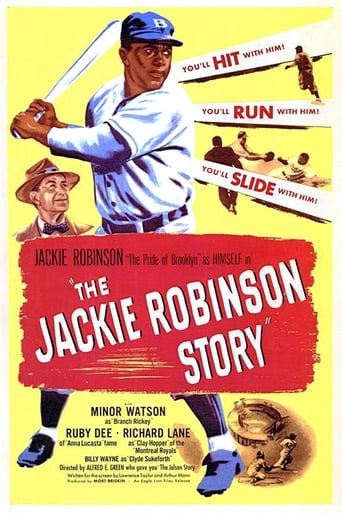
- The Jackie Robinson Story (1950)
- Gentleman's Agreement (1947)
- Body and Soul (1947)
- Champion (1949)
This film influenced
- The Great White Hope (1970)
- Ali (2001)
- Cinderella Man (2005)
- The Hurricane (1999)
Film restoration
The Joe Louis Story has been preserved through various formats over the years. While not considered a lost film, original prints have deteriorated over time. The film exists in the archives of major film institutions and has been made available through various home media releases. Some restoration work has been done for DVD releases, though it has not received the comprehensive restoration treatment given to more famous classic films. The movie occasionally appears on classic movie channels and streaming services specializing in vintage cinema. Its preservation status is considered stable, with multiple copies existing in both institutional and private collections.
Where to watch
- Classic movie streaming services
- DVD releases from public domain distributors
- Classic film television channels
- Film archive screenings
- Online platforms specializing in vintage cinema