The Lord and the Peasant
"Lord desires a peasant maiden already promised"
Keys: Space play/pause · ←/→ 10s · F fullscreen · M mute · </> speed
About this film
In a peasant's cot we find a fair, young maiden who is loved by an honest, true-hearted peasant lad, while yonder stands the manor of Glenwood with its noble lord, who chanced to pass by one fair day and there noble eyes met peasant meekness and love found work a-plenty to do. But maiden thought naught of my lord o' the manor, nor so much as gave him cause to hope that all his castles and lands could win her heart from the true peasant lad who had gone forth in the world to win humble living for his bride to be. It was then that Dame Poverty came knocking at the peasant's door and upon her hee…
Cast & crew
More films like this

More Drama films
View all →







More from J. Searle Dawley
View all →

More about this film
About the production
Release dateMarch 1912
Box officeBox office records not preserved for this era
ProductionEdison Manufacturing Company
Filmed inEdison Studios, Bronx, New York
This was one of many one-reel dramas produced by Edison Studios during their peak production period. The film was shot on indoor sets at the Edison studio facility in the Bronx, which was one of the first purpose-built film production studios in America. The production utilized natural lighting from large windows in the studio, a common practice before sophisticated artificial lighting was developed.
Themes
Class division and social hierarchyTrue love versus material wealthLoyalty and faithfulnessPoverty and hardshipMoral choice and sacrifice
Themes & topics
Historical background
Made during the nickelodeon years around 1912, The Lord and the Peasant reached audiences through theatrical programs, fairground booths, or specialized distribution channels typical of its generation. In a peasant's cot we find a fair, young maiden who is loved by an honest, true-hearted peasant lad, while yonder. Historians now read such works for what they reveal about production methods, national taste, and the expanding vocabulary of screen narrative.
Why this film matters
Archivists and programmers still screen The Lord and the Peasant when tracing how popular entertainment evolved. Its subject—in a peasant's cot we find a fair, young maiden who is loved by an honest, true-hearted peasant—gives later viewers tangible evidence of what drew crowds in the silent period. Home video, restorations, and festival sidebars keep the title circulating among students of film history.
Making of
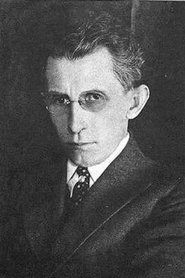
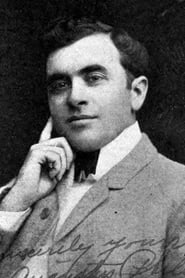
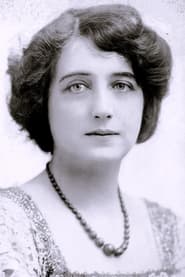
The Lord and the Peasant was produced during a transitional period in American cinema when Edison Studios was still trying to maintain dominance in the industry they had helped create. Director J. Searle Dawley, who had been with Edison since 1907, was known for his efficient shooting style and ability to complete films quickly. The production likely took only 1-2 days to shoot, typical for one-reel films of this era. The cast, Augustus Phillips and Miriam Nesbitt, were regular performers at Edison and had developed a working chemistry that made them reliable choices for romantic dramas. The film's sets were designed to create the contrast between the humble peasant cottage and the luxurious manor house, using painted backdrops and minimal furniture to suggest the different social classes. The production team would have worked under the constraints of early film technology, with cameras mounted on fixed tripods and lighting dependent on the weather and time of day.
What critics said
Original trade coverage treated The Lord and the Peasant as routine program filler rather than a landmark production—common for shorts. Later criticism emphasizes preservation, stylistic comparison with contemporaries, and whatever cast or crew names later gained prominence. Contemporary writing is mostly historical: assessing completeness, influence, and place in a director's or studio's catalog.
Did you know?
- Director J. Searle Dawley was one of Edison's most prolific directors, having directed over 200 films by 1912
- Augustus Phillips later gained fame for playing Dr. Jack Griffin in the 1933 film 'The Invisible Man'
- Miriam Nesbitt was married to fellow actor Marc McDermott and they frequently appeared together in Edison productions
- The film was released during the height of the 'one-reel era' when most films were 10-15 minutes long
- Edison Studios was still using their 35mm format with a 1.33:1 aspect ratio, which would become the standard for silent films
- The film's intertitles were likely created using Edison's own stencil lettering process
- This was one of the last years Edison remained competitive before losing market share to independent producers
- The film was distributed through the General Film Company, Edison's distribution arm
- Original prints were on nitrate film stock, which explains why many Edison films from this period are now lost
- The story reflects the popular 'rags-to-riches' theme that dominated early American cinema
Visual style
The cinematography for 'The Lord and the Peasant' would have been typical of Edison Studios productions in 1912. The film was likely shot using the Edison Studio's standard 35mm cameras with fixed focal length lenses. Lighting would have relied primarily on natural light from the studio's large windows, supplemented by reflectors to soften shadows. The camera work would have been static, with the camera mounted on a tripod throughout filming, as dollies and other movement equipment were not yet in common use. Composition would have followed the theatrical conventions of the time, with actors positioned center frame and action staged for clarity rather than visual dynamism. The film would have been shot at approximately 16 frames per second, the standard speed for silent films of this period. The contrast between the peasant cottage and manor house sets would have been emphasized through lighting and set design to visually represent the class divide central to the story.
Innovations
While 'The Lord and the Peasant' was not technically innovative, it represents the standard production techniques of 1912. The film was produced using Edison's established workflow and equipment, which represented some of the most advanced technology of the time. The use of interior sets with controlled lighting demonstrated the industry's move away from outdoor filming toward studio production. The film's editing, likely consisting of simple cuts between scenes, followed the continuity editing principles that were becoming standard practice. The intertitles, created using Edison's stencil process, represented the sophisticated titling methods the company had developed. The film's one-reel format (approximately 1,000 feet of film) was the industry standard and allowed for efficient projection and distribution. The production's adherence to Edison's quality control standards ensured consistent technical quality, which was a selling point for the company's films.
Music
As a silent film, 'The Lord and the Peasant' would have been accompanied by live music during theatrical exhibition. The specific musical score is not documented, as was typical for one-reel films of this era. Theaters would have used their house musicians to provide appropriate accompaniment, often drawing from published collections of photoplay music. The accompaniment would likely have included romantic themes for the love story, dramatic music for the illness scenes, and stately music for the lord's appearances. Larger theaters might have employed small orchestras, while smaller venues would have used a piano or organ. The music would have been synchronized with the film's action and intertitles, with musicians following cue sheets provided by the distributor or improvising based on the visual content. The emotional tone of the story would have been heavily influenced by the quality and appropriateness of the musical accompaniment.
Famous quotes
'In a peasant's cot we find a fair, young maiden who is loved by an honest, true-hearted peasant lad'
'Noble eyes met peasant meekness and love found work a-plenty to do'
'Dame Poverty came knocking at the peasant's door'
'All his castles and lands could win her heart from the true peasant lad'
Memorable scenes
- The contrasting introduction of the humble peasant cottage and the grand Glenwood Manor, establishing the class divide
- The moment the lord first sees the maiden, capturing the instant of romantic fascination across social boundaries
- The fever scene showing the younger sister's illness, heightening the family's desperation
- The lord's formal courtship of the maiden, presenting her with the impossible choice between love and security
What audiences thought
Audience reception in 1912 was primarily measured by box office returns and theater bookings, though specific records for individual one-reel films are scarce. Films like 'The Lord and the Peasant' were programmed as part of varied bills that included newsreels, comedies, and other short subjects. The romantic theme and clear moral choice would have appealed to the predominantly working-class and immigrant audiences who made up the majority of early cinema patrons. The class dynamics in the story would have resonated with audiences experiencing the rapid social changes of the Progressive Era. Edison films were generally well-received due to the company's reputation for quality and reliability, though by 1912 they were facing increasing competition from independent producers. The film's success would have been measured by its ability to be booked in theaters across the country and its potential for repeat bookings in different markets.
Film connections
Influenced by
- Literary traditions of pastoral romance
- Victorian melodrama
- Shakespearean class themes
- Contemporary stage plays
- Earlier Edison one-reel dramas
- European literary romanticism
- Social reform literature of the Progressive Era
This film influenced
- Later Edison romantic dramas
- Class-themed silent films of the 1910s
- Hollywood romantic melodramas
- Films exploring social mobility themes
Film restoration
The film is currently considered lost. Like approximately 90% of American silent films, no complete copies of 'The Lord and the Peasant' are known to exist in any film archive or collection. This loss is typical of Edison Studios films from this period, as the company's nitrate film prints deteriorated over time and were not systematically preserved. The Edison Manufacturing Company's film collection was not comprehensively archived, and many of their one-reel films from 1912 have disappeared completely. Only the plot summary and production information survive through contemporary trade publications and studio records.
Where to watch
- No known viewing sources available - the film is considered lost