

The Navigator
"Lost at sea with the wrong sweetheart"
Keys: Space play/pause · ←/→ 10s · F fullscreen · M mute · </> speed
About this film
Wealthy Rollo Treadway books a honeymoon cruise after Betsy O'Brien rejects his proposal, then both land aboard the wrong ship and drift helplessly toward open sea.
Cast & crew
More films like this

More Comedy films
View all →






More from Buster Keaton
View all →




More about this film
About the production
Release dateOctober 13, 1924
Budget$300,000 (an extraordinarily high budget for a comedy in 1924)
Box officeHighly successful, grossing over $1 million and becoming one of Keaton's most profitable films
ProductionBuster Keaton Productions, Metro Pictures Corporation
Filmed inMetro Studios, Hollywood, California, Pacific Ocean off California coast, Special water tanks constructed for underwater sequences
Keaton purchased and extensively modified the decommissioned USS Oregon (a battleship) for filming. A massive 40,000-gallon water tank was built specifically for underwater scenes. The production employed over 200 crew members and took 12 weeks to film. Keaton insisted on performing all his own stunts, including the perilous diving bell sequence where he nearly drowned when the safety mechanism failed.
Themes
Incompetence vs. capabilityClass and social statusRomance through adversityTechnology and modernitySurvival and adaptation
Themes & topics
shiphoneymoonsubmarinedivingstormcookingnavigationmarriage proposalwealthsurvivaladventureromancecomedysilent filmoceanbattleship
Historical background
Keaton's 1924 maritime comedy was among the most expensive silent productions of its day, shot partly aboard a decommissioned ocean liner.
Why this film matters
The Navigator's massive ship sets and underwater gags influenced later seafaring comedies and remain staples of Keaton retrospectives.
Making of
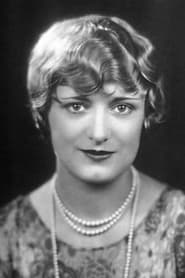
The production of 'The Navigator' was especially ambitious undertakings of Buster Keaton's career. Keaton's obsession with authenticity led him to purchase an entire decommissioned battleship rather than use studio sets. The USS Oregon had to be towed from the naval yard to the filming location, a massive logistical challenge. For the underwater sequences, Keaton's team constructed enormous tanks and developed innovative camera housing to film beneath the surface. The diving bell sequence was particularly dangerous - during one take, the safety mechanism malfunctioned, and Keaton was trapped underwater with limited oxygen. His quick thinking saved him from drowning. The film's elaborate gags required extensive planning, with Keaton and his team spending weeks choreographing each sequence. The submarine attack scenes involved real naval vessels and required coordination with the U.S. Navy. Kathryn McGuire, despite being primarily a dramatic actress, proved adept at physical comedy and performed many of her own stunts alongside Keaton.
What critics said
Critics praised its scale and precision; it ranks among Keaton's most commercially successful silent features.
Did you know?
- The ship used in filming was the actual decommissioned battleship USS Oregon, which Keaton purchased for $25,000 and extensively modified
- Keaton spent an additional $75,000 on sets and equipment, making it among the costliest comedies of the silent era
- The famous underwater diving bell sequence required Keaton to hold his breath for up to three minutes per take
- A real submarine was rented for the attack sequences, costing $500 per day (a fortune in 1924)
- The film was inspired by a newspaper story about a ship that accidentally set sail without passengers
- Keaton and his co-star Kathryn McGuire performed their own stunts, including the dangerous deep-sea diving scenes
- The ship was scrapped after filming, as no one wanted to purchase such a massive vessel
- The cooking scene where Keaton tries to prepare breakfast took three days to film due to the complexity of the gags
- The film's success convinced studios to invest more heavily in feature-length comedies
- Many of the maritime gags were improvised by Keaton during filming
Awards & recognition
- No major awards were given for silent comedies in 1924, though it received several honors from film organizations
Visual style
The cinematography by Elgin Lessley and Byron Houck was groundbreaking for its time, particularly in the underwater sequences. The film employed innovative camera techniques including underwater photography using specially designed waterproof camera housings. The diving bell sequence required multiple cameras positioned both above and below water to capture the action seamlessly. The ship's massive scale was emphasized through wide shots that showcased the vessel's enormity against the ocean. The film used tracking shots and crane movements that were technically advanced for 1924, particularly in scenes following Keaton through the ship's corridors. The contrast between the vast, empty ship and the tiny, helpless protagonists created powerful visual irony. The lighting in the underwater scenes was particularly notable, using artificial light sources to create an eerie, otherworldly atmosphere that enhanced the comedy.
Innovations
The Navigator pioneered several technical innovations in cinema. The underwater photography sequences were revolutionary, requiring the development of waterproof camera equipment and specialized lighting techniques for underwater filming. The film's use of a full-scale battleship as a set was unprecedented in comedy filmmaking. The diving bell sequence involved complex mechanical rigging and safety systems that were cutting-edge for the time. The submarine attack scenes utilized miniatures and special effects that were highly sophisticated for 1924. The film's seamless integration of location shooting, studio work, and model work set new standards for visual effects. Keaton's team developed new techniques for simulating ocean storms within controlled environments. The film's success in making the impossible look plausible influenced the development of special effects throughout the industry.
Music
As a silent film, The Navigator originally had no synchronized soundtrack, but was accompanied by live musical performances in theaters. The suggested score included popular songs of the era as well as classical pieces. Modern restorations have featured newly composed scores by various artists. The most acclaimed modern score was composed by Carl Davis in 1995, which captures the film's nautical themes and comic timing. Other notable scores include those by Robert Israel and the Alloy Orchestra. The music typically incorporates maritime themes, using instruments like the ship's bell and sea shanty melodies to enhance the ocean setting. The rhythmic nature of the accompaniment is crucial to accentuating Keaton's precise physical comedy.
Famous quotes
Rollo Treadway: (after proposing) 'I've decided we should get married. I'll go get the license tomorrow.'
Intertitle: 'Two helpless society people adrift on an ocean liner with no crew!'
Intertitle: 'The Navigator - The biggest ship that ever sailed the seas!'
Intertitle: 'Alone on the boundless ocean - with a submarine in pursuit!'
Memorable scenes
- The opening scene where Rollo attempts to propose to Betsy using a mechanical device that malfunctions spectacularly
- The scene where Rollo and Betsy attempt to cook breakfast in the ship's massive industrial kitchen, resulting in chaos
- The underwater diving bell sequence where Keaton battles a swordfish while trying to repair the hull
- The scene where the two protagonists try to navigate the ship using charts and instruments they don't understand
- The submarine attack sequence where Keaton uses clever tricks to outsmart the enemy vessel
- The final scene where the ship is destroyed in a spectacular explosion as the couple reaches safety
What audiences thought
The Navigator was a massive commercial success upon its release, becoming one of the highest-grossing films of 1924. Audiences were thrilled by the spectacular maritime setting and Keaton's death-defying stunts. The film played to packed theaters across America and was equally successful internationally. Contemporary audience reports describe people laughing so hard they missed subsequent gags, requiring multiple viewings. The film's popularity helped establish Keaton as a major box office draw alongside Chaplin and Lloyd. Modern audiences continue to embrace the film; it regularly appears in revivals at film festivals and art houses. The film's universal humor and visual gags transcend the silent era barrier, making it accessible to contemporary viewers who may not typically watch silent films.
Film connections
Influenced by
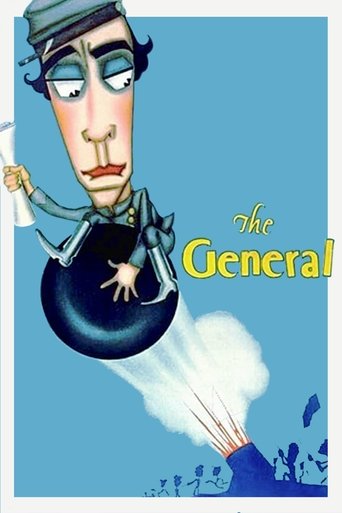
- The General (1926) - Keaton's later work built on The Navigator's success
- Steamboat Bill, Jr. (1928) - expanded on the disaster comedy elements
- Modern Times (1936) - Chaplin's film borrowed themes of man vs. machine
This film influenced
- Captain Ron (1992)
- Overboard (1987)
- The Love Boat (TV series)
- Speed 2: Cruise Control (1997)
- Titanic (1997) - for its ship-based romance elements
Film restoration
The Navigator is well-preserved with complete copies existing in several film archives. The film was restored by the Cohen Film Collection in 2010, producing a high-definition version from original nitrate elements. The Library of Congress maintains a preserved copy in their collection. The film has survived in excellent condition compared to many silent films, as its popularity ensured multiple copies were made and stored carefully. The underwater sequences, which used special film stock, have been particularly well-preserved through modern restoration techniques.
Where to watch
- The Criterion Channel
- Kino Lorber Blu-ray/DVD releases
- The Cohen Film Collection DVD
- Public domain versions on YouTube and Internet Archive
- TCM (Turner Classic Movies) periodic broadcasts
- Various streaming services specializing in classic cinema