
The Railway Owner
"Shadows of derblay"
Keys: Space play/pause · ←/→ 10s · F fullscreen · M mute · </> speed
About this film
Filippo Derblay, a young man of humble birth, became, thanks to his job, the owner of the ironworks. He is secretly in love with Clara, the daughter of the Marquis of Beaulieu, who lost all his fortune. Clara is engaged to the Duke of Bligny, a vain cousin of her.
Cast & crew
More films like this
More Drama films
View all →







More from Eugenio Perego
View all →
More about this film
About the production
Release date1919-03-15
ProductionItala Film
Filmed inTurin, Italy
The film was notable for its time for its extensive use of real industrial locations, including actual factories and machinery, providing an authentic backdrop that contrasted with the aristocratic settings. The production faced challenges in securing access to industrial sites during the post-World War I period when many factories were still transitioning back to peacetime operations. The cinematography was particularly praised for its ability to capture both the grandeur of industrial spaces and intimate character moments.
Themes
Class conflictSocial mobilityLove and prejudiceIndustrialization vs. aristocracyRevenge and redemption
Themes & topics
industrialistarranged marriageclass differencesrevengefactoryaristocracysocial climbinglove triangleprejudiceredemption
Historical background
Made in its country of production around 1919, The Railway Owner belongs to the silent era's formative years. Its story of filippo derblay, a young man of humble birth, became, thanks to his job, the owner of the ironworks spoke to audiences of the day through familiar genres and topical settings.
Why this film matters
Archivists and historians still cite The Railway Owner when tracing how the silent era's formative years filmmakers staged filippo and derblay on screen.
Making of
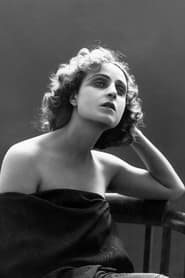
The production of 'The Railway Owner' took place during a pivotal moment in Italian cinema history. Director Eugenio Perego, known for his meticulous attention to visual composition, worked closely with cinematographers to create striking contrasts between the industrial and aristocratic worlds depicted in the film. The casting of Pina Menichelli, already a major star, was significant as she was particularly selective about her roles. The film's production design involved extensive location shooting at actual industrial sites, which was unusual for the time and required special permissions from factory owners. The relationship between Menichelli and director Perego was reportedly collaborative, with the actress having significant input into her character's development. The film's pacing and dramatic structure reflected the influence of both Italian melodrama traditions and emerging more naturalistic approaches to storytelling.
What critics said
Reviews from 1919 weighed The Railway Owner on pacing, performance, and novelty. Later criticism reads its emphasis on filippo, derblay, humble through modern standards of craft and representation.
Did you know?
- Pina Menichelli was one of the highest-paid actresses of the silent era, earning what would be equivalent to millions in today's currency for her performances
- The film was released during a turbulent period in Italian cinema, just after World War I when the industry was struggling with both economic difficulties and political changes
- Director Eugenio Perego was known for his sophisticated visual style and was particularly adept at showcasing his leading actresses
- The factory scenes were considered groundbreaking for their time, offering a realistic portrayal of industrial life rarely seen in cinema of the era
- The film's theme of class conflict and social mobility resonated strongly with post-war Italian audiences experiencing significant social upheaval
- Pina Menichelli's performance style in exemplified the 'diva' genre of Italian cinema, characterized by intense emotional expression and dramatic gestures
- The original Italian title was 'Il padrone delle ferrovie', though some sources list it as 'Il proprietario delle ferrovie'
- The film was part of a wave of Italian productions that attempted to compete with American films by focusing on contemporary social themes rather than historical epics
- Amleto Novelli, who played the Duke, was a veteran actor who had appeared in numerous Italian silent films since the early 1910s
- The film's cinematographer utilized innovative lighting techniques to contrast the cold, industrial world of Filippo with the opulent but decaying aristocratic world of Clara
Visual style
The cinematography of The Railway Owner was particularly noted for its sophisticated use of light and shadow to create dramatic contrasts between different social worlds. The factory sequences employed innovative techniques for capturing industrial machinery and workers, using both wide shots to establish the scale of industrial operations and closer shots to show human interaction with machinery. The cinematographer used natural lighting in many scenes, particularly in the industrial locations, creating a more realistic visual style than was common in studio-bound productions of the era. The aristocratic scenes featured more controlled, artificial lighting that emphasized the artificiality and decay of that social world. The camera work included dynamic movements that were advanced for the time, particularly in scenes showing the operation of machinery and industrial processes.
Innovations
The film's most significant technical achievement was its extensive use of location shooting in actual industrial settings, which was relatively rare for the period. The cinematography employed advanced lighting techniques to capture both the vast scale of industrial operations and intimate character moments. The film's editing, particularly in sequences contrasting industrial and aristocratic life, demonstrated sophisticated narrative techniques for the era. The production design successfully integrated real industrial locations with studio sets, creating a cohesive visual world. The film also showcased advanced techniques in capturing movement, particularly in scenes involving machinery and industrial processes, requiring careful choreography of actors and equipment.
Music
As a silent film, The Railway Owner would have been accompanied by live musical performance during its original theatrical run. The typical score would have been compiled from existing classical pieces and popular melodies, selected by the theater's music director to match the film's mood and action. For dramatic scenes, particularly those featuring Pina Menichelli, passionate romantic music from composers like Chopin or Liszt would have been common. The industrial scenes might have been accompanied by more rhythmic, mechanical-sounding music or martial themes to emphasize the power of industry. No original composed score for the film survives, and modern screenings typically use newly commissioned scores or compilations of period-appropriate music.
Famous quotes
Your prejudice blinds you to the truth of my heart, Clara.
In this world of iron and steel, I have built something real - can you say the same of your noble name?
You married for revenge, but I will teach you the meaning of love.
The machines I own may be cold, but my love for you burns with a fire you cannot ignore.
Memorable scenes
- The dramatic sequence where Filippo leads Clara through his ironworks factory, showing her the scale of his industrial empire and the workers who depend on him
- The tense confrontation scene where Clara initially agrees to marry Filippo, her face showing contempt mixed with desperation
- The climactic scene where Filippo proves his worth not through wealth but through character, finally breaking through Clara's prejudices
- The visual contrast sequence cutting between the Duke's superficial aristocratic world and Filippo's substantial industrial domain
What audiences thought
The film was reportedly successful with Italian audiences, particularly appealing to viewers interested in contemporary social themes. Pina Menichelli's star power ensured significant initial interest, and the film's dramatic elements and visual spectacle satisfied audience expectations for silent-era melodrama. The class conflict themes resonated with post-war Italian audiences experiencing significant social change. The film's success helped cement Menichelli's status as one of Italy's most popular actresses of the period. However, like many Italian films of this era, its international reach was limited by the dominance of American films in the global market.
Film connections
Influenced by
- Italian diva film tradition
- Post-war social dramas
- Industrial cinema movement
- Melodrama conventions
- Realist tendencies in European cinema
This film influenced
- Later Italian realist films
- Industrial-themed dramas of the 1920s
- Class conflict narratives in European cinema
- Films featuring strong female protagonists
Film restoration
The film is considered partially lost, with only fragments and some scenes surviving in various film archives. Portions of the film are preserved at the Cineteca Nazionale in Rome and other European film archives. Some complete sequences, particularly those featuring Pina Menichelli, have been preserved and occasionally screened at film festivals specializing in silent cinema. Restoration efforts have been ongoing, with some restored fragments shown at retrospectives of Italian silent cinema. The film's incomplete status makes it a subject of interest for film archivists and historians working to preserve Italy's cinematic heritage.
Where to watch
- Cineteca Nazionale (Rome) - occasional special screenings
- European Film Gateway - some fragments available online
- Museum of Modern Art (NY) - film archive access by appointment
- Bologna Cinematheque - periodic silent film retrospectives
- Silent film festivals - occasional screenings with live accompaniment