


The Village Shoemakers
"Rural comedy of the intrigues and stratagems involving a country wedding"
Keys: Space play/pause · ←/→ 10s · F fullscreen · M mute · </> speed
About this film
Rural comedy of the intrigues and stratagems involving a country wedding.
Cast & crew
More Comedy films
View all →






More from Erkki Karu
View all →
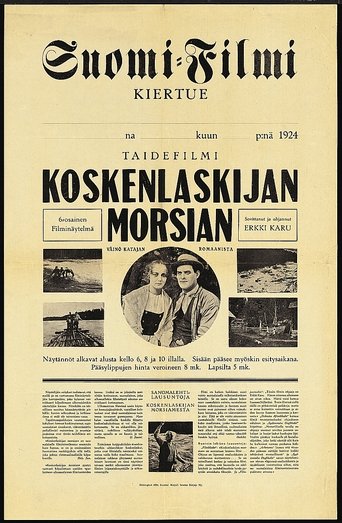
More about this film
About the production
Release dateDecember 26, 1923
Box officeUnknown - box office records from early Finnish cinema are scarce
ProductionSuomi-Filmi
Filmed inHelsinki, Finland, Various rural locations in Southern Finland
The film was shot during the summer of 1923, utilizing natural lighting and authentic rural settings. Director Erkki Karu, a pioneer of Finnish cinema, employed local villagers as extras to enhance the authenticity of the rural atmosphere. The production faced challenges typical of the era, including limited film stock resources and primitive equipment, yet managed to create a visually appealing representation of 19th-century Finnish village life.
Themes
Rural Finnish life and traditionsSocial hierarchy and class dynamicsRomantic love and marriageGenerational conflictCommunity and gossip
Themes & topics
country weddingshoemakerrural comedyromantic intriguevillage lifesocial maneuveringmisunderstandingmatchmakingtraditionFinnish culture
Historical background
The Village Shoemakers (1923) emerged during the silent-film era. Rural comedy of the intrigues and stratagems involving a country wedding. Archival records and catalog entries help place the work within film-history surveys of the period.
Why this film matters
Preserved under Wikidata ID Q11884866, The Village Shoemakers is valued as a comedy within catalog and archive collections. Wikipedia's "The Village Shoemakers" entry connect it to broader histories of cinema exhibition and restoration.
Making of
The production of 'The Village Shoemakers' was a significant undertaking for the fledgling Finnish film industry. Director Erkki Karu, who had previously worked as a journalist and theater director, brought his theatrical experience to this adaptation, carefully staging scenes to maximize comedic timing within the constraints of silent filmmaking. The cast, many of whom were stage actors, had to adapt their performances for the camera, learning the subtleties of silent film acting. The production team scouted authentic rural locations to capture the essence of 19th-century Finnish village life, often filming in actual village settings with local community members participating as background actors. The film's costume department researched traditional Finnish rural clothing from the 1800s to ensure historical accuracy. Despite limited resources, the production managed to create elaborate sets, including a detailed shoemaker's workshop and village church scenes.
What critics said
Trade and archival sources offer limited day-one review coverage for The Village Shoemakers. Modern reception rests on its availability in collections, repertory screenings, and reference works that document 1923 cinema.
Did you know?
- Based on Alexis Kivi's play 'Nummisuutarit' (The Heath Shoemakers), considered among the pivotal works in Finnish literature
- This was the second film adaptation of Kivi's famous play, following a 1917 version that is now lost
- Director Erkki Karu was one of the founders of Suomi-Filmi, Finland's first major film studio
- The film was shot in the same year that Finland gained full independence from Russia (though independence was declared in 1917, 1923 marked significant consolidation of Finnish sovereignty)
- Adolf Lindfors, who played the lead role, was primarily known as a stage actor before transitioning to film
- The original play by Alexis Kivi was written in 1864 and remains a staple of Finnish theater
- This film is considered one of the earliest surviving examples of Finnish comedy cinema
- The wedding scenes in the film featured authentic traditional Finnish wedding costumes and customs
- The film's intertitles were written in Finnish, with some Swedish versions created for Finland's Swedish-speaking population
- The shoemaker character represents the common Finnish archetype of the clever but humble craftsman
Visual style
The cinematography of The Village Shoemakers reflects the technical capabilities and aesthetic preferences of early 1920s Finnish cinema. The film was shot in black and white using natural light whenever possible, particularly for the outdoor rural scenes. The camera work is relatively static by modern standards, typical of the era, but includes some movement in key scenes to enhance dramatic effect. The cinematographer paid careful attention to composition, creating visually balanced frames that often resembled stage productions, reflecting the theatrical origins of the source material. The rural landscapes were captured with an eye for authenticity, showcasing the Finnish countryside in a way that reinforced the film's national character. Interior scenes, particularly those in the shoemaker's workshop, were lit to create dramatic shadows and highlights that enhanced the silent film narrative.
Innovations
While The Village Shoemakers did not introduce groundbreaking technical innovations, it demonstrated the growing sophistication of Finnish film production capabilities in the early 1920s. The film's successful use of location shooting in rural settings was notable for the time, showing that Finnish crews could work effectively outside studio facilities. The production achieved good visual quality despite the limitations of available equipment and film stock. The film's intertitles were well-integrated into the narrative, helping to convey the story's humor and plot developments. The costume and set design showed attention to historical detail, creating an authentic 19th-century atmosphere. The film's preservation and survival through the decades is itself a technical achievement, as many films from this era have been lost.
Music
As a silent film, The Village Shoemakers would have been accompanied by live musical performances during its theatrical run. The typical presentation would have featured a pianist or small orchestra in the cinema, playing appropriate music to match the mood of each scene. The score likely incorporated Finnish folk melodies and popular classical pieces of the era. For comedic scenes, upbeat and playful music would have been used, while more dramatic moments would have been accompanied by romantic or tension-building compositions. The wedding scenes probably featured traditional Finnish wedding music. Unfortunately, no specific information about the original musical accompaniment has survived, as was common with silent films of this period.
Famous quotes
As a silent film, quotes were conveyed through intertitles. The most memorable intertitle was likely: 'In the village, even the smallest whisper becomes the loudest news'
Another significant intertitle: 'A shoemaker mends more than just shoes - he mends hearts and fortunes'
The film's opening intertitle: 'In every Finnish village, there are two things that never fail - gossip and love'
Memorable scenes
- The chaotic wedding preparation scene where multiple villagers attempt to influence the young couple's decisions
- The shoemaker's workshop scene where clever wordplay and misunderstanding create comic tension
- The village gathering scene where gossip spreads like wildfire through the community
- The climactic wedding scene where all the various plots and schemes come to a head
- The final scene where the shoemaker reveals his true role in bringing the couple together
What audiences thought
The Village Shoemakers was well-received by Finnish audiences upon its release in December 1923, particularly because of the familiarity and affection for Alexis Kivi's original work. The film drew viewers from both urban and rural areas, with rural audiences especially appreciating the authentic depiction of village life and traditions. The comedy elements resonated with Finnish viewers, as the humor was deeply rooted in Finnish cultural sensibilities and social dynamics. The film's success at the domestic box office encouraged Suomi-Filmi to continue producing adaptations of Finnish literary works. Audience word-of-mouth was positive, with many viewers praising the film's entertainment value and its celebration of Finnish culture.
Film connections
Influenced by
- Alexis Kivi's 1864 play 'Nummisuutarit'
- Finnish folk comedy traditions
- Scandinavian silent film aesthetics
- European rural comedy films of the 1920s
- Finnish national romanticism
This film influenced
- Later Finnish adaptations of Alexis Kivi's works
- Finnish rural comedy films of the 1930s-1950s
- Finnish films featuring village life and traditions
- Subsequent Finnish literary adaptations
Film restoration
The film is partially preserved in the Finnish Film Archive. While some sections may be incomplete or damaged, significant portions of the film survive, making it one of the earliest surviving Finnish feature films. Restoration efforts have been undertaken to preserve what remains of this important cultural artifact.
Where to watch
- Finnish Film Archive screenings
- Specialized silent film festivals
- Academic film collections
- Occasional broadcasts on Finnish television channels during classic film retrospectives
- Potential availability through the National Audiovisual Institute of Finland (KAVA) for research purposes