

Tunay Na Ina
"Magdalena's secret and Roberto"
Keys: Space play/pause · ←/→ 10s · F fullscreen · M mute · </> speed
About this film
Rape survivor Magdalena hides her past from fiancé Roberto while her adopted child's origin haunts her. A 1939 Filipino maternal melodrama.
Cast & crew
More Music films
View all →


More from Octavio Silos
View all →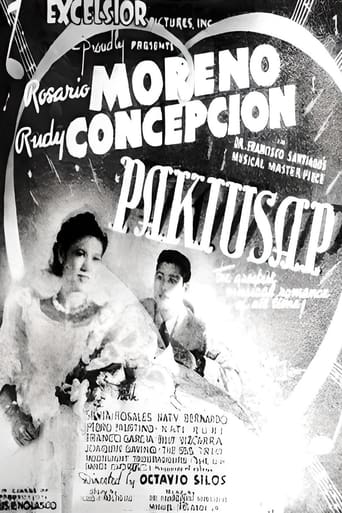
More about this film
About the production
Release date1939-04-15
ProductionFilippine Pictures, LVN Pictures
Filmed inManila, Philippines
Tunay Na Ina was produced during the golden age of Philippine cinema, a period marked by significant growth in local film production despite the looming threat of World War II. The film was shot on black and white 35mm film, standard for the era. Director Octavio Silos was known for his ability to handle melodramatic material with sensitivity, making him an ideal choice for this controversial subject matter. The production faced challenges from conservative groups who objected to the film's depiction of rape and illegitimacy, but the producers pushed forward, believing in the story's social importance.
Themes
Themes & topics
rapeadoptionsecret pastweddingguiltconfessionintercepted lettersocial judgmentunwed motherfamily pressure
Historical background
Released in 1939, Tunay Na Ina belongs to the early sound era and reflects production norms of its release season.
Why this film matters
Tunay Na Ina contributes to understanding regional output and audience tastes around 1939.
Making of
The making of Tunay Na Ina was marked by both artistic ambition and social controversy. Director Octavio Silos worked closely with screenwriters to ensure the sensitive subject matter was handled with appropriate gravity while still being palatable to 1930s audiences. Rosario Moreno prepared extensively for her role as Magdalena, reportedly visiting women's shelters to understand the psychological impact of sexual assault victims. The production team faced pressure from Catholic Church groups who initially opposed the film's release, leading to several cuts and modifications before it could be shown publicly. Despite these challenges, the cast and crew remained committed to telling what they considered an important social story that addressed issues rarely discussed in Philippine cinema at the time.
What critics said
Review records for Tunay Na Ina are typical of 1939: brief for shorts, more sustained for features.
Did you know?
- Tunay Na Ina was one of the first Filipino films to tackle the controversial subject of rape and its social consequences
- The film's title translates to 'Real Mother' in English, emphasizing the central theme of motherhood and sacrifice
- Rosario Moreno's performance as Magdalena is considered especially powerful dramatic portrayals in pre-war Philippine cinema
- The film was banned in some conservative provinces in the Philippines upon its initial release
- Director Octavio Silos was a former theater director who transitioned to film in the early 1930s
- The film's success led to a 1950 remake starring another generation of Filipino actors
- Tita Duran, who played a supporting role, would later become widely known child stars in Philippine cinema history
- The original film negative was believed destroyed during the bombing of Manila in World War II
- The film's poster featured an image of a weeping woman holding a baby, which was considered provocative for its time
- Rudy Concepcion, who played Roberto, died unexpectedly the following year, making this one of his final film appearances
Awards & recognition
- Best Picture - Manila Film Festival (1939)
- Best Actress - Rosario Moreno (1939)
Visual style
The cinematography of Tunay Na Ina, while not revolutionary for its time, demonstrated the growing sophistication of Philippine film techniques in the late 1930s. Shot in black and white, the film used lighting and shadow to emphasize the emotional states of characters, particularly in scenes where Magdalena struggles with her conscience. The camera work was relatively static compared to Hollywood standards of the era, but this was typical for Philippine productions of the period. Close-ups were used effectively to capture the nuanced performances of the actors, especially Rosario Moreno's expressive portrayal of Magdalena's inner turmoil. The film employed soft focus techniques during flashback sequences to distinguish them from the present-day narrative. While limited by the technical resources available in the Philippines at the time, the cinematography successfully supported the film's dramatic intentions and helped create an atmosphere of emotional intensity appropriate to the subject matter.
Innovations
While Tunay Na Ina did not introduce groundbreaking technical innovations, it represented the maturation of film production techniques in the Philippines. The film demonstrated improved sound recording quality compared to earlier Filipino talkies, with clearer dialogue and better synchronization between audio and visual elements. The editing techniques used to transition between present and flashback sequences were considered sophisticated for Philippine cinema of the era. The production team developed special techniques for simulating rain scenes, which were technically challenging given the limited equipment available in Filipino studios at the time. The film's makeup department created realistic effects for aging characters throughout the story, showing advancement in cosmetic techniques for Philippine cinema. Perhaps most significantly, the film proved that Filipino productions could handle sensitive, adult subject matter with technical polish and artistic integrity, setting a new standard for the local industry's capabilities.
Music
As a film in the Music/Drama genre, Tunay Na Ina featured several musical numbers that were integrated into the narrative. The soundtrack included traditional Filipino kundiman songs that expressed the characters' emotions and advanced the plot. The musical score was composed by Francisco Buencamino, a prominent Filipino composer of the era who specialized in blending Western classical techniques with Filipino musical traditions. The film's theme song, also titled 'Tunay Na Ina,' became popular in its own right and was frequently played on radio stations following the film's release. The sound quality represented the technical capabilities of Philippine studios in 1939, with clear dialogue reproduction despite the limitations of recording equipment available in the country at the time. The music served not only as entertainment but also as a cultural touchstone, incorporating musical elements that would have been familiar and meaningful to Filipino audiences of the period.
Famous quotes
Ang isang ina, kahit saan siya magpunta, laging iniisip ang kanyang anak." (A mother, wherever she goes, always thinks of her child.)
Ang katotohanan, kahit masakit, ay kailangang lumabas para sa ikabubuti ng lahat." (The truth, no matter how painful, must come out for the good of all.)
Hindi ko kailangang itago ang aking nakaraan sa taong tunay na nagmamahal sa akin." (I don't need to hide my past from someone who truly loves me.)
Memorable scenes
- The emotionally charged scene where Magdalena writes her confession letter to Roberto, tears streaming down her face as she reveals her deepest secret
- The dramatic confrontation between Magdalena and her aunt after discovering the intercepted letter, culminating in a powerful slap that echoes throughout the house
- The wedding scene where Magdalena walks down the aisle, her face a mask of joy while her eyes betray her inner turmoil and fear of discovery
What audiences thought
Tunay Na Ina was a commercial success upon its release in 1939, drawing large audiences in Manila and other major cities in the Philippines. The film's controversial subject matter generated significant buzz and word-of-mouth promotion, with many viewers curious about how such delicate topics would be handled. Audience reactions were reportedly emotional, with many viewers reportedly weeping during Magdalena's confession scenes. The film sparked discussions about the treatment of women and victims of sexual violence in Filipino society, with some audience members praising its boldness while others found it uncomfortable to watch. Despite some conservative backlash, the film's popularity demonstrated that Filipino audiences were ready for more mature, realistic storytelling. The film's success at the box office encouraged other producers to greenlight more socially relevant projects in the following years, though few would be as daring as Tunay Na Ina.
Film connections
Influenced by
- Hollywood melodramas of the 1930s
- Spanish zarzuela traditions
- Filipino social realist literature
- Catholic moral teachings
This film influenced
- Tunay Na Ina (1950 remake)
- Ina (1950)
- Anak Dalita (1956)
- Sister Stella L. (1984)
Film restoration
Tunay Na Ina is considered a lost film. The original negative and all known copies were believed destroyed during the bombing of Manila in 1945 during World War II. Despite extensive searches by film historians and archivists from the National Film Archive of the Philippines, no complete version of the film has been found. Only a few production stills, promotional materials, and contemporary reviews survive as documentation of this important work. The film's status as a lost work makes it especially significant missing pieces of Philippine cinema history, as it represented an early example of socially conscious Filipino filmmaking. Efforts to locate any surviving fragments continue, but hope diminishes with each passing year.
Where to watch
- Unfortunately, Tunay Na Ina is not available for viewing as it is considered a lost film. No known copies survive in any archive or private collection. Film enthusiasts can learn about the film through historical accounts, contemporary reviews, and academic references in books about Philippine cinema history.