
Unaccustomed as We Are
"Neighbors, wives, and borrowed cigars"
Keys: Space play/pause · ←/→ 10s · F fullscreen · M mute · </> speed
About this film
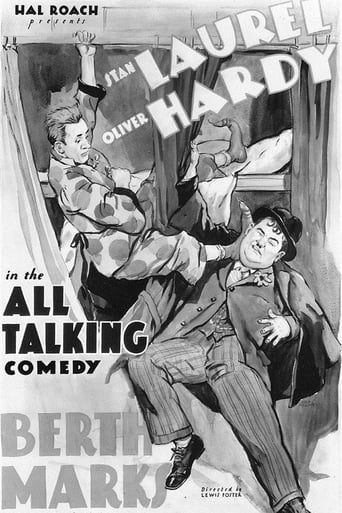
Laurel and Hardy try to entertain a female neighbor while keeping the visit secret from Mrs. Hardy, with predictable domestic disaster.
Cast & crew
More films like this
More Comedy films
View all →







More from Lewis R. Foster
View all →


More about this film
About the production
Release dateMay 4, 1929
ProductionHal Roach Studios, Metro-Goldwyn-Mayer
Filmed inHal Roach Studios, Culver City, California
This was Laurel and Hardy's first sound film, marking their transition from silent to talking pictures. The production utilized early sound recording equipment that was cumbersome and required microphones to be hidden in props and furniture. The film was shot as a two-reel comedy with a runtime of approximately 20 minutes, standard for comedy shorts of the era. The sound technology limitations required actors to remain relatively stationary during dialogue scenes, which actually enhanced the comedic timing of Laurel and Hardy's routines.
Themes
Domestic comedyMarital misunderstandingsNeighbor relationsDeception and consequencesMale friendship
Themes & topics
first sound filmapartmentneighborwife returns earlykitchen firemistaken identityhideoutchase sequencedomestic chaoscomedy of errors
Historical background
Hal Roach released this 1929 sound short as the duo transitioned from silent two-reelers to talking pictures.
Why this film matters
Typifies Roach's formula of escalating domestic embarrassment built around Laurel and Hardy's contrasting personalities.
Making of
The production of 'Unaccustomed as We Are' faced numerous challenges due to the primitive state of sound recording technology in 1929. The microphones were large and conspicuous, requiring creative placement within the set design. The cast had to remain relatively still during dialogue scenes, which actually enhanced Laurel and Hardy's comedic timing. Director Lewis R. Foster had to balance the visual comedy that made the duo famous in silent films with the new requirements of sound recording. The chemistry between Laurel and Hardy translated remarkably well to sound, with their verbal timing proving as effective as their physical comedy. The kitchen fire sequence was particularly difficult to film, as the sound equipment was sensitive to smoke and heat, requiring multiple takes and careful coordination between the special effects and sound departments.
What critics said
Trade reviewers treated it as reliable program comedy; fans still cite its timing in the early sound period.
Did you know?
- This was Laurel and Hardy's first talking picture, making it historically significant in their filmography
- The title is a play on the classic phrase 'unaccustomed as I am to public speaking'
- Edgar Kennedy, who plays the neighbor's husband, would later become famous for his 'slow burn' reaction comedy style
- The film was released just as the transition to sound was revolutionizing Hollywood
- Many of the sound effects were created live during filming using primitive techniques
- The kitchen scene required multiple takes due to early sound recording difficulties
- established the template for many of Laurel and Hardy's domestic comedy shorts that would follow
- The success of convinced Hal Roach to continue producing Laurel and Hardy sound comedies
- Some dialogue was improvised by Laurel and Hardy, who were skilled at adapting to the new medium
- The film's release timing coincided with the beginning of the Great Depression, providing audiences with much-needed comic relief
Visual style
The cinematography by Art Lloyd adapted to the technical constraints of early sound filming, using more static camera setups than typical silent comedies. The lighting had to be carefully arranged to avoid interfering with the sensitive microphones. The apartment set was designed to accommodate both the action and the sound equipment, with careful attention to how scenes were framed. Despite these limitations, the visual comedy remained effective, with well-composed shots that enhanced the physical humor while accommodating the new technical requirements.
Innovations
The film represents an early successful implementation of sound recording for comedy, demonstrating that verbal humor could enhance rather than diminish physical comedy. The production team developed innovative techniques for hiding microphones within the set design, a practice that would become standard in sound filmmaking. The synchronization of sound effects with physical comedy gags was particularly noteworthy, showing how the new technology could actually enhance comedic timing. The film proved that comedy shorts could successfully incorporate dialogue without losing their visual appeal.
Music
The film utilized the early sound-on-film technology, with a basic musical score accompanying the action. The soundtrack included popular songs of the era as background music, with sound effects created live during filming. The dialogue recording was relatively primitive by modern standards, but clear enough to showcase Laurel and Hardy's verbal comedy. The sound design emphasized domestic sounds - doors slamming, dishes breaking, and other household noises that enhanced the comedy of the situation.
Famous quotes
Another fine mess you've gotten me into!
Well, here's another nice kettle of fish!
I had a good mind to ring your neck!
You know that I'm not accustomed to public speaking.
Memorable scenes
- The frantic kitchen scene where Laurel and Hardy try to cook while hiding their visitor, culminating in a small fire that they desperately try to conceal from Hardy's returning wife. The sequence combines physical comedy with verbal misunderstandings, showcasing how effectively the team had adapted to sound.
What audiences thought
Audiences in 1929 enthusiastically embraced Laurel and Hardy's transition to sound, with the film proving popular in theaters across America. The familiarity of the comedy team combined with the novelty of sound made it a box office success. Contemporary audience reports indicate that viewers particularly enjoyed the verbal interplay between Laurel and Hardy, finding their dialogue as funny as their physical antics. The film's domestic themes resonated with audiences during the uncertain economic times of the early Depression era.
Film connections
Influenced by
- Silent comedy shorts
- Domestic stage plays
- Vaudeville routines
- Early sound comedies
This film influenced
- Blotto (1930)
- Brats (1930)
- Below Zero (1930)
- Hog Wild (1930)
Film restoration
The film is preserved in the Library of Congress collection and has been restored for home video releases. Multiple good quality prints exist, and it has been included in several Laurel and Hardy DVD collections. The restoration work has improved both the visual and audio quality, making it accessible to modern audiences while maintaining the charm of the original production.
Where to watch
- The film is available on various Laurel and Hardy DVD collections
- Streaming services specializing in classic films
- Public domain archives
- Film preservation websites
- Classic movie streaming platforms