

Utopia
"Laurel and Hardy's troubled final voyage"
Keys: Space play/pause · ←/→ 10s · F fullscreen · M mute · </> speed
About this film
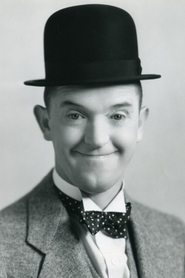
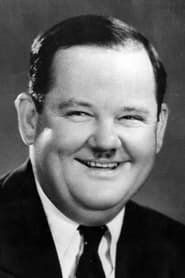
Stan Laurel and Oliver Hardy inherit a South Seas island called Utopia and sail into comic chaos when uranium deposits attract greedy outsiders.
Cast & crew
More Comedy films
View all →






More about this film
About the production
Release dateDecember 14, 1951 (France), May 1954 (United States as 'Utopia')
BudgetApproximately $500,000 (equivalent to about $5 million in 2023)
Box officePoor performance, considered a commercial failure
ProductionFrance Film Production, Foro Film, Léo Joannon Films, Les Films Sirius
Filmed inNice, France, Villefranche-sur-Mer, France, Studios de la Victorine, Nice, France
The film had an extremely troubled production, lasting over a year with multiple directors. Original director John Berry was blacklisted during filming and replaced by Léo Joannon. Both Stan Laurel and Oliver Hardy were seriously ill during production - Hardy suffered from weight problems and heart issues, while Laurel had prostate problems. The film was shot in both English and French versions, with the actors having to learn their lines phonetically for the French version. Production was halted multiple times due to funding issues and the stars' health problems.
Themes
Utopian ideals vs. realityFriendship and loyaltyColonialism and exploitationCold War paranoiaAging and mortality
Themes & topics
islandinheritanceutopiavolcanouraniumcomedy duoshipwreckgovernment conspiracyfailed societytreasure hunt
Historical background
Filmed in 1950–51 as a French-Italian co-production, Atoll K/Utopia emerged during the blacklist era and the duo's declining health.
Why this film matters
Despite troubled production, the picture remains the last completed feature pairing of Laurel and Hardy, studied as a bittersweet coda to their partnership.
Making of
The production of 'Utopia' was plagued with problems from the beginning. The film began shooting in 1950 with director John Berry, but he was replaced by Léo Joannon after being blacklisted. The cast and crew had to deal with language barriers as it was a French-Italian co-production. Both Laurel and Hardy were in poor health - Hardy had undergone prostate surgery and was dealing with diabetes and heart problems, while Laurel was recovering from prostate issues himself. The filming locations in the South of France were beautiful but challenging to work in. The script went through numerous rewrites, and multiple endings were filmed. The production ran out of money multiple times, causing delays. The French and English versions were shot simultaneously, requiring the actors to perform scenes twice. The final editing was chaotic, with different cuts released in different countries.
What critics said
Initial reviews were mixed to negative; later assessments treat it sympathetically as a historical artifact of two aging icons.
Did you know?
- This was the final film appearance of the comedy duo Stan Laurel and Oliver Hardy
- The film was originally titled 'Atoll K' but released in the US as 'Utopia'
- Both comedians were seriously ill during filming - Hardy had lost over 100 pounds and was suffering from a heart condition
- The production took over a year to complete, an unusually long time for the era
- Original director John Berry was replaced mid-production after being blacklisted during the McCarthy era
- The film exists in multiple versions with different running times and scenes
- Stan Laurel was so disappointed with the final film that he reportedly walked out of the premiere
- The uranium subplot was added to make the film more contemporary during the Cold War era
- The French version was reportedly better received than the English version
- Oliver Hardy's health never fully recovered after this production, and he died in 1957
Visual style
The cinematography by Raymond Picon-Borel captured the beautiful Mediterranean locations effectively, providing a stark contrast to the chaotic comedy. The Technicolor photography was vibrant for its time, though some critics felt it made the stars' health problems more visible. The island sequences were particularly well-shot, creating a believable tropical paradise. The volcanic eruption scenes used practical effects that were typical of the era but appear dated by modern standards.
Innovations
While not groundbreaking technically, the film did feature some impressive miniature work for the volcanic eruption sequences. The dual-language production was technically challenging for the era, requiring precise synchronization between French and English takes. The underwater sequences were relatively ambitious for the time, though they appear primitive by modern standards.
Music
The musical score was composed by Jean-Jacques Grunenwald, incorporating both comedic and dramatic elements. The film featured several musical numbers, including a scene where the characters attempt to establish their own national anthem. The soundtrack also included traditional South Seas-inspired music to establish the island setting. The French version had different musical arrangements compared to the English release.
Famous quotes
Well, here's another nice mess you've gotten me into!
Utopia? I thought you said Utah!
A volcano? This island gets hotter every minute!
We came here to establish a perfect society, not to be perfect fools!
If this is utopia, I'd hate to see dystopia!
Memorable scenes
- The opening sequence where Stan and Ollie learn about their inheritance and immediately begin planning their paradise
- The chaotic ship journey where everything that can go wrong does go wrong
- The scene where they attempt to write their own constitution and national anthem
- The volcanic eruption climax where they must flee their failed utopia
- The final scene where they reflect on their failed attempt at creating paradise
What audiences thought
Audience reception was generally poor, with the film performing badly at the box office in most markets. Many longtime fans of the comedy duo were saddened to see their heroes in such poor health and in what appeared to be a subpar film. The film's limited release in the United States (not until 1954) further hurt its commercial prospects. However, over time, the film has gained a cult following among Laurel and Hardy enthusiasts who appreciate it as a historical artifact and the team's final collaboration.
Film connections
Influenced by
- Robinson Crusoe
- Gulliver's Travels
- Gilligan's Island (later influenced by similar premise)
- The Marx Brothers' Duck Soup (political satire elements)
This film influenced
- The film's troubled production became a cautionary tale in Hollywood
- Later comedy films about failed societies
- The concept of comedians establishing their own society appeared in later works
Film restoration
The film exists in various versions and has been preserved by film archives, though finding a complete, high-quality version can be challenging. The French version is generally considered more complete than the heavily edited American release. Some restoration work has been done by film preservationists, particularly in Europe. The film has entered the public domain in some regions, leading to numerous poor-quality releases.
Where to watch
- Available on DVD from various public domain distributors
- Streaming on some classic film platforms
- Can be found on YouTube in various versions
- Available through specialty film archives and libraries
- Sometimes broadcast on Turner Classic Movies and similar classic film channels