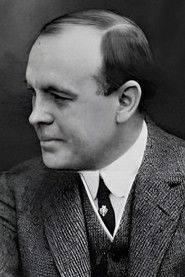


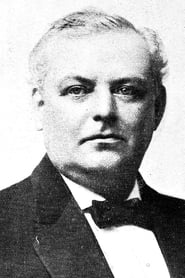

When the Earth Trembled
"A mother with two young children survives the San Francisco earthquake…"
Keys: Space play/pause · ←/→ 10s · F fullscreen · M mute · </> speed
About this film
A mother with two young children survives the San Francisco earthquake disaster.
Cast & crew
More films like this

More Drama films
View all →







More from Barry O'Neil
View all →More about this film
About the production
Release dateNovember 2, 1913
BudgetApproximately $10,000 (estimated based on Lubin's high-end productions of the era)
ProductionLubin Manufacturing Company
Filmed inPhiladelphia, Pennsylvania (Lubin Studios), San Francisco, California (Actuality footage locations)
The film was the Lubin Manufacturing Company's first 'mega-production,' expanding from their usual one or two reels to a substantial three-reel format. Director Barry O'Neil oversaw the construction of massive breakaway sets designed by over thirty carpenters; these sets took five weeks to build but were destroyed in just two minutes of filming to simulate the earthquake. The production also made innovative use of genuine newsreel footage captured by Lubin cameraman Jack Frawley immediately following the 1906 San Francisco earthquake, blending fiction with historical reality.
Themes
Class conflict and family inheritanceThe destructive and redemptive power of natureResilience of the maternal bondForgiveness and reconciliationSurvival against all odds
Themes & topics
San Francisco earthquakeshipwreckdisinheritancenannyfamily reunion1906 disasterlost at seabusiness rivalry
Historical background
Released in 1913 during the silent era's formative years, When the Earth Trembled reached audiences when exhibitors were still defining programming conventions. The narrative hook—A mother with two young children survives the San Francisco earthquake…—reflects what contemporary producers thought would draw viewers.
Why this film matters
When the Earth Trembled remains discussed by archivists tracing how screen stories of its period represented work, desire, conflict, and social order. Its central situation—A mother with two young children survives the San Francisco earthquake…—still prompts questions about genre conventions and audience expectations.
Making of
The making of 'When the Earth Trembled' was a massive undertaking for the Philadelphia-based Lubin Studio. Director Barry O'Neil insisted on high production values, employing a large crew to build elaborate interior sets that could collapse on cue. The 'breakaway' technology was primitive but effective, using hidden wires and pre-cut supports to ensure the safety of the actors while maximizing visual impact. Despite these precautions, the set was genuinely dangerous; the incident where Ethel Clayton was hit by a chandelier was a real accident that stayed in the final cut. The film's integration of 1906 actuality footage required careful editing to match the lighting and tone of the newly filmed dramatic scenes, a technique that was quite advanced for its time.
What critics said
Trade and newspaper notices for When the Earth Trembled generally emphasized casting, spectacle, and program fit rather than extended aesthetic argument. Retrospective screenings and archival notes continue to shape how viewers evaluate When the Earth Trembled today.
Did you know?
- The film is widely considered the first fiction film to depict the 1906 San Francisco earthquake.
- Lead actress Ethel Clayton was actually struck in the face by a falling chandelier during the earthquake sequence but continued her performance until she moved out of the camera's range.
- The film was thought to be lost for decades until a restoration was possible in 2015 using prints found in the Netherlands, the UK, and the US.
- It was released under the alternative title 'The Strength of Love' in some markets.
- The production utilized 'Exclusive Service' distribution, a short-lived model for multi-reel films that actually hindered its initial US success.
- A vault fire at Lubin in 1914 destroyed the original negatives, making the surviving international prints the only record of the film.
- The film features a 'Samoan Colony' subplot, reflecting the era's interest in exotic Pacific locations.
- The earthquake sequence was so realistic for 1913 that it was used as a benchmark for special effects in early cinema.
Visual style
The film utilizes a standard 1.33:1 aspect ratio and was originally released with color tinting to enhance the mood (e.g., blue for night/shipwreck, red/amber for the fire). The cinematography is notable for its 'actuality' style during the disaster scenes, contrasting with the more static, stage-like compositions of the domestic drama scenes. The use of multiple camera angles during the collapse of the sets was an early attempt at creating a sense of immersive chaos.
Music
As a silent film, there was no original recorded soundtrack. During its 1913 run, it would have been accompanied by live piano or organ music. For the 2015 restoration, a new score was performed and recorded by renowned silent film accompanists Stephen Horne and Frank Bockius.
Famous quotes
Intertitle: 'The city that was... and the strength of a love that endured.'
Memorable scenes
- The Earthquake Sequence: A five-minute tour-de-force where the Sims' home literally falls apart around the actors, featuring falling chimneys, collapsing walls, and the famous chandelier accident.
- The Shipwreck: Paul Jr. struggling against the waves after his ship is destroyed, a scene that transitions the film from urban drama to an island survival story.
- The Unmasking: The emotional climax where Paul Sr. realizes the nanny he hired is actually his daughter-in-law, leading to his ultimate redemption.
What audiences thought
The film was a significant hit with audiences, particularly in Europe and the United Kingdom, where it enjoyed a longer theatrical life than in the United States. Viewers were reportedly captivated by the realism of the earthquake, which many still remembered vividly. The emotional core of the story—a mother's struggle to protect her children—resonated deeply with contemporary audiences who favored high-stakes family dramas.
Film connections
Influenced by
- The 1906 San Francisco Earthquake (Historical Event)
- Victorian stage melodramas
- Lubin's own newsreel footage from 1906
This film influenced
- San Francisco (1936)
- Old San Francisco (1927)
- The Deluge (1933)
Film restoration
The film was long considered lost but was restored in 2015 by the San Francisco Silent Film Festival and EYE Film Institute Netherlands. The restoration utilized a tinted nitrate print from the Netherlands, a B&W negative from the British Film Institute, and additional elements from MoMA.
Where to watch
- Available for streaming on Vimeo via the San Francisco Silent Film Festival page
- Included in various silent film archives and specialized museum screenings
- Public domain versions may be found on YouTube (EYE Filmmuseum channel)