

Why We Fight: The Battle of Britain
"Capra documents the Luftwaffe's assault on Britain in 1940."
Keys: Space play/pause · ←/→ 10s · F fullscreen · M mute · </> speed
About this film
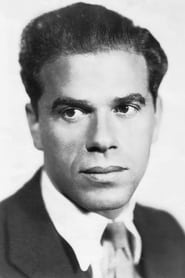
The fourth of Frank Capra's Why We Fight series of seven propaganda films, which made the case for fighting and winning the Second World War. It was released in 1943 and concentrated on the German bombardment of the United Kingdom in anticipation of Operation Sea Lion, the planned German invasion.
Cast & crew
More films like this
More Documentary films
View all →
More from Frank Capra
View all →


More about this film
About the production
Release dateNovember 10, 1943
ProductionU.S. Office of War Information, U.S. Army Signal Corps
Filmed inUnited Kingdom (archival footage), United States (studio work)
The film was created as part of a special assignment by Frank Capra, who was commissioned as a major in the U.S. Army Signal Corps. Capra and his team had unprecedented access to captured German footage, British combat film, and American newsreel material. The production team worked under tight deadlines to complete the film while the war was still ongoing. The film used innovative editing techniques, combining multiple sources of footage to create a coherent narrative. Capra employed the technique of 'double exposure' - showing enemy footage and then immediately refuting it with counter-evidence or narration.
Themes
Resistance against overwhelming oddsThe importance of air power in modern warfareCivilian courage and resilienceThe special relationship between Britain and AmericaThe cost of freedom and democracy
Themes & topics
World War IIBattle of BritainRoyal Air ForceLuftwaffeAir combatBlitzPropagandaDocumentaryMilitary strategyCivilian resilienceOperation Sea LionWinston ChurchillNazi GermanyAllied victoryAerial warfare
Historical background
Released around 1943, Why We Fight: The Battle of Britain emerged while exhibitors were still defining how longer narratives could hold nickelodeon audiences.
Why this film matters
For historians, Why We Fight: The Battle of Britain is less a blockbuster than a datapoint—showing what audiences in 1943 could see on a typical program.
Making of
Frank Capra, already an established Hollywood director with classics like 'It's a Wonderful Life' and 'Mr. Smith Goes to Washington' to his credit, was commissioned as a major in the U.S. Army Signal Corps to create the 'Why We Fight' series. Capra assembled a team of Hollywood's best talent, including editors, writers, and composers, to work on the project. The production team faced significant challenges, including working with footage of varying quality, different film stocks, and material shot under combat conditions. Capra's innovative approach involved using the enemy's own propaganda footage against them, showing German films and then systematically debunking their claims through narration and counter-footage. The team worked long hours in Washington D.C. and Hollywood, often under pressure from military officials to deliver films that would be both informative and morale-boosting. The collaboration between Hollywood talent and military personnel was unprecedented and set a new standard for wartime documentary production.
What critics said
Trade papers near 1943 treated Why We Fight: The Battle of Britain as program material—noticed when exhibitors needed a reliable slot-filler, seldom debated as auteur cinema.
Did you know?
- This was the fourth film in Capra's seven-part 'Why We Fight' series, commissioned by the U.S. government to educate American soldiers and the public about the reasons for U.S. involvement in WWII
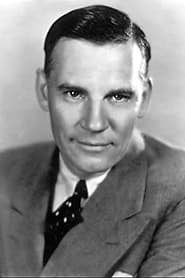
- Walter Huston, who served as narrator, was a distinguished stage and film actor who had previously won an Academy Award for his role in 'Treasure of the Sierra Madre'
- The film used actual combat footage from the Battle of Britain, some of which was captured under dangerous conditions by British cameramen
- Frank Capra was inspired to create the series after being shown Leni Riefenstahl's Nazi propaganda film 'Triumph of the Will' and realizing the power of cinema as a propaganda tool
- The film's score was composed by Dimitri Tiomkin, who would later become famous for his work on Western films like 'High Noon' and 'The Alamo'
- Despite being government-funded propaganda, the film won an Academy Award for Best Documentary Feature in 1943
- The film was shown not only to American troops but also in theaters across the United States to build public support for the war effort
- Capra and his team had to work with footage from multiple sources and different film stocks, creating technical challenges in maintaining visual consistency
- The film's release was timed to coincide with the growing American involvement in the European theater of operations
- The British government provided unprecedented access to their military footage and facilities, recognizing the film's importance for the Allied cause
Awards & recognition
- Academy Award for Best Documentary Feature (1943)
Visual style
The film's cinematography is notable for its use of authentic combat footage captured under extremely dangerous conditions. The visual material includes aerial dogfights filmed from cockpits, ground-level footage of bombing raids, and scenes of civilian life during the Blitz. The cinematographers, both British and American, used handheld cameras to capture the immediacy of combat, often risking their lives to get the shots. The film employs dramatic contrast between peaceful pre-war Britain and the devastation of the bombing campaigns. Aerial sequences showcase the beauty and terror of dogfights, with the sun glinting off aircraft wings against dramatic cloud formations. Ground footage emphasizes the scale of destruction through wide shots of burning cities and close-ups of civilian resilience. The cinematography effectively conveys the technological aspects of modern warfare while maintaining human focus on the pilots and civilians affected by the conflict.
Innovations
The film represented significant technical achievements in documentary production, particularly in its innovative editing techniques. The production team developed new methods for integrating footage from multiple sources with different film stocks and qualities. They pioneered the use of split-screen techniques to show simultaneous events from different perspectives. The film's sound mixing was groundbreaking for its time, combining narration, music, sound effects, and authentic battlefield audio into a cohesive whole. The technical team also developed new processes for enhancing the clarity of combat footage that had been shot under difficult conditions. The film's use of maps and animated graphics to explain military strategy was particularly innovative, making complex tactical concepts accessible to general audiences. These technical innovations would influence documentary filmmaking for decades to come.
Music
The musical score was composed by Dimitri Tiomkin, who brought his Hollywood expertise to the documentary format. Tiomkin's music enhances the dramatic impact of the visuals without overwhelming them, using leitmotifs to represent different elements of the conflict. The score incorporates both original compositions and adaptations of British patriotic music, including 'Rule, Britannia!' and 'Land of Hope and Glory.' Tiomkin used orchestral arrangements to convey the scale of the battle, with powerful brass themes for combat sequences and more delicate string passages for civilian scenes. The soundtrack also includes authentic sound effects from the actual battles, including aircraft engines, anti-aircraft guns, and bomb explosions. Walter Huston's narration is carefully balanced with the music and sound effects, creating a cohesive audio experience that guides the viewer through the complex events of the battle.
Famous quotes
Never in the field of human conflict was so much owed by so many to so few. - Winston Churchill (quoted in the film)
The Battle of Britain was not merely a battle; it was the turning point of the war. - Narration
From these islands, the forces of freedom would one day strike back at the heart of Nazi tyranny. - Narration
The Luftwaffe had the numbers, but the RAF had the determination. - Narration
While London burned, its people refused to be broken. - Narration
Memorable scenes
- The opening sequence showing peaceful Britain before the war, contrasted with the sudden arrival of German bombers
- The dramatic aerial combat footage showing dogfights between Spitfires and Messerschmitts
- The scenes of London during the Blitz, with searchlights crisscrossing the night sky and fires burning across the city
- The sequence showing RAF pilots scrambling to their planes during an alert
- The final scenes showing the German failure and Britain's survival, with Churchill's famous speech about 'the few'
What audiences thought
The Battle of Britain was enthusiastically received by both military and civilian audiences. For American soldiers, many of whom would soon be fighting alongside British forces, the film provided crucial context about their allies and the stakes of the European conflict. Civilian audiences, who had followed news of the Battle of Britain through radio and newspapers, were deeply moved by the visual documentation of the events. The film's theatrical release was well-attended, with many theaters reporting sell-out crowds. Audience surveys conducted by the Office of War Information indicated that the film significantly increased public understanding of and support for the British war effort. Veterans of the Battle of Britain who saw the film praised its accuracy in depicting the events they had lived through. The film's emotional impact was particularly noted in British audiences, who saw their struggle recognized and celebrated on the big screen. The film's success in maintaining public morale during a difficult period of the war was frequently cited in government reports on the effectiveness of wartime information programs.
Film connections
Influenced by
- Triumph of the Will (1935) - Leni Riefenstahl's Nazi propaganda that inspired Capra to create counter-propaganda
- The Battle of San Pietro (1945) - John Huston's documentary that shared similar techniques
- London Can Take It! (1940) - Earlier British documentary about the Blitz
- Target for Tonight (1941) - British documentary about RAF bomber crews
This film influenced
- Memphis Belle: A Story of a Flying Fortress (1944)
- The True Glory (1945)
- The World at War (1973-1974) TV series
- Hearts and Minds (1974)
- Fahrenheit 9/11 (2004)
- Restrepo (2010)
Film restoration
The film has been preserved by the National Archives and Records Administration and is part of the Library of Congress's collection. In 2000, it was selected for preservation in the United States National Film Registry by the Library of Congress as being 'culturally, historically, or aesthetically significant.' The film has been digitally restored and is available in high quality for educational and archival purposes. The original film elements are stored in climate-controlled facilities to ensure their long-term preservation.
Where to watch
- National Archives website (free streaming)
- YouTube (official uploads)
- Internet Archive
- Amazon Prime Video
- The Criterion Collection (as part of war documentary collections)
- Educational streaming services like Kanopy
- Museum of Modern War film collections
- Public domain DVD releases