Louis Mercanton
Director
- Born
- December 7, 1879, Nyon, Switzerland
- Died
- April 29, 1932
- Active
- 1911-1932
Films directed 2
About Louis Mercanton
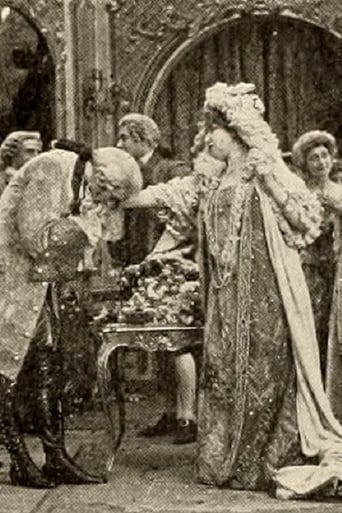
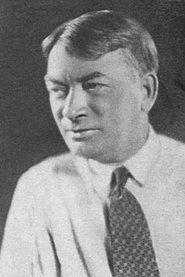
Louis Mercanton was a pioneering Swiss-born film director, screenwriter, and producer who became a central figure in the early French silent cinema movement. Born in Nyon, he initially pursued a career in the theater before transitioning to the burgeoning film industry, where he became a key collaborator with the legendary stage actress Sarah Bernhardt. Mercanton is most famously credited with directing 'Les Amours de la reine Élisabeth' (1912), a film that played a monumental role in the development of the 'Film d'Art' movement and helped establish the feature-length film in the United States. Throughout the 1910s and 1920s, he directed dozens of films, often adapting literary classics and stage plays for the screen with a focus on high production values and prestigious casting. He successfully navigated the transition from silent films to 'talkies' in the late 1920s, working in both French and English language productions. His career was tragically cut short when he died in Paris at the age of 52, just as he was establishing himself as a versatile director of early sound cinema.
More about Louis Mercanton
Behind the camera
Mercanton's directing style was characterized by a deep reverence for theatrical traditions, often utilizing static camera placements to capture the full breadth of a stage performance. However, as his career progressed, he became more adept at cinematic storytelling, incorporating more fluid editing and location shooting. He was known for his ability to handle 'prestige' projects, focusing on lavish costumes, historical accuracy, and eliciting disciplined performances from actors who were often used to the more exaggerated gestures of the stage. In his later sound films, he displayed a sophisticated understanding of dialogue and pacing, moving away from the purely visual language of the silent era.
Impact on culture
Louis Mercanton's impact on cinema is primarily tied to his role in legitimizing film as an art form capable of attracting middle-class audiences. By filming Sarah Bernhardt, the most famous actress of her time, he bridged the gap between the 'low-brow' reputation of early nickelodeons and the 'high-brow' world of the theater. His film 'Queen Elizabeth' provided the financial foundation for Adolph Zukor to start the Famous Players Film Company, which eventually became Paramount Pictures, thereby altering the course of Hollywood history.
Lasting legacy
Mercanton is remembered as a vital link between the 19th-century theater and 20th-century cinema. While his early work is often criticized for being 'canned theater,' his later films showed a growing mastery of the medium. He remains a significant figure for film preservationists, as his work provides some of the only surviving visual records of legendary stage performers like Sarah Bernhardt and Réjane.
Who they inspired
He influenced the 'Famous Players' business model in the United States, proving that audiences would sit through multi-reel feature films if they featured recognized stars. His work also influenced the development of historical epics in European cinema.
Off screen
Louis Mercanton was born into a Swiss family and moved to France to pursue his artistic ambitions. He was deeply integrated into the Parisian cultural scene of the early 20th century. He was married to Elsa Mercanton, and his daughter, Victoria Mercanton, followed in his footsteps to become a prominent film editor and director in her own right, working on films like 'Black Orpheus'.
Education
Educated in Switzerland and France, with a primary focus on dramatic arts and theater production.
Career milestones
- Directed 'Les Amours de la reine Élisabeth' (1912), which was a massive international success and helped found Paramount Pictures through Adolph Zukor's distribution.
- Collaborated extensively with Sarah Bernhardt, capturing her legendary stage performances for posterity.
- Directed 'Adrienne Lecouvreur' (1913), a major production of the silent era.
- Established himself as a leading director for the 'Film d'Art' company in France.
- Successfully transitioned to sound films with 'Chantage' (1930) and 'The Nipper' (1930).
- Directed the early sound version of 'These Charming People' (1931) starring Cyril Maude.
Must-see films
- Les Amours de la reine Élisabeth (1912)
- Adrienne Lecouvreur (1913)
- Jeanne Doré (1915)
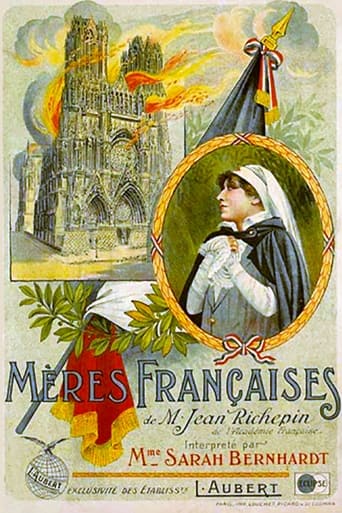
- Mothers of France (1917)
- The Call of the Blood (1920)
- Phroso (1922)
- Venus (1929)
- Chantage (1930)
Special recognition
- Recognized as a pioneer of the 'Film d'Art' movement
- Credited by film historians as a key figure in the birth of the American feature film industry due to the success of his Queen Elizabeth film.
Worked often with
- Sarah Bernhardt (Actress)
- Henri Desfontaines (Co-director)
- Jean Angelo (Actor)
- Sessue Hayakawa (Actor)
Studios
- Film d'Art
- Eclipse
- Paramount Pictures (Distribution)
- British International Pictures
Family
- Elsa Mercanton
Did you know?
- His film 'Queen Elizabeth' was one of the first feature-length films ever shown in the United States.
- He directed Sarah Bernhardt in her only sound film test shortly before her death.
- Mercanton often worked in both London and Paris, making him a truly international director of the early era.
- He directed the first film version of 'The Call of the Blood' based on Robert Hichens' novel.
- His daughter Victoria became one of the most respected film editors in French cinema history.
- He was one of the few directors of his era to successfully manage the transition from silent to sound cinema across different languages.
- He died suddenly in 1932 at the height of his career.
In their own words
Regarding Sarah Bernhardt: 'To capture the Divine Sarah on film is to preserve a piece of the soul of France for future generations.' (Context: During the filming of Queen Elizabeth)
On the future of cinema: 'The screen will one day speak as clearly as the stage, but with a much larger voice.' (Context: Discussing the advent of sound film in the late 1920s)
Questions and answers
Who was Louis Mercanton?
Louis Mercanton was a prominent Swiss-French film director and producer of the silent and early sound eras. He is best known for directing the legendary Sarah Bernhardt in several landmark films.
What films is Louis Mercanton best known for?
He is most famous for 'Les Amours de la reine Élisabeth' (1912), 'Adrienne Lecouvreur' (1913), and 'Jeanne Doré' (1915). These films were instrumental in establishing the feature film format.
When was Louis Mercanton born and when did they die?
He was born on December 7, 1879, in Nyon, Switzerland, and died on April 29, 1932, in Paris, France.
What was Louis Mercanton's directing style?
His style evolved from 'Film d'Art,' which emphasized theatricality and prestige, to a more modern cinematic approach involving location shooting and sophisticated sound techniques in his later years.
How did Louis Mercanton influence Hollywood?
The success of his film 'Queen Elizabeth' in America gave Adolph Zukor the capital and proof of concept needed to found Famous Players (Paramount Pictures), launching the feature film revolution in Hollywood.