Adrienne Lecouvreur
“The Divine Sarah Bernhardt in her most tragic and triumphant portrayal.”
About Adrienne Lecouvreur
The film follows the tragic life of Adrienne Lecouvreur, a celebrated 18th-century French actress at the Comédie-Française who rises from humble beginnings to become the toast of Paris. Her life becomes dangerously entangled in a high-stakes romance with the military hero Maurice de Saxe, which draws the jealous ire of the powerful Princess de Bouillon. As the rivalry between the two women intensifies, the Princess orchestrates a lethal plot involving a bouquet of poisoned violets sent to Adrienne. The climax depicts Adrienne's agonizing death in the arms of her lover, a scene famously performed by Sarah Bernhardt to showcase her legendary 'dying' technique on screen. The narrative serves as a dramatic exploration of the intersection between theatrical artifice and the harsh realities of aristocratic social hierarchies.
Cast & crew
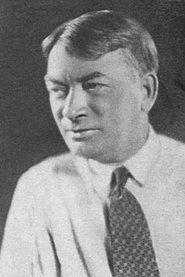
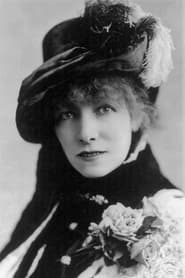
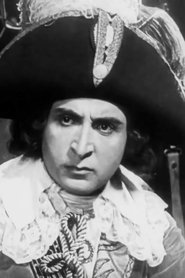
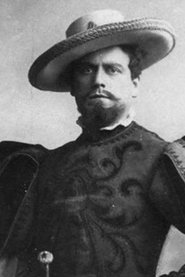

More from Louis Mercanton
View all →
More about Adrienne Lecouvreur
Production
- Release date
- January 24, 1913
- Country
- France
- Production
- Film d'Art, Eclipse
- Filmed in
- Paris, France, Studio Éclair, Épinay-sur-Seine, France
The film was an adaptation of the 1849 play by Eugène Scribe and Ernest Legouvé, which was a staple of Sarah Bernhardt's stage repertoire. Louis Mercanton and Henri Desfontaines directed the piece specifically to capture Bernhardt's performance for posterity, as she was already in her late 60s at the time of filming. The production utilized elaborate period costumes and painted backdrops typical of the 'Film d'Art' movement, which sought to elevate cinema by recording the performances of great stage actors. Despite the limitations of silent film, the production emphasized grand gestures and facial expressions to compensate for the lack of Scribe's famous dialogue.
Themes & topics
Historical background
In 1913, the film industry was transitioning from short 'attraction' films to longer, narrative-driven features. The 'Film d'Art' movement in France was at its peak, attempting to bridge the gap between the 'low' culture of early nickelodeons and the 'high' culture of the theater. This was also the era of the 'Suffragette' movement and rising tensions in Europe leading up to World War I, yet the film looks backward to the Enlightenment and the Napoleonic era's fascination with 18th-century tragedy.
Why this film matters
The film is a primary example of the 'Star System' in its infancy, where the presence of a world-renowned celebrity like Sarah Bernhardt was the primary selling point rather than the cinematic technique itself. It represents the early 20th-century obsession with preserving the ephemeral art of the stage through the new medium of celluloid. Furthermore, it solidified the 'tragic actress' archetype in early cinema, influencing how female stardom was constructed in the silent era.
Making of
The production was filmed during a period when Sarah Bernhardt was suffering from significant health issues, including the leg injury that would eventually lead to her amputation in 1915. Because of her physical limitations, the blocking of the scenes was carefully choreographed to minimize her need to walk long distances, often featuring her seated or leaning against furniture. The set design was overseen by artists from the Comédie-Française to ensure historical accuracy to the 18th-century setting. Mercanton reportedly had to manage Bernhardt's legendary temperament on set, as she was used to the total control she exerted over her own stage productions.
What critics said
Contemporary critics in 1913 praised the film for bringing the genius of Bernhardt to audiences who could not afford or travel to see her live performances. However, some early cinema purists argued that the film was too 'stagy' and failed to utilize the unique visual language of the camera. Modern film historians view it as a fascinating, if static, document of 19th-century acting styles that were already becoming obsolete by the time the film was shot.
What audiences thought
The film was a significant commercial success, particularly in North America and Europe, where Bernhardt had a massive following. Audiences were reportedly moved to tears by the final death scene, despite the lack of sound. It was often screened with live musical accompaniment that emphasized the melodramatic beats of the plot.
Visual style
The cinematography is characterized by a static camera and a 'proscenium arch' perspective, where the action takes place in front of the lens as if on a stage. There are very few close-ups, with the camera maintaining a medium-long shot to capture the full range of the actors' physical gestures. The lighting is flat and uniform, typical of early studio work, relying on the textures of the costumes to provide visual interest.
Innovations
The film utilized advanced tinting processes in some prints, specifically using red or amber hues to heighten the drama of the final scenes. It was also one of the longer narrative films of its year, pushing the boundaries of the then-standard one-reel format.
Music
As a silent film, there was no recorded soundtrack. However, original screenings were often accompanied by a live piano or small orchestra playing selections from Massenet or Cilea's opera 'Adriana Lecouvreur' to enhance the emotional resonance.
Film restoration
Considered a lost film. No complete prints are known to exist in public archives, though fragments or stills may survive in private collections.
Did you know?
- Sarah Bernhardt was approximately 68 years old when she played the role of Adrienne, despite the historical figure dying at age 38.
- This was one of several collaborations between Bernhardt and director Louis Mercanton, who also directed her in 'Les Amours de la reine Élisabeth' (1912).
- The film is historically significant as a 'Film d'Art' production, a movement intended to attract the intellectual elite to the cinema.
- The real Adrienne Lecouvreur was a pioneer of a more naturalistic acting style, which Bernhardt ironically portrays using her highly stylized, grand theatrical manner.
- The film was released in the United States by the French-American Film Company.
- Max Maxudian, who played Maurice de Saxe, was a frequent collaborator of Bernhardt and a respected stage actor in his own right.
- The 'poisoned bouquet' plot point became a famous trope in opera and theater following the success of the play this film is based upon.
- At the time of its release, the film was marketed as a 'living record' of the greatest actress in the world.
Memorable scenes
- The final scene where Adrienne receives the bouquet of violets, inhales their scent, and slowly succumbs to the poison in a highly choreographed display of physical agony and grace.
Influenced by
- The 1849 play 'Adrienne Lecouvreur' by Scribe and Legouvé
- The 1902 opera 'Adriana Lecouvreur' by Francesco Cilea
This film influenced
- Adrienne Lecouvreur (1928) starring Joan Crawford (Dream of Love)
- Adrienne Lecouvreur (1938) directed by Marcel L'Herbier
- The general trope of the 'dying diva' in silent melodrama
Where else to watch
- Currently unavailable for viewing due to its status as a lost film.
Famous quotes
I am not an actress when I die on stage; I am a woman who sees the end of all things. (Attributed to Bernhardt regarding her performance in this role)