
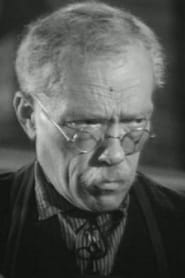
Boris Poslavsky
Actor
Born: January 24, 1897 in Saint Petersburg, Russian Empire Died: September 26, 1951 Active: 1936-1948 Birth Name: Boris Vladimirovich Poslavsky
Films
6 films
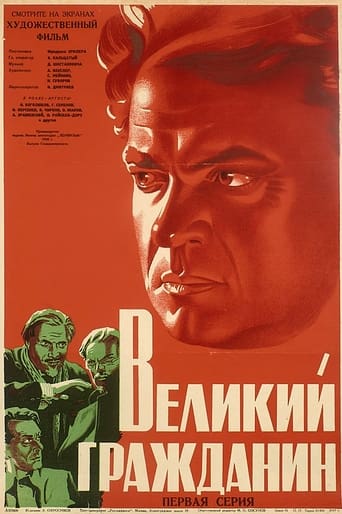
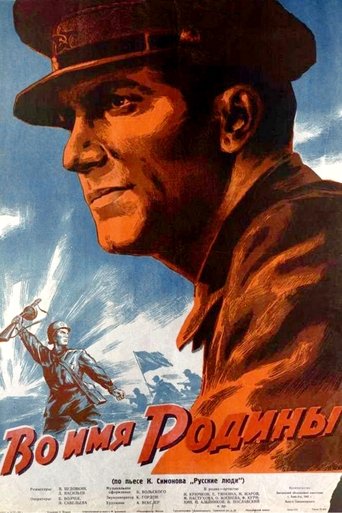
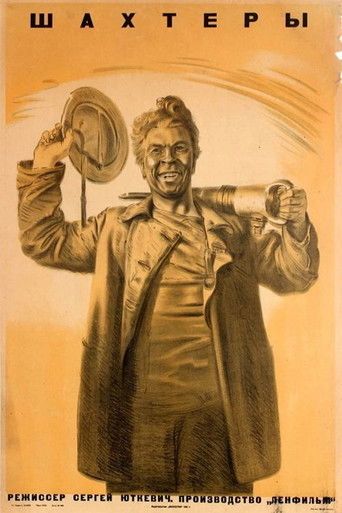
About Boris Poslavsky
Boris Vladimirovich Poslavsky — Soviet character actor whose the pivotal period of Stalinist cinema from the mid-1930s through the late 1940s. Born in Saint Petersburg, he received his theatrical training at the prestigious Leningrad Institute of Performing Arts, where he developed the foundation for his naturalistic acting style. Poslavsky began his career on the stage, performing with various Soviet theaters including the Leningrad Drama Theater before transitioning to film in 1936. His breakthrough role came in 'The Girlfriends' (1936), which established him as a reliable character actor capable of embodying the ideal Soviet citizen. Throughout his career, he specialized in playing working-class heroes, military officers, and party officials, becoming a familiar face in Soviet propaganda films that celebrated socialist values. His performances in 'Great Citizen' (1938) and 'The Defense of Tsaritsyn' (1942) showcased his ability to portray complex characters within the constraints of socialist realism. Poslavsky's career was interrupted by World War II, during which he contributed to the war effort through patriotic films and performances for soldiers. His final major role was in 'The Young Guard' (1948), Soviet war films of the era, cementing his legacy as recognizable character actors of his generation.
The Craft
On Screen
Poslavsky was known for his naturalistic and understated acting style within the constraints of socialist realism. He brought authenticity to his roles through careful character study and a subtle approach that avoided the exaggerated mannerisms common in earlier Soviet cinema. His performances were characterized by a quiet dignity and a deep understanding of the working-class characters he portrayed, making them relatable and human despite the ideological requirements of the films. He had a particular talent for conveying complex emotions through minimal gestures and facial expressions, a skill that made him especially effective in dramatic scenes.
Milestones
- Film debut in 'The Girlfriends' (1936) establishing him as a character actor
- Breakthrough role in 'Great Citizen' (1938) as a revolutionary character
- Performance in 'The Defense of Tsaritsyn' (1942) during wartime cinema
- Major role in 'The Young Guard' (1948),
- Recognition as a People's Artist of the RSFSR for contributions to Soviet cinema
Best Known For
Iconic Roles
Must-See Films
Accolades
Won
- People's Artist of the RSFSR (1947)
- Order of the Red Banner of Labour (1948)
- Stalin Prize (second degree) for 'The Young Guard' (1949)
Nominated
- Stalin Prize nomination for 'Great Citizen' (1939)
- Stalin Prize nomination for 'The Defense of Tsaritsyn' (1943)
Special Recognition
- Honored Artist of the RSFSR (1944)
- Medal for Valiant Labor in the Great Patriotic War (1945)
- Medal for the Defense of Moscow (1944)
Working Relationships
Worked Often With
Studios
Why They Matter
Impact on Culture
Boris Poslavsky played a significant role in shaping the visual representation of the ideal Soviet citizen during the Stalin era. His performances helped establish the archetype of the noble working-class hero that became central to Soviet cinema's propaganda efforts. Through his work in films like 'The Young Guard' and 'Great Citizen,' he contributed to the cultural memory of World War II and the revolutionary period, creating characters that embodied socialist values while maintaining human dignity. His naturalistic acting style influenced a generation of Soviet actors, helping to move Soviet cinema away from the theatrical mannerisms of the silent era toward more realistic performances.
Lasting Legacy
Poslavsky's legacy endures through his contributions to the golden age of Soviet cinema, particularly his work in films that have become classics of Russian film history. His performances continue to be studied by film scholars as examples of how actors navigated the demands of socialist realism while maintaining artistic integrity. Many of his films remain part of the Russian cultural canon, regularly screened in retrospectives and film festivals celebrating Soviet cinema. His influence can be seen in the work of later Soviet character actors who adopted his subtle, naturalistic approach to portraying working-class characters.
Who They Inspired
Poslavsky influenced Soviet cinema by demonstrating how character actors could bring depth and humanity to ideologically-driven roles. His naturalistic style provided an alternative to the more theatrical acting common in early Soviet films, paving the way for the more psychologically complex performances of the 1950s and 1960s. He particularly influenced younger actors in how to balance the demands of socialist realism with authentic character development, a skill that became increasingly important as Soviet cinema evolved. His work with directors like Ermler and Gerasimov helped establish new standards for ensemble acting in Soviet war films and historical dramas.
Off Screen
Poslavsky was married to actress Elena Poslavskaya, with whom he frequently collaborated both on stage and in film. The couple had one son, Vladimir, who later became a theater director. Despite his prominence in Soviet cinema, Poslavsky maintained a relatively private personal life, focusing primarily on his craft and avoiding the political controversies that affected many of his contemporaries. He was known among colleagues for his professionalism and dedication to his art, often spending hours preparing for even minor roles.
Education
Leningrad Institute of Performing Arts, graduated 1924
Family
- Elena Poslavskaya (1925-1951)
Did You Know?
- Poslavsky was originally trained as a stage actor and did not appear in films until he was nearly 40 years old
- He was a close friend of director Fridrikh Ermler, who cast him in multiple films
- During World War II, he performed for front-line soldiers as part of theater brigades
- His performance in 'The Young Guard' was so convincing that many viewers believed he had actually been a resistance fighter
- Poslavsky was known for his method of spending weeks living among workers to prepare for his roles
- He spoke out against the cult of personality in private, though never publicly
- Poslavsky's son later directed a documentary about his father's career
- He was one of the few actors to successfully transition from silent theater to sound film without formal retraining
- Poslavsky maintained a detailed diary throughout his career, which was published posthumously in 1991
- He was offered the lead role in 'Ivan the Terrible' but declined due to health issues
In Their Own Words
An actor must not play the worker, he must understand the worker. The difference is everything.
In our cinema, every character serves a purpose. My purpose is to show the dignity of ordinary people.
The camera sees everything. You cannot lie to it as you can to an audience in the theater.
When I play a Communist, I do not play an ideology, I play a man who believes in something greater than himself.
The most difficult thing in our art is to be simple. Complexity is easy, simplicity requires truth.
Frequently Asked Questions
Who was Boris Poslavsky?
Prominent Soviet character with credits in this catalog. He specialized in playing working-class heroes and was recognized as a People's Artist of the RSFSR for his contributions to Soviet cinema.
What films is Boris Poslavsky best known for?
Titles linked here include The Girlfriends (1936), Great Citizen (1938).
When was Boris Poslavsky born and when did he die?
Born January 24, 1897; died September 26, 1951.
What awards did Boris Poslavsky win?
Poslavsky was awarded the title of People's Artist of the RSFSR in 1947, received the Order of the Red Banner of Labour in 1948, and won the Stalin Prize (second degree) in 1949 for his performance in 'The Young Guard'. He also received several medals for his wartime contributions.
What was Boris Poslavsky's acting style?
Poslavsky was known for his naturalistic and understated acting style within the constraints of socialist realism. He brought authenticity to his roles through careful character study and subtle performances, avoiding the exaggerated mannerisms common in earlier Soviet cinema while effectively portraying working-class characters.
Did Boris Poslavsky work with any famous directors?
Yes, Poslavsky frequently collaborated with prominent Soviet directors including Fridrikh Ermler, who cast him in multiple films, and Sergei Gerasimov, who directed him in 'The Young Guard'. These collaborations helped establish his reputation as a reliable character actor.
What was Boris Poslavsky's contribution to Soviet cinema?
Poslavsky helped establish the archetype of the noble working-class hero in Soviet cinema and influenced the move toward more naturalistic acting styles. His performances in war films and historical dramas contributed to the cultural memory of the Soviet experience during World War II and the revolutionary period.