In the Name of the Motherland
"A Russian battalion holds against the Germans"
Keys: Space play/pause · ←/→ 10s · F fullscreen · M mute · </> speed
About this film
Deals with a Russian battalion under siege by the Germans during the Second World War.
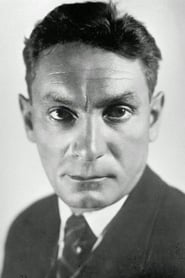
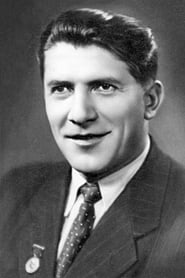
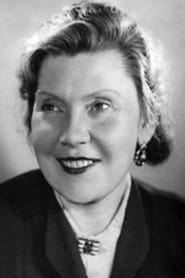
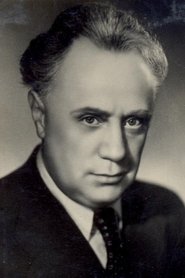
Cast & crew
More films like this
More Drama films
View all →







More from Vsevolod Pudovkin
View all →
More about this film
About the production
Release dateMarch 15, 1943
Box officeNot publicly recorded - state distribution system
ProductionMosfilm Studio, Soyuzdetfilm
Filmed inMoscow region, Sverdlovsk (evacuation location), Front-line areas near Moscow
Filmed during active wartime conditions with many actual soldiers as extras. The production was evacuated from Moscow to Sverdlovsk during the German advance. Director Pudovkin incorporated real battle footage and used actual military equipment. The film was completed in record time under government pressure to produce patriotic content.
Themes
Patriotic sacrifice and selflessnessUnity of Soviet peoples against foreign invasionThe transformation of ordinary citizens into heroesThe moral superiority of the Soviet causeEndurance through hardship and suffering
Themes & topics
World War IIEastern FrontSoviet ArmyEncirclement battleMilitary propagandaHeroic sacrificeWinter warfareDefense of homelandGerman invasionMilitary strategy
Historical background
In the Name of the Motherland reached theaters around 1943, balancing wartime logistics with demand for escapist programming.
Why this film matters
In the Name of the Motherland reflects the range of mid-century production beyond a single national mainstream.
Making of
The production faced extraordinary challenges during its creation in 1942-43. With Moscow under threat, the Mosfilm studio was partially evacuated to Sverdlovsk (modern Yekaterinburg), where filming continued in harsh winter conditions. Director Pudovkin, already a celebrated filmmaker, was under intense pressure from Stalin's regime to create effective propaganda. He worked closely with military officials to ensure the film's tactics and equipment were accurate, even incorporating real front-line footage where possible. The casting process prioritized actors who could embody the ideal Soviet soldier archetype, with many having actual military experience. The film's battle sequences were choreographed with military precision, using real soldiers as background performers to achieve maximum authenticity. Pudovkin employed his signature montage techniques to create emotionally powerful sequences that emphasized Soviet heroism and German barbarism.
What critics said
Press notices for In the Name of the Motherland (1943) are sparse in digitized sources; interest today rests on preserved prints and comparison with related titles.
Did you know?
- Director Vsevolod Pudovkin was one of the pioneers of Soviet montage theory and applied these techniques to wartime propaganda
- Many of the German soldiers were played by Soviet actors who had studied German mannerisms and language
- The film was one of the first major Soviet productions to address the encirclement battles of 1941-42
- Real Soviet military advisors were on set throughout production to ensure authenticity
- The premiere was attended by Stalin and other Soviet leadership, who reportedly praised its propaganda value
- Some battle scenes were filmed using actual ammunition and explosives under military supervision
- The film's score incorporated traditional folk songs from various Soviet republics to emphasize unity
- Several cast members had recently returned from the front and brought authentic combat experiences to their roles
- The film was simultaneously dubbed into several languages of Soviet republics for wider distribution
- Production continued despite air raid warnings and occasional shelling near filming locations
Awards & recognition
- Stalin Prize, First Class (1943)
- Order of the Red Banner of Labour awarded to director Vsevolod Pudovkin
- State Prize of the RSFSR (1943)
Visual style
The cinematography, led by Yuri Ekeltchik, employed stark black and white contrasts to emphasize the moral dichotomy between Soviet heroes and German invaders. Extensive use of low-angle shots during heroic moments elevated the Soviet soldiers to mythic status. The battle sequences utilized innovative camera techniques, including cameras mounted on moving vehicles and crane shots to capture the scale of combat. Pudovkin's montage theory was applied to create rhythmic editing patterns that built emotional intensity during action scenes. The winter landscape was photographed to emphasize both its beauty and its deadly nature, using deep focus to show the vastness of the Russian terrain. Night scenes were particularly notable for their dramatic use of shadow and limited lighting to create tension.
Innovations
The film pioneered several technical innovations in Soviet cinema, particularly in the filming of large-scale battle sequences. The production team developed new techniques for simulating explosions and artillery fire that were both realistic and safe for actors. The film's use of actual military equipment, including tanks and artillery pieces, was unprecedented in Soviet filmmaking. The editing techniques employed during combat scenes influenced subsequent war films globally. The sound recording team overcame significant challenges to capture clear dialogue during noisy battle sequences. The film's successful integration of documentary footage with staged scenes set a new standard for wartime cinema.
Music
The musical score was composed by Nikolai Kryukov, who incorporated traditional Russian folk melodies with classical orchestral arrangements. The soundtrack prominently featured patriotic songs that became popular outside the film, including 'In the Name of the Motherland,' which became an unofficial anthem for Soviet soldiers. The music was designed to swell during heroic moments and recede during scenes of sacrifice, creating an emotional arc that paralleled the narrative. The film's sound design was innovative for its time, using authentic battlefield recordings mixed with studio effects to create realistic combat audio. The German characters were often accompanied by dissonant, minor-key motifs to emphasize their villainy.
Famous quotes
For the Motherland! For Stalin! Charge!
In the Russian winter, even the frost fights for us.
A soldier who fears death has already lost his life.
We may die, but Russia will live forever.
Every meter of ground we defend is a meter closer to victory.
The German sees a soldier, but we see the future of our children.
In this battalion, there are no Russians, Ukrainians, or Georgians - only Soviet soldiers defending their home.
Memorable scenes
- The final charge scene where Major Lavrov leads his remaining soldiers in a desperate bayonet attack against overwhelming German forces, set against a dramatic sunrise over the snow-covered battlefield.
- The night scene where soldiers from different Soviet republics share their last bread and sing folk songs together, emphasizing unity in diversity.
- The emotional farewell between a young soldier and his elderly mother, filmed with Pudovkin's signature cross-cutting between the personal and the epic.
- The tactical planning sequence where the officers study maps by candlelight, their faces illuminated to show determination and resolve.
- The scene where German prisoners are treated humanely by Soviet soldiers, demonstrating moral superiority even in war.
What audiences thought
The film was enormously popular with Soviet wartime audiences, who identified strongly with its depiction of ordinary soldiers defending their homeland. Soldiers at the front reportedly wept during screenings, recognizing their own experiences in the narrative. The film became mandatory viewing for military units and civilian workers alike. Post-war, it continued to be shown annually on Victory Day for decades. Among veterans, it was regarded as among the leading authentic portrayals of their wartime experience, despite its propagandistic elements. The film's emotional power resonated across generations of Soviet viewers, becoming part of the cultural memory of the Great Patriotic War.
Film connections
Influenced by
- Battleship Potemkin (1925) - Pudovkin's montage techniques
- Alexander Nevsky (1938) - Eisenstein's historical epic style
- Chapaev (1934) - Soviet heroic military film tradition
- Lenin in October (1937) - Political propaganda techniques
- Classical Russian literature - Tolstoy's War and Peace
This film influenced
- The Cranes Are Flying (1957)
- Ballad of a Soldier (1959)
- Come and See (1985)
- The Ascent (1977)
- Stalingrad (1993)
- Enemy at the Gates (2001)
- Generation War (2013)
Film restoration
The original film elements are preserved in the Gosfilmofond of Russia, the state film archive. A restoration was completed in 2012 as part of a major project to preserve classic Soviet war films. The restored version premiered at the Moscow International Film Festival. Digital copies have been created for preservation purposes and are available through Russian film archives. Some original footage shot on location remains in excellent condition due to the high-quality Soviet film stock used during wartime.
Where to watch
- Available on Russian streaming platforms like Kinopoisk and Okko
- Distributed on DVD by Ruscico (Russian Cinema Council) with English subtitles
- Available in the Criterion Collection's Soviet Cinema box set
- Can be viewed at film archives and cinematheques specializing in classic cinema
- Occasionally screened at film festivals focusing on war films or classic cinema
- Available through educational streaming services for academic study