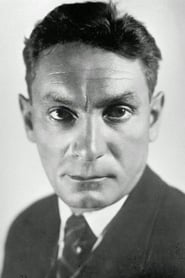
Vsevolod Pudovkin
Actor & Director
Born: February 16, 1893 in Penza, Russian Empire Died: June 30, 1953 Active: 1924-1953 Birth Name: Vsevolod Illarionovich Pudovkin
Films
16 films
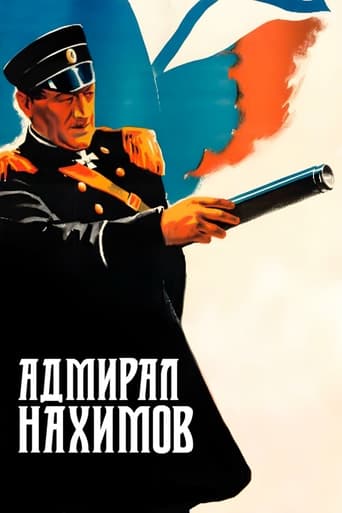
Admiral Nakhimov
1946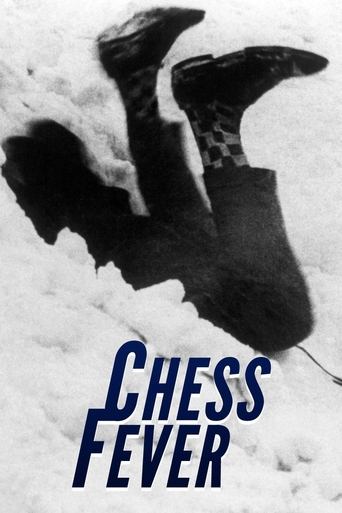
Chess Fever
1925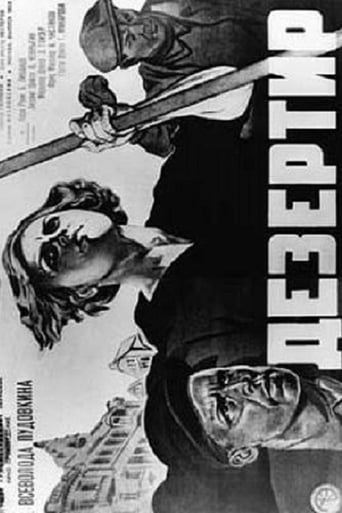
Deserter
1933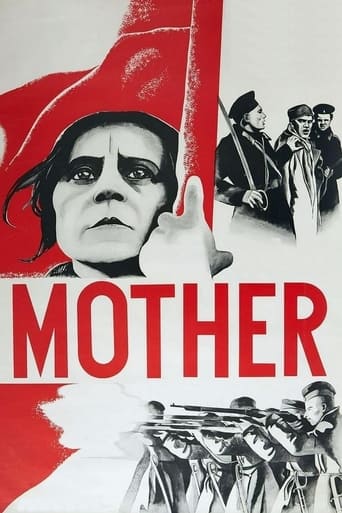
Mother
1926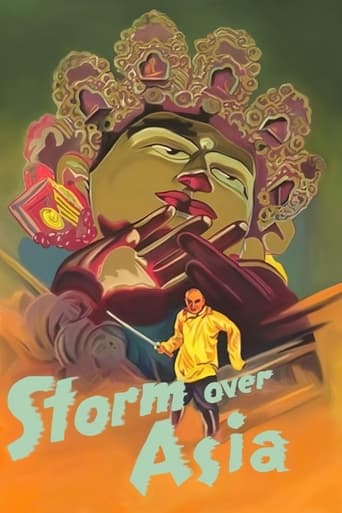
Storm Over Asia
1928No Poster
Collection of Films for the Armed Forces #6
1941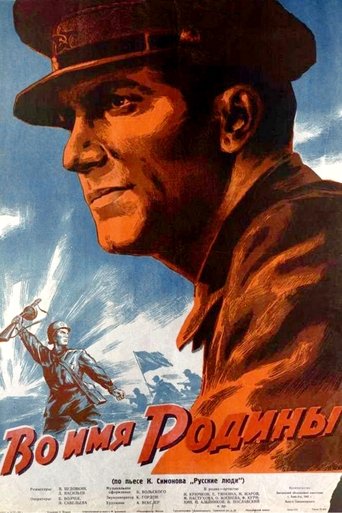
In the Name of the Motherland
1943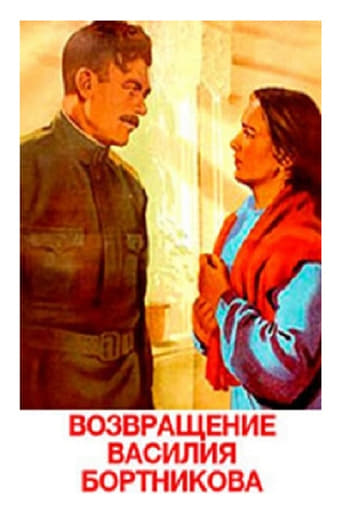
The Return of Vasili Bortnikov
1953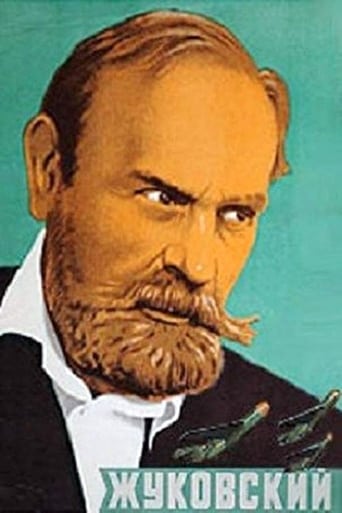
Zhukovsky
1950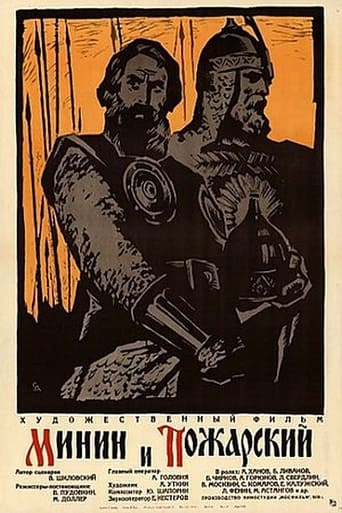
Minin and Pozharsky
1939
A Simple Case
1932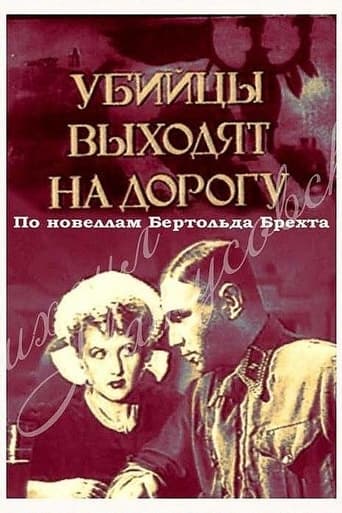
The Murderers Are Coming
1942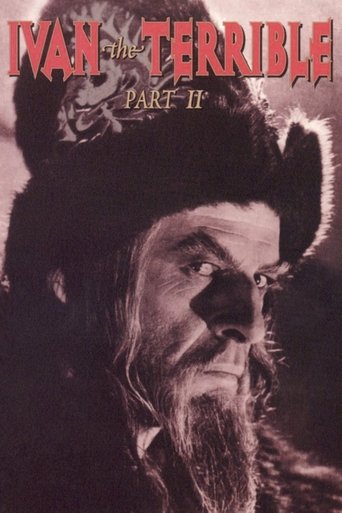
Ivan the Terrible, Part II: The Boyars' Plot
1958
The End of St. Petersburg
1927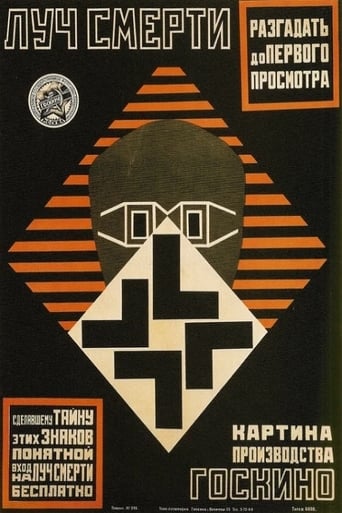
The Death Ray
1925About Vsevolod Pudovkin
Vsevolod Illarionovich Pudovkin — Soviet film director, screenwriter, actor, and film theorist who fundamentally shaped the language of cinema through his innovative approach to montage. Originally trained as a chemist, he served in the Red Army during the Russian Civil War before discovering his passion for filmmaking under the guidance of Lev Kuleshov. Pudovkin emerged as one of the three great Soviet montage theorists alongside Sergei Eisenstein and Dziga Vertov, though his approach emphasized psychological continuity and emotional linkage rather than Eisenstein's dialectical collision. His masterpiece 'Mother' (1926), based on Maxim Gorky's novel, became an international sensation and demonstrated his unique ability to blend political messaging with deeply human storytelling. Throughout the 1920s, he created a remarkable body of work including 'The End of St. Petersburg' (1927) and 'Storm Over Asia' (1928) that established him excelled in silent cinema. Despite the political pressures of Stalin's regime, Pudovkin managed to continue working, though his later films were more constrained by state requirements. He also contributed significantly to film education, teaching at the State Institute of Cinematography (VGIK) and writing influential theoretical works that continue to educate filmmakers worldwide. His the silent era, the transition to sound, and the difficult wartime years, leaving an indelible mark on both Soviet and world cinema.
The Craft
On Screen
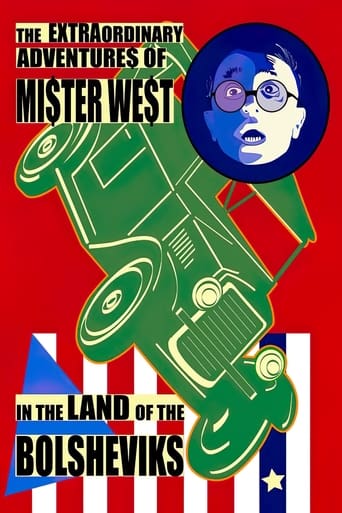
Pudovkin's acting career was secondary to his directing, though he appeared in several significant films. His performances were typically in service of his directorial vision, often in early experimental works or later wartime propaganda films. As an actor, he favored a naturalistic approach that aligned with his theoretical emphasis on psychological realism. His most notable acting role was in 'The Extraordinary Adventures of Mr. West in the Land of the Bolsheviks' (1924), where he played alongside other future Soviet directors in this satirical work. In his later acting appearances during WWII, he adopted the more stylized, heroic mode required by wartime propaganda, demonstrating his ability to adapt to changing political demands while maintaining his commitment to cinema.
Behind the Camera
Pudovkin's directing style was characterized by his innovative 'linkage' or 'connective' montage approach, which differed from Eisenstein's collision-based theory. He believed in building emotional and psychological continuity between shots, using editing to guide the audience's emotional response and create a unified narrative experience. His films often focused on individual characters' psychological transformations within broader social and political contexts, making revolutionary themes accessible through personal stories. Pudovkin excelled in visual storytelling, using close-ups and symbolic imagery to convey complex emotions and ideas. He emphasized the importance of rhythm and pacing in editing, creating films that flow with musical precision. His direction balanced artistic innovation with clear narrative comprehension, making his work both intellectually stimulating and emotionally engaging.
Milestones
- Directed the masterpiece 'Mother' (1926), considered one of the greatest films of the silent era
- Developed influential theories of montage and film editing in his books 'Film Technique' and 'Film Acting'
- Created 'Storm Over Asia' (1928), an acclaimed epic that blended documentary and fictional elements
- Survived Stalin's purges when many other Soviet filmmakers were executed or imprisoned
- Served as a professor at VGIK (State Institute of Cinematography), educating generations of filmmakers
- Made the transition from silent films to sound while maintaining artistic integrity
- Received multiple Stalin Prizes for his contributions to Soviet cinema
- His early comedy 'Chess Fever' (1925) demonstrated versatility beyond political epics
Best Known For
Iconic Roles
Must-See Films
Accolades
Won
- Stalin Prize (First Class) for 'Minin and Pozharsky' (1941)
- Stalin Prize (First Class) for 'Admiral Nakhimov' (1946)
- Order of Lenin (1947)
- Order of the Red Banner of Labour (1935)
- Order of the Red Star (1944)
- Medal 'For the Defence of Moscow' (1944)
- Medal 'For Valiant Labour in the Great Patriotic War 1941-1945' (1945)
Nominated
- Venice Film Festival - Mussolini Cup for 'Storm Over Asia' (1928)
- Venice Film Festival - Mussolini Cup for 'Deserter' (1933)
Special Recognition
- People's Artist of the RSFSR (1948)
- Honored Artist of the RSFSR (1935)
- Professor at the State Institute of Cinematography (VGIK)
- Films preserved in the Criterion Collection and studied worldwide as cinema classics
- His theoretical works remain standard texts in film schools globally
Working Relationships
Worked Often With
Studios
Why They Matter
Impact on Culture
Pudovkin's impact on cinema was revolutionary and far-reaching, extending far beyond Soviet borders. His development of 'linkage' montage provided filmmakers with a sophisticated tool for creating emotional continuity and psychological depth, influencing directors from Alfred Hitchcock to modern auteurs. His film 'Mother' demonstrated how political themes could be conveyed through personal, emotionally resonant storytelling, establishing a template for socially engaged cinema that balanced ideology with humanism. Pudovkin's theoretical writings, particularly 'Film Technique' and 'Film Acting,' became foundational texts in film education worldwide, translating complex cinematic concepts into practical guidance for filmmakers. His work helped establish cinema as a legitimate art form capable of expressing complex psychological and social ideas, contributing to the elevation of film from entertainment to art. During WWII, his propaganda films demonstrated cinema's power as a tool for national mobilization, showing how artistic techniques could serve political purposes without completely sacrificing aesthetic value.
Lasting Legacy
Vsevolod Pudovkin's legacy endures through both his films and his theoretical contributions to cinema. His major works of the 1920s, particularly 'Mother,' 'Storm Over Asia,' and 'The End of St. Petersburg,' remain masterpieces of silent cinema and are regularly screened in film retrospectives and studied in cinema courses worldwide. His books on film technique continue to be essential reading for film students, offering insights into editing and performance that remain relevant in the digital age. Pudovkin's approach to montage influenced generations of filmmakers, from classical Hollywood directors to contemporary auteurs who use editing to create psychological depth and emotional resonance. His ability to balance artistic innovation with clear narrative communication made his work particularly influential in commercial cinema, where his techniques were adapted to serve storytelling needs. The survival and restoration of his films have ensured that new generations can discover his unique vision, while his theoretical work continues to inform film scholarship and practice. Pudovkin stands as one of cinema's great pioneers, whose contributions helped establish film as both an art form and a craft with its own distinct language and techniques.
Who They Inspired
Pudovkin's influence on cinema is both direct and indirect, visible in the work of countless filmmakers who may never have seen his films but absorbed his techniques through film education and the evolution of cinematic language. His emphasis on psychological editing influenced Hollywood directors like Alfred Hitchcock, who used similar techniques to build suspense and emotional intensity. The French New Wave directors, particularly in their focus on character psychology and innovative editing, drew on Pudovkin's theoretical work. Contemporary directors known for their precise control of emotional tone through editing, such as David Fincher and Denis Villeneuve, continue techniques that Pudovkin pioneered. His influence extends to documentary filmmakers through his work on 'Storm Over Asia,' which blended documentary and fictional elements in ways that anticipated modern hybrid forms. Film schools worldwide continue to teach his montage theories, ensuring that new generations of filmmakers absorb his insights into the psychological power of editing. Even in the age of digital editing, Pudovkin's fundamental principles about rhythm, continuity, and emotional construction remain essential to the craft of filmmaking.
Off Screen
Pudovkin's personal life was marked by both professional dedication and the challenges of living through turbulent political times. He married actress Anna Zemtsova in the 1920s, though the marriage ended in divorce. His second marriage was to actress Vera Baranovskaya, who starred as the mother in his masterpiece 'Mother' and became his most frequent collaborator. Unlike many of his contemporaries, Pudovkin managed to navigate the dangerous political waters of Stalin's Russia, though he was briefly imprisoned during the purges. He suffered a serious heart attack in 1951 but continued working until his death in 1953. His life reflected the trajectory of Soviet cinema itself - from the creative explosion of the 1920s through the constraints of the Stalinist era to the challenges of wartime production.
Education
Pudovkin initially studied chemistry at Moscow State University before serving in the Red Army during the Russian Civil War. After the war, he discovered his passion for cinema and enrolled in Lev Kuleshov's legendary workshop at the State Technical School of Cinematography, where he studied alongside future Soviet directors like Boris Barnet and Vladimir Fogel. This education under Kuleshov was crucial, as it exposed him to Kuleshov's experiments with montage and the psychological effects of editing. Pudovkin graduated in 1925 and immediately began his directorial career, though he continued to develop his theoretical understanding of cinema throughout his life, eventually becoming a professor himself at VGIK.
Family
- Anna Zemtsova (1920s-1930s)
- Vera Baranovskaya (1930s-1953)
Did You Know?
- Originally trained as a chemist and worked in a laboratory before discovering cinema
- Served as a military doctor's assistant during World War I before joining the Red Army
- His comedy 'Chess Fever' (1925) featured real chess champion José Raúl Capablanca in a cameo
- Was briefly imprisoned during Stalin's Great Purge in 1937 but was released after influential colleagues intervened
- His film 'Mother' was banned in several countries for its revolutionary content but became an art house sensation
- Wrote two influential books on cinema theory that are still in print: 'Film Technique' and 'Film Acting'
- Survived a major heart attack in 1951 but returned to work immediately after recovery
- His last film 'The Return of Vasili Bortnikov' was incomplete at the time of his death
- Was one of the few major Soviet directors of his generation to die of natural causes rather than political persecution
- His films were rediscovered and celebrated in the West during the 1960s film revival movement
- Pudovkin and Eisenstein were rivals as well as colleagues, with different approaches to montage theory
- His wife Vera Baranovskaya won the Best Actress award at the Venice Film Festival for her role in 'Mother'
In Their Own Words
Editing is the creative force of filmic art. It is here that the film-maker expresses his view of reality.
The film is a battle. The first stage is the battle for the audience's attention.
Montage is the means by which the film-maker expresses his view of reality. It is the method by which the director creates his own world.
A film should be built like a symphony, with each shot contributing to the overall emotional and intellectual effect.
The art of cinema consists not in the reproduction of reality but in the creation of a new reality based on the material of life.
Every cut must have a purpose, whether it's to advance the story, reveal character, or evoke emotion.
The power of cinema lies in its ability to show the inner world of characters through external means.
Frequently Asked Questions
Who was Vsevolod Pudovkin?
Soviet on YTB.my. He created several masterpieces of silent cinema including 'Mother' (1926) and 'Storm Over Asia' (1928), and wrote influential theoretical books that continue to educate filmmakers worldwide.
What films is Vsevolod Pudovkin best known for?
Titles linked here include Mother (1926), Storm Over Asia (1928).
When was Vsevolod Pudovkin born and when did he die?
Born February 16, 1893; died June 30, 1953.
What awards did Vsevolod Pudovkin win?
Pudovkin received multiple Stalin Prizes (the Soviet Union's highest artistic honor) for 'Minin and Pozharsky' (1941) and 'Admiral Nakhimov' (1946). He was also named People's Artist of the RSFSR and received the Order of Lenin and Order of the Red Banner of Labour for his contributions to Soviet cinema.
What was Vsevolod Pudovkin's directing style?
Pudovkin's directing style was characterized by his 'linkage' montage approach, which emphasized emotional and psychological continuity between shots. Unlike Eisenstein's collision-based montage, Pudovkin used editing to build emotional resonance and guide the audience's psychological response. His films often focused on individual characters' transformations within broader social contexts.