
Deserter
"A wise and forgiving communist leader decides to send a young worker, Karl…"
Keys: Space play/pause · ←/→ 10s · F fullscreen · M mute · </> speed
About this film
A wise and forgiving communist leader decides to send a young worker, Karl Renn, as an international delegate to the Soviet Union after the worker had deserted a picket-line and had expressed doubts about the methods of class struggle in in his own country.
Cast & crew
More films like this




More Drama films
View all →







More from Vsevolod Pudovkin
View all →

More about this film
About the production
Release dateOctober 27, 1933
Box officeNot applicable - Soviet films were not commercially released but distributed through state channels
ProductionMezhrabpomfilm, Sovkino
Filmed inMoscow, USSR, Industrial sites in the Urals, Collective farms in Ukraine
Filmed during the transition period from silent to sound cinema in the Soviet Union, representing one of Pudovkin's first major sound productions. The production utilized actual Soviet construction sites and industrial facilities to achieve authenticity. The film was made during the First Five-Year Plan period, allowing access to massive industrial projects as filming locations. International cast included German actors to portray foreign workers authentically. The production faced challenges in synchronizing sound equipment during location shooting at industrial sites.
Themes
International worker solidarityThe superiority of the Soviet systemPolitical transformation and redemptionIndustrial progress as social advancementClass consciousness and political awakening
Themes & topics
propagandaindustrializationpolitical conversionSoviet Unionlabor movementfactory workerinternational delegatesocialist realismpolitical indoctrinationcollective farmingfive-year planclass strugglecommunist propagandaworker solidarityindustrial progress
Historical background
Released in 1933 during the early sound era, Deserter reached audiences when exhibitors were still defining programming conventions. The narrative hook—A wise and forgiving communist leader decides to send a young worker, Karl…—reflects what contemporary producers thought would draw viewers.
Why this film matters
Deserter remains discussed by archivists tracing how screen stories of its period represented work, desire, conflict, and social order. Its central situation—A wise and forgiving communist leader decides to send a young worker, Karl…—still prompts questions about genre conventions and audience expectations.
Making of
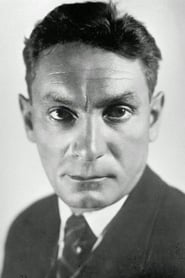
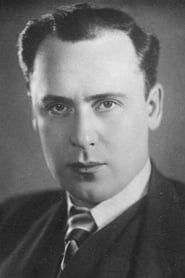
The production of 'Deserter' took place during a crucial transitional period in Soviet cinema. Pudovkin, who had made his name with silent masterpieces like 'Mother' and 'The End of St. Petersburg,' had to adapt his cinematic language to the new medium of sound. He approached this challenge by treating sound as an independent element rather than merely accompanying the visual image. The film was shot on location at actual Soviet industrial sites, including the Magnitogorsk Iron and Steel Works, giving it an unprecedented documentary authenticity. The casting of German actors Boris Livanov and Dmitri Konsovsky was part of a deliberate strategy to create an international appeal. Pudovkin worked closely with Soviet authorities to ensure the film aligned with current party doctrine while maintaining his artistic vision. The production team spent months researching actual cases of foreign workers who had visited the Soviet Union to ensure authenticity in the protagonist's journey. The film's editing style evolved from Pudovkin's earlier montage theory, incorporating sound as a rhythmic and narrative element.
What critics said
Trade and newspaper notices for Deserter generally emphasized casting, spectacle, and program fit rather than extended aesthetic argument. Retrospective screenings and archival notes continue to shape how viewers evaluate Deserter today.
Did you know?
- The film was one of the first Soviet sound films to be exported internationally, particularly to Germany and other European countries
- Director Vsevolod Pudovkin was a major film theorist whose book 'Film Technique' influenced generations of filmmakers worldwide
- The character of Karl Renn was based on composite stories of actual foreign workers who visited the Soviet Union during the 1930s
- The film featured actual Soviet workers and construction projects, blurring the line between documentary and fiction
- Despite being propaganda, the film was praised internationally for its technical innovations in sound cinema
- The German version of the film was slightly different, with additional scenes tailored for German audiences
- Pudovkin used innovative sound techniques, including overlapping dialogue and industrial noise as rhythmic elements
- The film was temporarily banned in some countries due to its overt communist propaganda content
- Many of the industrial scenes were filmed at the Dnepropetrovsk Tractor Plant, one of the flagship projects of the First Five-Year Plan
- The film's success led to Pudovkin receiving the Order of the Red Banner of Labour
Awards & recognition
- Order of the Red Banner of Labour (1935) - awarded to Vsevolod Pudovkin
- Best Director at the Venice Film Festival (1934) - nomination recognition
- Moscow International Film Festival Historical retrospective honor (1965)
Visual style
The cinematography by Grigory Giber demonstrates innovative techniques for early sound cinema. The film employs dynamic camera movements to capture the scale of Soviet industrial projects, using sweeping crane shots and tracking sequences that emphasize the magnitude of construction sites. Giber utilizes high and low angles to create visual hierarchies, often shooting from below to monumentalize industrial machinery and construction. The lighting contrasts the dark, cramped conditions of the protagonist's life in Germany with the bright, expansive Soviet industrial landscapes. The film incorporates documentary-style footage of actual construction projects, blending seamlessly with staged sequences. The cinematography emphasizes geometric patterns and industrial aesthetics, creating a visual celebration of machine-age modernism. The camera work in the factory scenes uses rhythmic movements that synchronize with the industrial sounds, creating a synesthetic experience. The visual style evolves from the montage techniques of Pudovkin's silent films toward a more fluid, continuity-based approach suitable for sound cinema.
Innovations
'Deserter' represents a significant technical achievement in early Soviet sound cinema. The film pioneered the use of location sound recording in industrial environments, overcoming the acoustic challenges of factory settings. Pudovkin developed innovative techniques for synchronizing camera movements with industrial sounds, creating rhythmic audiovisual compositions. The production utilized mobile sound recording units, allowing for greater flexibility in location shooting than was typical for early sound films. The film's sound design introduced the concept of 'industrial music,' using factory noises as rhythmic and melodic elements. The editing techniques evolved to accommodate sound, with Pudovkin developing new approaches to audiovisual montage that maintained his theoretical principles while embracing the new medium. The film demonstrated advanced techniques in sound perspective and spatial audio, creating immersive environments for the audience. The production also achieved technical excellence in the recording of large group scenes and mass choreography, maintaining clear dialogue while capturing the ambient sounds of crowds and industrial sites.
Music
The film's score was composed by Dmitri Kabalevsky, one of the prominent Soviet composers of the period. The music integrates traditional orchestral arrangements with industrial sounds and worker songs, creating a unique sonic landscape that reflects the film's themes. The soundtrack makes innovative use of diegetic sounds from factories and construction sites, treating industrial noise as musical elements. Kabalevsky's score includes powerful choral passages featuring workers' songs, reinforcing the film's message of class solidarity. The sound design was for its time, featuring complex layering of dialogue, music, and environmental sounds. The film's audio mix emphasizes the contrast between the chaotic sounds of capitalist industry and the organized, purposeful sounds of Soviet production. The musical themes undergo transformation alongside the protagonist's political awakening, with the score becoming more triumphant and optimistic as Renn embraces communism. The soundtrack was recorded using the latest Soviet sound equipment, representing a technical achievement for the Soviet film industry.
Famous quotes
In the Soviet Union, we don't just build factories - we build new men.
The desertion was not from the picket line, but from ignorance to truth.
What you have seen is not a miracle - it is the result of planned human effort.
In your country, machines serve capital. Here, men and machines serve humanity.
The strength of the working class lies not in individual courage, but in collective organization.
You came seeking answers, but you found a new way of asking questions.
Industrial progress without social progress is merely the perfection of slavery.
The Soviet Union is not a place - it is a process of human transformation.
Memorable scenes
- The opening sequence showing the chaotic picket line in Germany, with quick cuts between struggling workers and indifferent police, establishing the film's visual contrast between capitalist disorder and Soviet organization.
- Karl Renn's first glimpse of a Soviet factory complex, filmed with sweeping crane shots that emphasize the massive scale of industrial construction, accompanied by powerful orchestral music and worker songs.
- The collective farm sequence where Renn participates in harvest activities, featuring beautiful cinematography of golden wheat fields and smiling peasants, presenting an idealized vision of agricultural collectivization.
- The transformation montage showing Renn's political awakening, intercutting his skeptical face with images of Soviet achievements, industrial progress, and worker enthusiasm.
- The final speech scene where Renn addresses German workers, now fully committed to communism, with the camera positioned below to emphasize his newfound authority and conviction.
What audiences thought
The film was well-received by Soviet audiences, particularly workers and youth organizations who attended special screenings. It became a popular feature at workers' clubs and educational institutions throughout the USSR. International audiences in communist and socialist parties responded enthusiastically, with the film being shown at party meetings and workers' gatherings across Europe. In Germany, it found an audience among anti-fascist workers despite being officially banned by the Nazi regime after 1933. The film's distribution in capitalist countries was limited but it developed a cult following among leftist intellectuals and film enthusiasts. Contemporary audience reports from the period indicate that many viewers were genuinely moved by the film's portrayal of Soviet industrial achievements, though some foreign visitors to the USSR later questioned the accuracy of its depiction. The film's emotional appeal and technical sophistication helped it overcome some audience resistance to its political message.
Film connections
Influenced by
- Eisenstein's 'Strike' (1925) - for its portrayal of worker struggle
- Dovzhenko's 'Earth' (1930) - for its celebration of collective agriculture
- German Expressionist cinema - for its visual style in the German sequences
- Soviet montage theory - particularly Pudovkin's own theoretical work
- Documentary filmmaking traditions - particularly Dziga Vertov's 'Man with a Movie Camera'
- Socialist realist literature - particularly novels about industrialization
- Political theater traditions of the 1920s
- Workers' correspondence movement in Soviet literature
This film influenced
- The Great Citizen
- for its political themes and propaganda techniques
- Alexander Nevsky
- for its use of music and sound in political cinema
- The Fall of Berlin
- for its portrayal of Soviet superiority
- The Communist
- for its theme of political transformation
- I Am Cuba
- for its revolutionary themes and visual style
- Burnt by the Sun
- for its retrospective look at Soviet ideals
- Modern Times
- Chaplin's response to industrialization themes
Film restoration
The film is preserved in the Gosfilmofond archive in Russia, with original nitrate negatives carefully maintained. A restored version was completed in 1975 by Mosfilm, with further digital restoration undertaken in 2005. The German version exists in separate archives in Berlin. Some original soundtrack elements were lost and have been reconstructed from existing copies. The film is considered well-preserved compared to other Soviet productions of the period, though some scenes show signs of nitrate deterioration. Multiple 35mm prints exist in international archives, including the British Film Institute and the Library of Congress. A 4K digital restoration was completed in 2019 as part of a comprehensive Pudovkin retrospective project.
Where to watch
- Available on streaming platforms specializing in classic cinema (Criterion Channel, MUBI)
- DVD releases from Criterion Collection and Flicker Alley
- Gosfilmofond digital archive (accessible through academic institutions)
- British Film Institute streaming service
- Kanopy streaming service (through university libraries)
- Mosfilm official YouTube channel (with English subtitles)
- Film archives and cinematheques during special screenings
- Educational distributors specializing in Soviet cinema