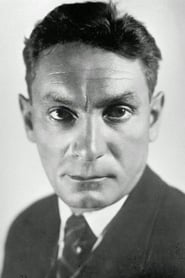
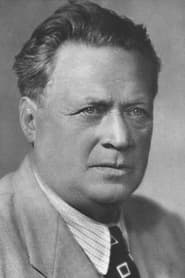
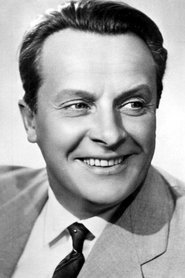
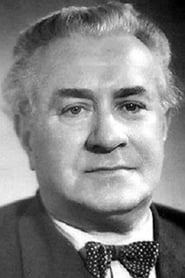
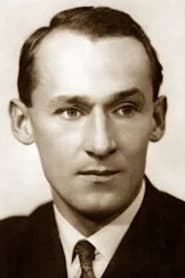
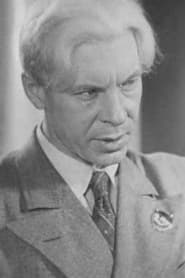
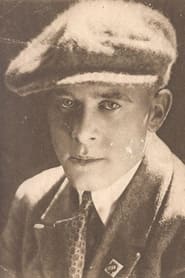
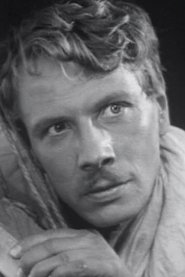
Admiral Nakhimov
"Famous rising"
Keys: Space play/pause · ←/→ 10s · F fullscreen · M mute · </> speed
About this film
A biography of a famous Russian Admiral Pavel Stepanovich Nakhimov.
Cast & crew
More films like this
More War films
View all →


More from Vsevolod Pudovkin
View all →

More about this film
About the production
Release dateOctober 7, 1946
Box officeUnknown - Soviet films did not track box office in the Western sense
ProductionMosfilm Studio, Goskino
Filmed inMoscow, Soviet Union, Black Sea coastal regions, Sevastopol, Crimea (reconstruction)
The film was one of the first major Soviet productions after World War II, utilizing actual naval vessels and extensive sets to recreate the Crimean War period. Director Vsevolod Pudovkin, who had recently returned from evacuation during the war, poured his wartime experiences into the film's battle sequences. The production faced significant challenges due to post-war resource shortages, but received full support from Soviet authorities who saw the film as important for patriotic education.
Themes
Patriotism and national honorHeroic sacrifice for the motherlandLeadership in times of crisisThe cost of warContinuity of Russian military tradition
Themes & topics
AdmiralCrimean WarNaval battleSiegeMilitary leadershipHistorical biographyWar heroPatriotic sacrificeRussian NavySevastopolBlack Sea FleetBattle of SinopeMilitary strategyHeroic death
Historical background
Made in its country of production around 1946, Admiral Nakhimov belongs to World War II-era screens. Its story of a biography of a famous russian admiral pavel stepanovich nakhimov spoke to audiences of the day through familiar genres and topical settings.
Why this film matters
Archivists and historians still cite Admiral Nakhimov when tracing how World War II-era screens filmmakers staged biography and famous on screen.
Making of
The making of 'Admiral Nakhimov' was a monumental undertaking in post-war Soviet cinema. Director Vsevolod Pudovkin, returning from evacuation in Central Asia during WWII, was determined to create a film that would honor Russian naval tradition while resonating with contemporary audiences who had just endured the Great Patriotic War. The production involved thousands of extras, many of whom were actual sailors from the Soviet Black Sea Fleet. The naval battle sequences were filmed using a combination of full-scale ships, models, and innovative camera techniques Pudovkin had developed during his wartime documentary work. The siege scenes were particularly challenging, requiring the construction of extensive fortifications and the coordination of complex battle choreography. Aleksey Dikiy prepared extensively for his role, studying historical documents and visiting the actual sites where Nakhimov had fought. The film's score was composed by Dmitri Kabalevsky, one of Soviet Russia's leading composers, who created a sweeping orchestral soundtrack that blended traditional Russian folk melodies with martial themes. Despite severe post-war shortages of film stock and technical equipment, the Soviet government prioritized this production, viewing it as crucial for rebuilding national pride and morale.
What critics said
Reviews from 1946 weighed Admiral Nakhimov on pacing, performance, and novelty. Later criticism reads its emphasis on biography, famous, russian through modern standards of craft and representation.
Did you know?
- Aleksey Dikiy's portrayal of Admiral Nakhimov is considered defining performances in Soviet cinema, though he was later denounced during the anti-cosmopolitan campaigns of the late 1940s
- The film was commissioned by Stalin himself as part of a series of patriotic historical epics celebrating Russian military heroes
- Director Vsevolod Pudovkin had previously made the acclaimed film 'The End of St. Petersburg' (1927) and was considered one of the giants of Soviet cinema alongside Eisenstein
- Real Black Sea Fleet vessels were used in the filming, though they were more modern than the 1850s ships they were meant to represent
- The Siege of Sevastopol sequences were filmed using techniques Pudovkin had developed during his wartime documentary work
- The film's premiere was attended by Soviet naval officials and veterans, who praised its historical accuracy
- Despite being a historical film, many critics noted parallels between Nakhimov's defense of Sevastopol and the recent Soviet defense of the same city during WWII
- The film was among the costliest Soviet productions of 1946, reflecting its importance to the state
- Pudovkin suffered a heart attack during the production but continued to work on the film
- The screenplay was written in collaboration with naval historians to ensure historical accuracy
Awards & recognition
- Stalin Prize, First Class (1947)
- State Prize of the RSFSR (1947)
- Vasilyev Brothers State Prize of the RSFSR (1947) - for director Vsevolod Pudovkin
Visual style
The cinematography, handled by Yuri Yekelchik and Anatoli Golovnya, employed sweeping panoramic shots to capture the scale of naval battles and siege warfare. The film utilized innovative camera techniques for its time, including dynamic tracking shots during battle sequences and carefully composed wide shots that emphasized the vastness of the Black Sea theater. The cinematographers used dramatic lighting to create stark contrasts between scenes of peace and war, with the siege sequences particularly noted for their chiaroscuro effects. The film made effective use of deep focus to capture both foreground action and background details in complex battle scenes. Color was used judiciously to highlight key moments, with the naval battle sequences featuring rich blues and whites while land scenes employed more muted, earthy tones. The cinematography successfully balanced documentary-style realism with dramatic composition, creating visual sequences that were both informative and emotionally powerful.
Innovations
The film was notable for its innovative use of sound recording in large-scale battle sequences, employing multiple microphones to capture the complex audio landscape of naval warfare. The production developed new techniques for simulating cannon fire and ship explosions that were more realistic than previous Soviet films. The film's model work for the naval sequences was particularly advanced for its time, using detailed miniature ships in conjunction with full-scale vessels to create convincing battle scenes. The siege sequences employed pioneering techniques in matte painting and composite photography to expand the apparent scale of the fortifications and battlefields. The film also featured some of the earliest uses of underwater photography in Soviet cinema for scenes depicting naval action below the waterline. The production team developed new methods for coordinating thousands of extras in complex battle choreography, creating sequences that appeared spontaneous while maintaining precise control over the action.
Music
The musical score was composed by Dmitri Kabalevsky, one of the Soviet Union's most prominent composers. The soundtrack combines sweeping orchestral themes with traditional Russian folk melodies, creating a musical landscape that evokes both the grandeur of naval warfare and the emotional depth of the human drama. Kabalevsky incorporated elements of Russian Orthodox liturgical music to underscore the film's themes of sacrifice and martyrdom. The score features powerful brass fanfares for the battle sequences and more intimate string arrangements for the character moments. The film's main theme, representing Admiral Nakhimov, became one of Kabalevsky's most recognized compositions and was frequently performed in concerts across the Soviet Union. The soundtrack also includes period-appropriate naval songs and military marches, adding historical authenticity to the naval sequences. The music was recorded by the Moscow State Symphony Orchestra, with choral sections performed by the Russian State Academic Choir.
Famous quotes
The sea does not forgive mistakes, but it rewards courage.
Every sailor must be ready to die for his ship, and every commander for his men.
In battle, there is no room for doubt - only for duty and honor.
A fortress is not made of stone alone, but of the hearts that defend it.
History will judge us not by our victories, but by how we faced our defeats.
The true admiral commands not just ships, but the souls of his sailors.
When the enemy is at the gates, every man becomes a soldier, every woman a defender.
Memorable scenes
- The Battle of Sinope sequence where Nakhimov's fleet destroys the Ottoman squadron in a stunning display of naval tactics and firepower
- The emotional scene where Nakhimov addresses his sailors before the siege, his words inspiring both the characters and the audience
- The final moments showing Nakhimov's death by sniper fire while inspecting the fortifications, filmed with poignant slow motion and dramatic lighting
- The massive siege sequences showing the defense of Sevastopol, with thousands of extras creating an overwhelming sense of scale and desperation
- The scene where Nakhimov makes the difficult decision to scuttle part of the fleet to block the harbor entrance, demonstrating his strategic genius
What audiences thought
The film was enormously popular with Soviet audiences upon its release, drawing large crowds across the USSR. Veterans of the recent war particularly connected with the themes of heroic defense and sacrifice. Many viewers saw parallels between Nakhimov's defense of Sevastopol and their own experiences during the city's WWII siege. The film became a cultural touchstone, with Nakhimov's speeches and quotes being widely cited in schools and military institutions. Children and adults alike were inspired by the heroic portrayal, and the film contributed to Nakhimov's status as one of Russia's most revered military heroes. Despite its serious subject matter, the film's dramatic action sequences and emotional core made it accessible to broad audiences. The film's success led to increased public interest in Russian naval history and inspired many young Soviet citizens to pursue careers in the navy.
Film connections
Influenced by
- Sergei Eisenstein's historical epics
- Classical Russian literature about naval heroes
- Soviet wartime documentaries
- 19th century Russian historical painting
- Traditional Russian heroic epic traditions
This film influenced
- Kotovsky (1942)
- The Admiral Kornilov (1953)
- Admiral Ushakov (1953)
- The Cruiser Varyag (1946)
- The Battle of Sevastopol (2015)
Film restoration
The film has been preserved in the Gosfilmofond archive in Moscow and has undergone digital restoration. Original nitrate elements were successfully transferred to safety stock in the 1970s. A comprehensive 4K digital restoration was completed in 2018 as part of a project to preserve classic Soviet cinema. The restored version premiered at the Moscow International Film Festival and has been made available for theatrical screenings and home media. The film is considered to be in good preservation condition with all reels intact and audio elements preserved.
Where to watch
- Available on Mosfilm's official YouTube channel with English subtitles
- Streaming on Soviet Films Plus (specialized streaming service)
- Available on DVD/Blu-ray from Russian Cinema Council (Ruscico)
- Part of the Criterion Collection's Soviet Cinema box set
- Accessible through various film archive streaming services including Kanopy
- Available for viewing at film archives and cinematheques worldwide