A Simple Case
"Everything went wrong: technical problems forced him to complete the."
Keys: Space play/pause · ←/→ 10s · F fullscreen · M mute · </> speed
About this film
As a response to criticism for the allegedly excessive “mass appeal” of his earlier epic STORM OVER ASIA (1928), Vsevolod Pudovkin unleashed his flair for experimentation in what was supposed to be the director’s first sound feature. Everything went wrong: technical problems forced him to complete the film as a silent; viewers were baffled by the lack of a recognizable plot; then, the ideological climate of the Soviet Union changed. He was now being blamed for catering to bourgeois taste!
Cast & crew
More films like this

More Romance films
View all →




More from Vsevolod Pudovkin
View all →
More about this film
About the production
Release date1932
ProductionMezhrabpomfilm
Filmed inSoviet Union
Originally conceived as Pudovkin's first sound film, technical difficulties with early Soviet sound equipment forced the production to complete as a silent feature. The film was shot during a transitional period in Soviet cinema when sound technology was still experimental and unreliable. Pudovkin deliberately eschewed conventional narrative structure in favor of a more experimental, poetic approach that emphasized visual storytelling and montage theory. The production faced significant challenges due to changing political winds in the Soviet Union, with the film's artistic ambitions clashing with emerging socialist realist doctrines.
Themes
Nature as emotional metaphorIndividual psychology vs. collective ideologyLove and relationships in Soviet societyArtistic freedom vs. political constraintThe passage of time and seasonal cycles
Themes & topics
experimental cinemamontagesilent filmSoviet unionnatureromancepsychological dramapoetic cinemaartistic expressionpolitical criticism
Historical background
Production circa 1932 meant fixed cameras, intertitles or early sound rigs, and studio economies that shaped every scene in A Simple Case.
Why this film matters
Surviving prints of A Simple Case document how 1932-era filmmakers solved story problems with limited means.
Making of
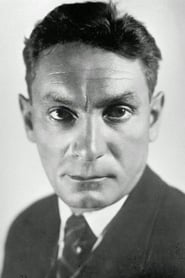
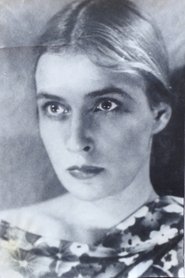
The production of 'A Simple Case' was fraught with technical and political challenges that ultimately shaped its unique character. Pudovkin, already an established master of silent cinema through films like 'Mother' and 'The End of St. Petersburg,' was eager to embrace the new possibilities of sound technology. However, the primitive state of Soviet sound recording equipment in the early 1930s meant that the audio tracks were unusable, forcing Pudovkin to complete the film as a silent feature. This technical setback ironically led to one of Pudovkin's most artistically daring works, as he doubled down on purely visual storytelling and montage techniques. The cast, including Aleksandr Baturin and Yevgeniya Rogulina, had to adapt to Pudovkin's experimental approach, which emphasized emotional expression over conventional acting. The film's deliberate ambiguity and poetic nature put it at odds with the increasingly rigid cultural policies of the Stalin era, which demanded clear ideological messaging in all artistic works.
What critics said
Modern retrospectives screen A Simple Case to illustrate 1932 pacing and camera norms.
Did you know?
- The film was intended to be Vsevolod Pudovkin's first sound feature but was completed as silent due to technical failures with Soviet sound equipment
- Often considered Pudovkin's most experimental work, deliberately abandoning conventional narrative structure
- The film was heavily criticized upon release for alleged 'bourgeois tendencies' and lack of clear ideological messaging
- Remained largely forgotten for decades until its rediscovery and restoration by film archivists
- The film's title in Russian is 'Prostoy sluchay'
- Featured a groundbreaking live musical score by Gabriel Thibaudeau at its Pordenone Film Festival revival
- Pudovkin made the film as a direct response to criticism that his previous work 'Storm Over Asia' was too commercially oriented
- The film's experimental nature made it particularly vulnerable to the rise of socialist realism in Soviet cinema
- Only one of Pudovkin's films from the early 1930s to survive in relatively complete form
- The cinematography was praised for its innovative use of natural light and landscape as emotional metaphor
Visual style
The cinematography of 'A Simple Case' represents some of the most innovative visual work of early Soviet cinema, utilizing breathtaking black-and-white photography to create a poetic dialogue between human emotion and natural environment. The film employs Pudovkin's mastery of montage theory in service of emotional expression rather than ideological messaging, using rapid cuts and superimpositions to convey psychological states. Natural light is used extensively to create mood and atmosphere, with landscape photography that rivals the best work of the era in its technical and artistic achievement. The camera work emphasizes the relationship between characters and their environment, using wide shots of nature to mirror internal emotional states. The visual style deliberately avoids the straightforward documentary approach of some Soviet cinema in favor of a more lyrical, impressionistic aesthetic that creates a dreamlike quality throughout the film.
Innovations
Despite being completed as a silent film due to technical limitations, 'A Simple Case' represents significant technical achievements in cinematography and editing. Pudovkin pushed the boundaries of montage theory beyond his earlier work, creating more complex and emotionally resonant sequences that integrated natural imagery with human psychology. The film's use of superimposition and multiple exposure techniques was particularly innovative for its time, creating dreamlike sequences that blurred the line between reality and internal emotional states. The cinematography achieved remarkable results in capturing natural landscapes and lighting effects, demonstrating technical mastery of black-and-white photography. The film's experimental approach to visual storytelling, while controversial at the time, has been recognized as technically groundbreaking in its use of cinematic language to convey emotion without dialogue or conventional narrative structure.
Music
Originally conceived as a sound film, 'A Simple Case' was completed as a silent feature due to technical difficulties with Soviet sound recording equipment. In its contemporary revival, the film has been accompanied by live musical performances, most notably Gabriel Thibaudeau's emotionally charged score created for the Pordenone Silent Film Festival. Thibaudeau's composition emphasizes the film's lyrical qualities and emotional depth, using orchestral arrangements that enhance the poetic imagery without overwhelming the visual storytelling. The modern musical interpretation has been praised for its sensitivity to the film's rhythms and its ability to bridge the gap between contemporary audiences and the film's experimental nature. The absence of original music from the 1932 release makes modern musical accompaniment particularly important in conveying the film's emotional and artistic intentions.
Memorable scenes
- The sequence where the protagonists' emotional states are mirrored through changing weather patterns and seasonal transitions
- The montage sequence intercutting human faces with natural landscapes to create psychological portraits
- The climatic scene where nature and human emotion reach their most powerful synthesis through Pudovkin's montage technique
What audiences thought
Contemporary Soviet audiences in 1932 reportedly found the film baffling and difficult to follow, accustomed as they were to more straightforward narratives with clear political messages. The lack of dialogue and conventional plot structure made the film inaccessible to many viewers, contributing to its poor reception and eventual suppression. However, modern audiences viewing the restored version, particularly with live musical accompaniment, have responded much more positively. The film's visual poetry and emotional resonance have found appreciative viewers among international cinema enthusiasts and scholars. The contrast between its initial reception and contemporary appreciation highlights how changing cultural contexts can dramatically alter a film's reception and legacy.
Film connections
Influenced by
- German Expressionism
- French Impressionist cinema
- Pudovkin's own earlier montage theories
- Soviet avant-garde art of the 1920s
This film influenced
- Later Soviet poetic cinema
- International art house cinema of the 1960s-70s
- Contemporary experimental filmmakers
Film restoration
The film was considered lost for decades but has been restored and preserved by international film archives. The restoration has made it available for contemporary viewing, though some elements may remain incomplete due to the film's troubled production history and suppression.
Where to watch
- Available through specialized film archives and cinematheques
- Screened at international silent film festivals
- May be accessible through academic film collections and museum programs
- Some versions available with modern musical accompaniment