Max Hamburger
Actor
- Active
- 1918-1919
Films 2
About Max Hamburger
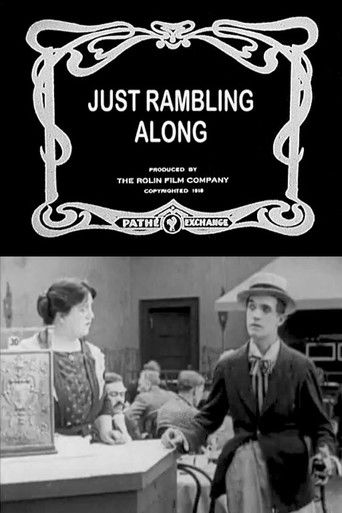
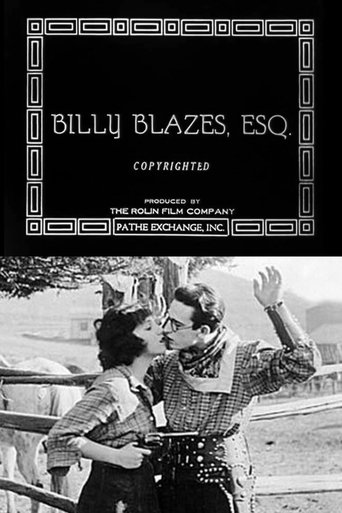
Max Hamburger is a very obscure silent-era screen performer whose documented film work places him briefly in American cinema in 1918 and 1919. He is credited as an actor in Just Rambling Along (1918) and Billy Blazes, Esq. (1919), both associated with the early career of Harold Lloyd, which suggests that Hamburger worked in the orbit of one of the most important comedy productions of the period. Beyond these two surviving credits, reliable biographical documentation is extremely limited, and major reference sources do not appear to preserve a substantial personal history, making him one of the many small-part performers whose screen presence survives more clearly than their life story. Because of the scarcity of records, details such as his birth date, birthplace, family background, and later career cannot be verified with confidence. His known filmography indicates participation in the fast-moving world of silent comedy production during the final years of the 1910s, when studios relied on large casts of supporting players, extras, and stock performers. Hamburger’s surviving credits make him part of the broader, often under-credited workforce that helped shape early Hollywood slapstick and comedy shorts. Although he did not become a widely recognized star, his name remains a documented part of silent-cinema history through the films in which he appeared.
More about Max Hamburger
In film history
Max Hamburger’s cultural impact is indirect rather than star-driven, but he is still part of the historical fabric of silent comedy. Performers like him filled out the ensemble world around major figures such as Harold Lloyd, helping create the crowded, energetic comic environments that defined late-1910s short subjects. While he did not leave a large body of work or a public persona that shaped popular culture in the way major stars did, his documented presence contributes to the completeness of film history and the study of early studio labor. For researchers and database users, his credits serve as evidence of the many short-lived or lightly documented careers that existed behind the scenes of early Hollywood. In that sense, his significance lies in preservation and attribution: he represents the numerous screen workers whose names survived only in cast lists and filmographies.
Later reputation
Hamburger’s lasting legacy is modest but meaningful to archival film history. He remains an example of the many minor players whose names are preserved through surviving credits even when personal details have been lost. For historians of silent comedy, his filmography helps map the personnel network around Harold Lloyd and Hal Roach productions during a formative period for American screen comedy. His record underscores how incomplete documentation can be for early cinema and why cast attribution matters. Even a brief career like his contributes to understanding how silent shorts were staffed and produced.
Influence
There is no evidence that Max Hamburger exerted a direct influence on later actors or filmmakers in the way major stars and directors did. His importance is instead cumulative: as one of the many supporting performers in early comedy shorts, he participated in the performance traditions that informed ensemble timing, physical business, and comic scene construction. These small roles supported the development of studio comedy as a genre and helped establish the production methods used by larger stars and comedy teams. His influence is therefore archival and contextual rather than personal or stylistic.
Off screen
No dependable public record of Max Hamburger’s personal life could be verified from standard classic-cinema references. His family background, marital history, children, residence, and post-film career are not known with confidence from the surviving documentation. Like many minor silent-era performers, he may have worked in film only briefly or under conditions that left limited archival trace. At present, any more specific personal-history claims would be speculative.
Credits
- Appeared in Just Rambling Along (1918), an early Harold Lloyd comedy short
- Appeared in Billy Blazes, Esq. (1919), another Harold Lloyd silent comedy
- Documented screen activity during the late silent-comedy boom of the 1910s
- Part of the supporting cast ecosystem that sustained early Hollywood short-form comedy production
Roles
- Supporting performer in Just Rambling Along
- Supporting performer in Billy Blazes, Esq.
Films
- Just Rambling Along (1918)
- Billy Blazes, Esq. (1919)
Collaborators
Studios
- Hal Roach Studios
Notes
- He is documented in only two known film credits, both from the late silent era.
- Both surviving credits are associated with Harold Lloyd comedy shorts.
- His recorded screen career is extremely brief, spanning just 1918 to 1919.
- He is an example of a silent-era performer whose life details are largely lost to history.
- The surname Hamburger can create confusion with other people, but the film credits identify this specific classic-cinema actor.
- His surviving work places him in the important short-comedy production world of Hal Roach-era Hollywood.
Questions
Who was Max Hamburger?
Max Hamburger was a very obscure silent-era actor whose documented screen work appears in just two known films from 1918 and 1919. He is best remembered today as part of the supporting cast world surrounding early Harold Lloyd comedy shorts.
What films is Max Hamburger best known for?
He is known for Just Rambling Along (1918) and Billy Blazes, Esq. (1919). Both are silent comedy shorts associated with Harold Lloyd and the Hal Roach production environment.
When was Max Hamburger born and when did he die?
His birth and death dates are not reliably documented in the surviving classic-cinema record. Because the historical evidence is so limited, both dates and his birthplace remain unverified.
What awards did Max Hamburger win?
No awards or nominations are currently documented for Max Hamburger. He appears to have been a minor supporting performer rather than a decorated star, and the historical record does not preserve any honors.
What was Max Hamburger's acting style?
No detailed description of his individual acting style survives in accessible sources. Based on the films in which he appeared, he likely worked within the broad physical-comedy performance style common to silent-era short subjects.
What is Max Hamburger's legacy in film history?
His legacy is primarily archival: he represents the many early film performers whose names survive in cast lists even when personal biographies are lost. He also contributes to the documented ensemble history of Harold Lloyd and late-1910s silent comedy.