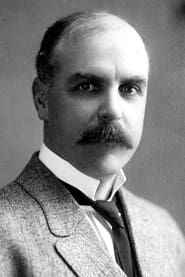
James Rolph Jr.
Actor
- Born
- August 23, 1869, San Francisco, California, USA
- Died
- June 2, 1934
- Active
- 1915-1915
Films 1
About James Rolph Jr.
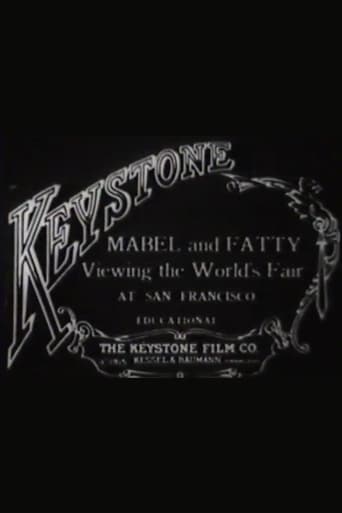
James Rolph Jr. was not a professional actor in the ordinary Hollywood sense, but rather a prominent civic figure whose name appears in the cast of the 1915 silent short Mabel and Fatty Viewing the World's Fair at San Francisco. He is best known in history as the longtime mayor of San Francisco and later as governor of California, and his screen credit reflects a cameo appearance or civic participation tied to the city's role in the Panama-Pacific International Exposition. Because his film activity is documented only for this single 1915 title, he should be understood primarily as a public official who briefly appeared in a motion picture rather than as a career performer. His presence in the film is significant as a piece of local and historical context, illustrating how early cinema often incorporated real public figures, civic events, and location-specific spectacle into comedy shorts. Rolph's broader historical importance comes from politics and municipal leadership, not from an acting career. In film history databases, he is therefore a marginal but noteworthy silent-era screen personality, remembered mainly for this one credited appearance. There is no evidence of a sustained acting career, studio relationship, or further screen work beyond this period.
More about James Rolph Jr.
On screen
No documented acting style is available, since James Rolph Jr. was not a trained or career actor. His screen appearance appears to have been a brief civic or cameo participation in a silent comedy context, likely relying on natural presence rather than performance technique. Any on-screen manner would have been shaped by the conventions of the period and the documentary-comedy hybrid quality common in early shorts featuring real locations and public figures.
In film history
James Rolph Jr.'s cultural impact in cinema is indirect but historically interesting. His appearance in a 1915 silent short shows how early American filmmaking frequently drew upon real civic leaders, landmarks, and public events to lend immediacy and topical interest to entertainment. In this sense, Rolph becomes part of the visual record of San Francisco during a landmark moment in the city's history. For modern researchers, his screen credit is a reminder that early film credits often preserved ephemeral appearances by nonactors whose names would otherwise be known only in political or municipal history. He is therefore culturally significant as a crossover figure between local politics and early motion-picture documentation.
Later reputation
Rolph's lasting legacy belongs primarily to California political history, but his single film credit gives him a small yet distinctive place in silent cinema recordkeeping. Because the early film industry often intersected with public spectacle, his presence in Mabel and Fatty Viewing the World's Fair at San Francisco makes him a useful example of how politicians and civic leaders could briefly enter popular media. His legacy in film history is not based on performance or artistry, but on being part of a historically specific on-screen moment that captures San Francisco's World's Fair era. For databases and historians, he is a reminder that the cast lists of silent films sometimes include figures whose broader renown comes from entirely different public roles.
Influence
James Rolph Jr. did not influence actors or directors in the conventional sense, and there is no evidence of a sustained artistic career. His influence on cinema is best understood as contextual: he represented the kind of real-world authority figure that early filmmakers occasionally incorporated to authenticate local subjects or add novelty. As a civic leader visible in a popular film short, he indirectly demonstrates how motion pictures could intersect with municipal identity and public life. Any influence he had was on the historical texture of the film rather than on film style or performance practice.
Off screen
James Rolph Jr. was a San Francisco native whose public life was centered in civic administration and California politics. He is historically remembered as a major municipal and state leader, and his personal identity is tied closely to the development of San Francisco in the early 20th century. Detailed film-oriented personal-life information is not generally recorded in relation to his brief screen appearance. Outside of cinema, he had a substantial public profile, and that political prominence likely explains his inclusion in the 1915 film. He died in 1934, leaving behind a legacy defined by governance rather than performance.
Education
Not reliably documented in the available film references; his film-related identity is that of a civic figure rather than a trained performer.
Credits
- Appeared in the silent comedy short Mabel and Fatty Viewing the World's Fair at San Francisco (1915)
- Served as a prominent public figure associated with San Francisco during the Panama-Pacific International Exposition era
- Built a major political career outside cinema as mayor of San Francisco
- Later served as governor of California, making him a historically significant figure whose image intersected with early film culture
Roles
- Himself in Mabel and Fatty Viewing the World's Fair at San Francisco (1915)
Honors
- No film-industry honors are known
- Historically remembered for his political offices rather than entertainment awards
Collaborators
Studios
- No known studio affiliation
Family
- Not documented in available film references
Notes
- He is better known historically as a politician than as an actor.
- His only known film credit is a 1915 silent short tied to San Francisco's World's Fair context.
- The film credit likely reflects a cameo or appearance as himself rather than a dramatic role.
- He was born in San Francisco, making his screen appearance especially locally resonant.
- His inclusion in the film demonstrates how early cinema often blurred the line between entertainment and civic documentation.
- He later became governor of California, which makes him one of the more unusual one-credit screen personalities from the silent era.
- There is no evidence of a continuing acting career after 1915.
- His filmography is so limited that he is often cataloged more as a historical figure than as an actor.
Quotes
No verified quotes from his film work are known.
No reliably sourced quote from his screen appearance is available.
Questions
Who was James Rolph Jr.?
James Rolph Jr. was an American civic and political leader best known as mayor of San Francisco and later governor of California. In film history, he is noteworthy for a single silent-era screen appearance in Mabel and Fatty Viewing the World's Fair at San Francisco (1915), rather than for a career as a performer.
What films is James Rolph Jr. best known for?
He is best known for Mabel and Fatty Viewing the World's Fair at San Francisco (1915), his only documented film credit. His screen presence is generally understood as a cameo or civic appearance connected to San Francisco's World's Fair-era prominence.
When was James Rolph Jr. born and when did he die?
James Rolph Jr. was born on August 23, 1869, in San Francisco, California, USA. He died on June 2, 1934.
What awards did James Rolph Jr. win?
No film-industry awards or nominations are known for James Rolph Jr. His recognition came from public service and political leadership rather than from acting or cinema awards.
What was James Rolph Jr.'s acting style?
There is no documented acting style for James Rolph Jr. because he was not a professional actor and appears to have made only a single known film appearance. Any on-screen presence would have been natural and incidental, likely functioning as a cameo within a silent comedy context.
Why is James Rolph Jr. important to classic cinema history?
He is important as a historical crossover figure: a major public official who appears in an early silent film connected to San Francisco. His credit illustrates how early cinema sometimes captured real civic personalities, making films valuable not only as entertainment but also as historical documents.