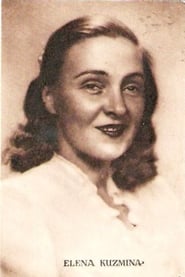
Yelena Kuzmina
Actor
Born: February 17, 1909 in St. Petersburg, Russian Empire Died: October 15, 1979 Active: 1931-1948 Birth Name: Yelena Alexandrovna Kuzmina
Films
6 films
About Yelena Kuzmina
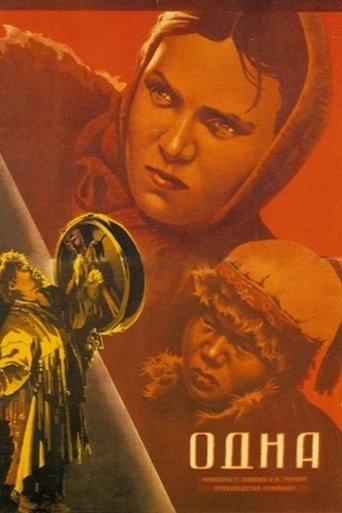
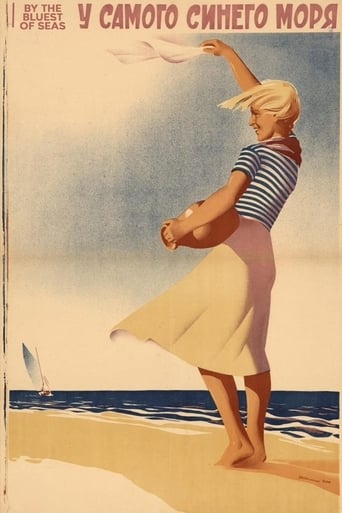
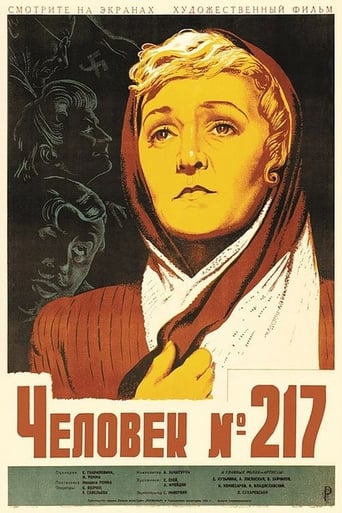
Yelena Kuzmina was actresses of Soviet cinema's golden age, whose the crucial decades of the 1930s and 1940s when Soviet film was establishing its artistic identity. She began her career at the State Institute of Cinematography (VGIK) and quickly rose to prominence with her debut in 'Alone' (1931), directed by Grigori Kozintsev and Leonid Trauberg. Kuzmina became particularly renowned for her collaborations with director Boris Barnet, starring in his masterpiece 'By the Bluest of Seas' (1936), where she portrayed the idealistic fisherman's wife Adelia with remarkable naturalism and emotional depth. Her performance in 'Girl No. 217' (1945) as a Soviet woman captured by Nazis during World War II became powerful cinematic representations of wartime suffering and resilience. Throughout her career, Kuzmina embodied the Soviet ideal of the 'new woman' - strong, principled, and dedicated to socialist values - while bringing subtle psychological complexity to her characters. Her final major film appearance was in 1948, after which she largely retired from acting, though she remained a respected figure in Soviet cultural circles. Kuzmina's legacy endures through her contributions to establishing a distinctly Soviet style of cinematic acting that balanced ideological requirements with artistic authenticity.
The Craft
On Screen
Kuzmina developed a distinctive acting style that combined naturalistic performance with the ideological requirements of Soviet socialist realism. Her approach emphasized emotional authenticity and psychological depth while maintaining the heroic qualities demanded by Soviet cinema. She was particularly skilled at portraying strong, principled women who embodied socialist ideals, yet she brought subtle nuances and human vulnerability to these roles. Her performances were characterized by a restrained intensity, using minimal gestures and facial expressions to convey complex emotions, which was particularly effective in the close-up techniques favored by Soviet directors of the era.
Milestones
- Breakthrough role in 'Alone' (1931) establishing her as a major Soviet actress
- performance in 'By the Bluest of Seas' (1936) directed by Boris Barnet
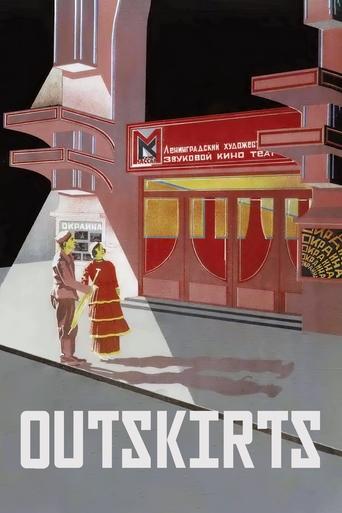
- Critically acclaimed role in 'Outskirts' (1933)
- Powerful wartime drama 'Girl No. 217' (1945) becoming one of her most celebrated performances
- Named People's Artist of the RSFSR in 1950 for her contributions to Soviet cinema
Best Known For
Iconic Roles
Must-See Films
Accolades
Won
- Stalin Prize, second class (1946) for her role in 'Girl No. 217'
- People's Artist of the RSFSR (1950)
- Order of the Badge of Honor (1939)
Special Recognition
- Honored Artist of the RSFSR (1935)
- People's Artist of the RSFSR (1950)
Working Relationships
Worked Often With
Studios
Why They Matter
Impact on Culture
Yelena Kuzmina played a crucial role in shaping the visual and emotional language of Soviet cinema during its formative years. Her performances helped define the archetype of the Soviet heroine - strong, resilient, and ideologically committed - while bringing psychological depth and humanity to these roles. Through her work in films like 'Girl No. 217,' she contributed to the Soviet war film genre, creating powerful narratives of resistance and survival that resonated deeply with Soviet audiences. Kuzmina's ability to balance artistic expression with ideological requirements made her a model for subsequent generations of Soviet actors, demonstrating how personal artistry could coexist with political commitment. Her films continue to be studied as important examples of how cinema can serve both artistic and social purposes.
Lasting Legacy
Yelena Kuzmina's legacy endures as one of the foundational actresses of Soviet cinema, whose work helped establish a uniquely Soviet approach to film acting. Her performances in the 1930s and 1940s remain benchmarks for understanding how Soviet cinema developed its distinctive style and ideological messaging. Film scholars continue to analyze her work for its technical mastery and its role in shaping Soviet cultural identity during a critical historical period. Kuzmina's films, particularly 'By the Bluest of Seas' and 'Girl No. 217,' are regularly featured in retrospectives of classic Soviet cinema and are studied in film schools as examples of the intersection of art and ideology in mid-20th century cinema.
Who They Inspired
Kuzmina influenced subsequent generations of Soviet and Russian actresses through her naturalistic yet ideologically grounded performance style. Her ability to convey complex emotions within the constraints of socialist realism provided a template for actors working in state-sponsored cinema. Many later Soviet actresses cited her performances as inspiration for how to maintain artistic integrity while working within the Soviet system. Her collaborations with directors like Boris Barnet also helped establish working relationships between actors and directors that emphasized mutual artistic respect and creative collaboration, influencing the professional culture of Soviet film production.
Off Screen
Yelena Kuzmina was known for her dedication to her craft and maintained a relatively private personal life despite her fame. She was deeply committed to the ideals of Soviet art and culture, which influenced both her professional choices and personal relationships. Kuzmina lived through the tumultuous decades of Soviet history, including the Stalin era, and her career reflected both the opportunities and constraints faced by artists during this period. She was respected by her colleagues for her professionalism and artistic integrity, qualities that helped her navigate the complex political landscape of Soviet cinema.
Education
Graduated from the State Institute of Cinematography (VGIK) in 1931, studying under prominent Soviet film theorists and directors
Family
- Nikolai Kryukov (actor, married 1930s-1940s)
Did You Know?
- Was discovered while still a student at VGIK and cast immediately in 'Alone' (1931)
- Her performance in 'Girl No. 217' was so powerful that it was used in Soviet schools as educational material about the Great Patriotic War
- Worked with some of the most important Soviet directors of her generation including Barnet, Kozintsev, and Trauberg
- Despite her success, she retired from acting relatively early in 1948, focusing on teaching and mentoring young actors
- Her film 'By the Bluest of Seas' was praised internationally for its poetic realism and visual beauty
- Received the Stalin Prize, one of the highest honors in the Soviet Union, for her wartime film performances
- Was known for her meticulous preparation for roles, often spending months researching the historical and social context of her characters
- Survived the Siege of Leningrad during World War II, which deeply influenced her later performances
- Her acting style was studied by Soviet film theorists as an example of successful socialist realism in performance
- Maintained friendships with many Soviet cultural figures throughout her life, including poets, writers, and musicians
In Their Own Words
Acting is not just about playing a role, it's about understanding the soul of the people you represent
In Soviet cinema, we don't just entertain, we educate and inspire
The most important thing for an actor is to be truthful, even when playing within ideological frameworks
Every role I've played has been a piece of our great Soviet history
Cinema is the most powerful art form for reaching the hearts and minds of the people
Frequently Asked Questions
Who was Yelena Kuzmina?
Prominent Soviet actress active from 1931 to 1948, known for her roles in classic Soviet films like 'By the Bluest of Seas' and 'Girl No. 217'. She was one of the defining actresses of Soviet cinema's golden age and was honored as a People's Artist of the RSFSR for her contributions to film art.
What films is Yelena Kuzmina best known for?
Titles linked here include By the Bluest of Seas (1936), Alone (1931).
When was Yelena Kuzmina born and when did she die?
Born February 17, 1909; died October 15, 1979.
What awards did Yelena Kuzmina win?
Kuzmina received the Stalin Prize in 1946 for her role in 'Girl No. 217', was named Honored Artist of the RSFSR in 1935, and later achieved the title of People's Artist of the RSFSR in 1950. She also received the Order of the Badge of Honor in 1939.
What was Yelena Kuzmina's acting style?
Kuzmina's acting style combined naturalistic performance with the requirements of socialist realism, characterized by emotional authenticity, psychological depth, and restrained intensity. She was particularly skilled at portraying strong Soviet women while bringing subtle nuances and human vulnerability to these ideologically significant roles.