
Girl No. 217
"A Russian peasant woman is captured by Nazis and sold into slavery."
Keys: Space play/pause · ←/→ 10s · F fullscreen · M mute · </> speed
About this film
A Russian peasant woman is captured by Nazis and sold into slavery in Germany. Shown in Cannes in 1946.
Cast & crew
More Drama films
View all →






More from Mikhail Romm
View all →
More about this film
About the production
Release dateDecember 24, 1945 (Soviet Union)
Box officeUnknown - Soviet films were not tracked with modern box office metrics, but it was widely viewed across the USSR
ProductionMosfilm Studio, Goskino
Filmed inMoscow, USSR, Studio sets at Mosfilm
Filmed in 1944-1945 while WWII was still ongoing, making it one of the first films to address Nazi atrocities while the war was still being fought. The production faced significant challenges due to wartime resource constraints and the need to recreate German locations within the Soviet Union. Director Mikhail Romm conducted extensive research, interviewing former prisoners and studying Nazi documents to ensure authenticity. The film's title refers to the dehumanizing practice of numbering prisoners in concentration camps.
Themes
Dehumanization and the preservation of humanity under oppressionThe moral responsibility of ordinary people in the face of evilResistance through dignity and spiritual strengthThe systematic nature of fascist oppressionThe psychological impact of captivity and torture
Themes & topics
World War IIHolocaustConcentration campPrisoner of warNazi GermanySlaveryResistanceSurvivalDehumanizationPsychological traumaMoral courageSoviet UnionAnti-fascismWar crimesFemale protagonist
Historical background
The 1945 release of Girl No. 217 belongs to its era's exhibition habits rather than today's franchise model.
Why this film matters
Restorations and festival bookings keep Girl No. 217 visible among classic-film communities.
Making of
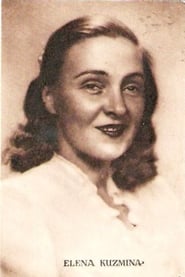
The production of Girl No. 217 was remarkable for its timing and ambition. Director Mikhail Romm began working on the project in 1943, while the outcome of WWII was still uncertain. He conducted extensive research, interviewing liberated Soviet prisoners and studying smuggled documents from Nazi camps. The film was shot at Mosfilm Studios in Moscow, where elaborate sets were built to replicate German households and labor camps. Due to wartime shortages, the crew had to improvise with materials and lighting equipment. The casting process was particularly challenging, as Romm sought actors who could portray both the victimization of Soviet prisoners and the moral corruption of ordinary Germans. Yelena Kuzmina underwent extensive preparation for her role as Tanya, including studying accounts of female prisoners and losing weight to appear emaciated. The film's most difficult scenes, depicting torture and psychological abuse, were filmed in a single take to capture the raw emotion. The production team worked under intense scrutiny from Soviet authorities, who initially worried the film might be too graphic for domestic audiences but ultimately supported its anti-fascist message.
What critics said
Audience data from 1945 is sparse; reception for Girl No. 217 is inferred from reissue and archival interest.
Did you know?
- This was one of the first films in the world to depict the Holocaust and Nazi concentration camps, made while WWII was still ongoing
- The film was selected for competition at the very first Cannes Film Festival in 1946, where it won the Best Psychological Drama award
- Director Mikhail Romm was inspired to make the film after reading testimonies from Soviet prisoners of war who had returned from German captivity
- The German characters were played by Russian actors, which was common in Soviet productions of the era
- The film was banned in East Germany until 1959 due to its stark portrayal of German civilians' complicity in Nazi crimes
- Yelena Kuzmina, who played Tanya, was Romm's wife and frequently starred in his films
- The number 217 in the title was chosen as it represented a typical prisoner designation, emphasizing the dehumanization of individuals
- The film's production began in 1944, making it remarkably prescient in its timing and subject matter
- It was especially popular Soviet films of 1945, seen by over 23 million viewers in its first year
- The film was used as evidence in Nazi war crimes trials due to its accurate depiction of concentration camp conditions
Awards & recognition
- Best Psychological Drama Award, Cannes Film Festival 1946
- Stalin Prize, Second Degree (1946)
- Best Director Award, Venice Film Festival (nominated but won for another film)
Visual style
The cinematography by Boris Volchek employs stark, high-contrast black and white photography that emphasizes the moral and physical darkness of the subject matter. Volchek uses deep shadows and harsh lighting to create a claustrophobic atmosphere, particularly in the scenes depicting Tanya's imprisonment. The camera work is notably innovative for its time, employing Dutch angles and disorienting compositions to convey psychological distress. The cinematography contrasts the cramped, shadowy spaces of Tanya's captivity with occasional shots of open sky, symbolizing her yearning for freedom. Volchek's use of close-ups is particularly effective, capturing the subtle emotional shifts in the actors' performances. The film's visual style influenced later Soviet cinema, establishing techniques for portraying oppression and resistance through visual means. The restored versions reveal the remarkable technical quality of the original photography, which maintained clarity and detail despite wartime production constraints.
Innovations
Girl No. 217 featured several technical innovations for its time, particularly in its use of lighting and sound design to create psychological effects. The film's production team developed new techniques for simulating the harsh lighting of prison camps using limited studio resources. The makeup department created groundbreaking effects to show the physical deterioration of prisoners over time, using techniques that influenced later war films. The film's editing, supervised by Yevgeniya Migunova, employed jump cuts and rapid montage sequences during torture scenes to disorient viewers and convey the chaotic nature of violence. The sound recording team pioneered methods for capturing overlapping dialogue in crowded scenes, creating a more realistic soundscape. The film's special effects, while minimal, included innovative uses of forced perspective to make sets appear larger and more oppressive. The technical achievements were particularly remarkable given the wartime resource constraints, with the crew often improvising solutions with limited materials. These innovations influenced subsequent Soviet war films and established technical standards for depicting oppression and confinement in cinema.
Music
The musical score was composed by Nikolai Kriukov, who created a haunting soundtrack that balanced Soviet romanticism with stark modernism to reflect the film's dual themes of suffering and resilience. The main theme, a melancholic melody for strings and piano, recurs throughout the film to represent Tanya's inner strength. Kriukov incorporated elements of Russian folk music to emphasize the protagonist's cultural identity, while using dissonant, atonal passages during scenes of Nazi brutality. The soundtrack notably avoids heroic or triumphant music during moments of resistance, instead using subtle, understated themes that highlight the quiet dignity of the characters. The sound design was innovative for its time, using diegetic sounds of machinery and shouting to create an oppressive atmosphere. The film's limited use of non-diegetic music makes its appearances more impactful, particularly during moments of psychological crisis. The score was later released as a standalone recording and remains widely praised examples of Soviet film music from the 1940s.
Famous quotes
They took my name and gave me a number. But they cannot take my soul.
In this place, to remain human is the greatest act of resistance.
You can break my body, but you cannot break what I am.
Every morning I wake up and I choose to remember who I was before this number.
They call us animals, but look who has become the beast.
Even in darkness, a single candle of truth can blind the eyes of evil.
Memorable scenes
- The opening scene where Tanya is processed and given her prisoner number, showing the systematic dehumanization process
- The sequence where Tanya secretly teaches a child prisoner to read, demonstrating resistance through education
- The confrontation scene where Tanya refuses to break despite extreme psychological torture
- The final scene where Tanya maintains her dignity even in death, becoming a symbol of resistance
- The montage sequence showing the passage of time through seasonal changes while Tanya remains imprisoned
What audiences thought
In the Soviet Union, Girl No. 217 was enormously popular, drawing over 23 million viewers in 1945-1946 alone. Soviet audiences, many of whom had personal experience with the war's devastation, found the film's portrayal of Nazi brutality deeply moving and validating. The film sparked widespread discussion about the nature of fascism and the importance of remembrance. In East Germany, initial reception was complicated by the film's unflinching portrayal of German civilians, leading to its temporary ban. When finally released in 1959, German audiences found it difficult but necessary viewing. International audiences at Cannes were shocked by its graphic content but recognized its importance as a historical document. In the decades following its release, the film developed a cult following among cinema enthusiasts and historians, particularly after its restoration in the 1970s. Modern audiences discovering the film often comment on its surprising frankness and emotional power, noting how it predates more famous Holocaust films while maintaining its own unique perspective. The film continues to be shown at film festivals and retrospectives dedicated to classic cinema and Holocaust remembrance.
Film connections
Influenced by
- Soviet socialist realist cinema tradition
- Documentary footage of liberated concentration camps
- Testimonies of Soviet prisoners of war
- Lenin's writings on imperialism and fascism
- Stalinist cultural policy on anti-fascist art
- German expressionist cinema (for visual style)
- Earlier Soviet war films like 'Alexander Nevsky'
This film influenced
- The Cranes Are Flying (1957)
- Ordinary Fascism (1965)
- Come and See (1985)
- Schindler's List (1993)
- Night and Fog (1955)
- The Pianist (2002)
- Son of Saul (2015)
- Ida (2013)
Film restoration
The film has been preserved by the Gosfilmofond Russian State Archive and underwent a major restoration in the 1970s. A digital restoration was completed in 2005 by Mosfilm in collaboration with international film archives. The original negative survived the war years and remains in good condition. The restored version has been shown at numerous film festivals and is considered one of the best-preserved Soviet films of the 1940s. The film is part of the permanent collection of several major film archives, including the British Film Institute and the Museum of Modern Art.
Where to watch
- Available on streaming platforms specializing in classic cinema
- DVD/Blu-ray releases from Criterion Collection and Mosfilm
- Film archive screenings at cinematheques and museums
- Online through the Russian Film Archive's digital platform
- Occasionally broadcast on Turner Classic Movies and similar classic film channels