

The Russian Question
"American journalist, Russian truth, U.S. pressure"
Keys: Space play/pause · ←/→ 10s · F fullscreen · M mute · </> speed
About this film
The film is based on the play by K. Simonov. It is the story of an American journalist who spends time in Russia and sees socialism in action. Upon his return to the U.S., a prestigious editor asks him to write a book about his experience. He receives a handsome advance for the p.
Cast & crew
More films like this
More Drama films
View all →







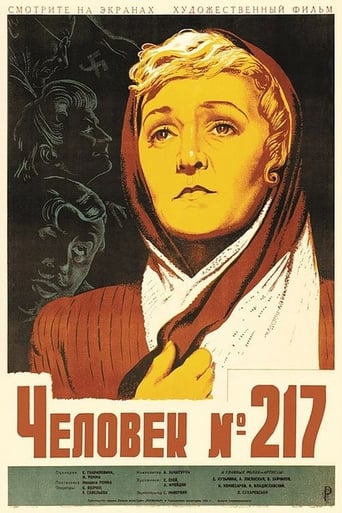
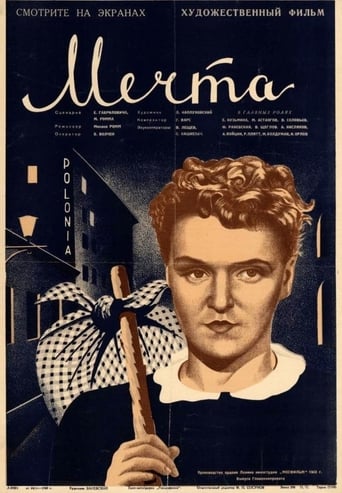
More from Mikhail Romm
View all →
More about this film
About the production
Release dateApril 26, 1948
Box officeNot publicly documented - Soviet cinema operated under a different distribution system
ProductionMosfilm Studio
Filmed inMoscow, Soviet Union, Mosfilm Studios, Moscow
The film was produced during the height of Stalin's regime and served as both artistic expression and political propaganda. Director Mikhail Romm, known for his historical films and documentaries, brought a sophisticated visual style to what was essentially a political message film. The production faced the typical challenges of post-war Soviet cinema, including limited resources and strict ideological oversight from state censors. The American sequences were carefully constructed to present a caricatured version of capitalist society, with sets designed to emphasize excess and moral corruption.
Themes
Truth versus materialismMoral integrity in the face of corruptionCapitalist exploitation versus socialist equalityThe role of the journalist in societyEast-West cultural misunderstanding
Themes & topics
journalismmoral dilemmaCold WarpropagandaSoviet UnionUnited Statestruthintegritycapitalismcommunismbook publishingpolitical pressureAmerican Dreamideological conflict
Historical background
Mosfilm Studio positioned The Russian Question for 1948 audiences accustomed to weekly program changes in urban theaters.
Why this film matters
Revival audiences read The Russian Question as evidence of 1948 taste for stories about the film is based on the play by k.
Making of
Mikhail Romm approached this adaptation with his characteristic attention to visual detail and psychological depth. The production team spent considerable time researching American life through available materials, though inevitably creating a somewhat distorted view filtered through Soviet ideology. The casting of Vsevolod Aksyonov as the American journalist Smith was significant, as he brought a thoughtful, intellectual quality to the role that elevated it beyond simple propaganda. The American sequences were filmed on specially constructed sets at Mosfilm, with art directors working to create an exaggerated version of American consumer culture. Romm worked closely with screenwriter Alexander Stein to adapt Simonov's play, making changes to better suit the cinematic medium while preserving the core political message. The film's score was composed by Aram Khachaturian, who incorporated subtle musical contrasts between the 'corrupt' American themes and the 'noble' Soviet motifs.
What critics said
Silent-era reviewers devoted little space to The Russian Question, typical for a release of its scale in 1948.
Did you know?
- The film is based on the play 'Russkiy Vopros' by Konstantin Simonov, who was among the leading prominent Soviet writers of the Stalin era
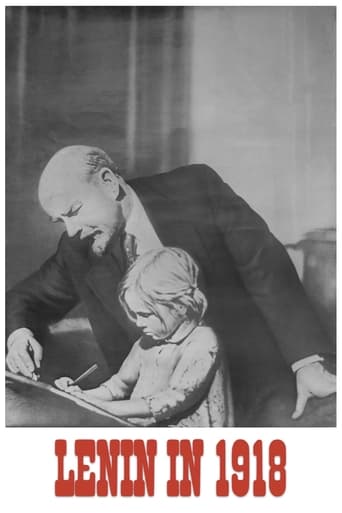
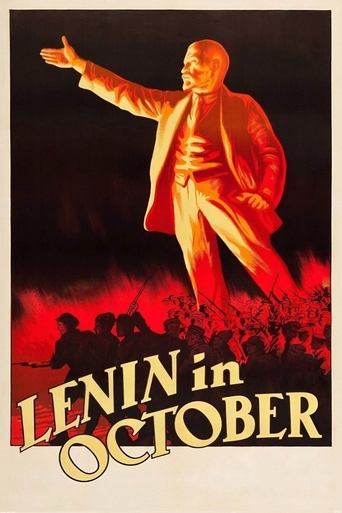
- Director Mikhail Romm was also known for his earlier anti-fascist films like 'Lenin in October' and 'Lenin in 1918'
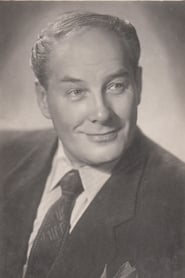
- The character of Smith was played by Vsevolod Aksyonov, one of the leading actors of the Soviet stage and screen
- The film was released just as the Cold War was intensifying, making it part of the early cultural battle between East and West
- Yelena Kuzmina, who played Smith's fiancée, had previously starred in Eisenstein's 'Alexander Nevsky'
- The American publisher character was deliberately portrayed as a stereotypical capitalist villain, reflecting Soviet propaganda of the era
- The film was one of the first Soviet productions to directly address American society and the 'American question'
- Despite its propaganda elements, the film was praised for its technical quality and performances
- The original play had been a success on the Soviet stage before being adapted for the screen
- The film's title became a catchphrase in Soviet discourse about America and capitalism
Awards & recognition
- Stalin Prize, Second Class (1948) - Awarded to director Mikhail Romm and the creative team
- State Prize of the RSFSR (1948) - For contributions to Soviet cinema
Visual style
The cinematography, handled by Boris Volchek, employed stark visual contrasts between the Soviet and American sequences. The Soviet scenes were shot with warmer lighting and more naturalistic compositions, emphasizing community and harmony. In contrast, the American sequences utilized harsher lighting, angular compositions, and wide shots that emphasized isolation and material excess. Volchek made effective use of deep focus techniques, particularly in scenes showing the contrast between individual characters and their environments. The film's visual language incorporated elements of socialist realism while also showing influences from Soviet montage theory of the 1920s. The camera work during Smith's internal conflict scenes was particularly notable, using close-ups and subtle camera movements to convey psychological tension. The cinematography helped elevate the film beyond simple propaganda, creating a visually compelling narrative that supported the ideological message.
Innovations
While not groundbreaking in technical innovation, The Russian Question demonstrated the high level of craftsmanship achieved by the Soviet film industry by the late 1940s. The film's sound recording was particularly notable for its clarity, especially in dialogue-heavy scenes that carried much of the ideological message. The production design team created convincing American interiors using limited resources, demonstrating ingenuity in set construction and prop sourcing. The film's editing, supervised by Tatyana Likhacheva, maintained a steady pace that balanced the political message with dramatic tension. The makeup and costume departments achieved effective transformations for the American characters, creating visual stereotypes that served the film's propaganda purposes. The film's technical quality was recognized with the Stalin Prize, acknowledging the achievement of maintaining high production standards despite post-war resource constraints.
Music
The musical score was composed by Aram Khachaturian, one of the Soviet Union's most celebrated composers. Khachaturian created two distinct musical themes: a warm, folk-inspired melody for the Soviet sequences, and a discordant, jazz-influenced score for the American scenes. The contrast in musical styles served as an audio representation of the film's ideological message. The soundtrack made effective use of leitmotifs, with Smith's internal struggle represented by musical themes that evolved throughout the film. Khachaturian incorporated elements of American popular music in a deliberately distorted manner to emphasize the 'decadence' of capitalist culture. The score was recorded by the Moscow State Symphony Orchestra, with Khachaturian himself conducting several sessions. The music received particular praise from Soviet critics for its ability to enhance the film's emotional and ideological impact.
Famous quotes
Truth is more valuable than any advance payment or book contract.
In America, they pay you well to lie. In the Soviet Union, we ask you to tell the truth for free.
A house and a car are poor compensation for a corrupted soul.
The American question is not about politics, it's about human decency.
When you sell your pen, you sell your soul.
I saw with my own eyes how people live under socialism, and I cannot write what I did not see.
Memorable scenes
- Smith's tour of a Soviet factory, where he witnesses workers' enthusiasm and collective spirit, contrasted with his later experience in an American corporate office
- The pivotal scene where the publisher offers Smith the book advance, with the camera focusing on the money as a symbol of temptation
- Smith's internal monologue sequence, using visual metaphors to show his moral struggle between truth and comfort
- The climactic scene where Smith rejects the publisher's demands and decides to write the truth, regardless of personal cost
- The final sequence showing Smith's book being published and distributed, emphasizing the power of truth over corruption
What audiences thought
The Russian Question was well-received by Soviet audiences upon its release, drawing large crowds in major cities and provincial theaters alike. Many viewers connected with the moral dilemma faced by the protagonist, seeing it as a reflection of broader questions about truth and integrity in Soviet society. The film's depiction of American material excess resonated with audiences who had experienced the hardships of World War II and were still dealing with post-war reconstruction. In the years following its release, the film became a staple of Soviet television programming and was regularly shown in schools and workers' clubs as an educational tool. Among Soviet intellectuals, the film sparked discussions about the nature of truth and the role of the artist in society. The film's popularity endured throughout the Soviet period, with many viewers remembering it fondly as an example of 'honest' cinema, even as younger generations in the post-Soviet era sometimes viewed its political message with skepticism.
Film connections
Influenced by
- Soviet socialist realist tradition
- Konstantin Simonov's stage play
- Earlier Soviet propaganda films
- American film noir visual style (adapted for ideological purposes)
- Soviet montage theory of the 1920s
This film influenced
- Later Soviet Cold War films
- The Meeting on the Elbe (1949)
- The Unforgettable Year 1919 (1951)
- Various Soviet films about American society
- East German Cold War cinema
Film restoration
The Russian Question has been preserved in the Gosfilmofond of Russia, the state film archive. The original negative and multiple positive copies are maintained in climate-controlled facilities. The film underwent digital restoration in the early 2000s as part of a broader effort to preserve classic Soviet cinema. The restored version was released on DVD by Krupny Plan and has been shown at various film retrospectives. While some minor deterioration is visible in certain scenes due to the age of the original materials, the film remains in good condition and is accessible for scholarly study and public exhibition.
Where to watch
- Available on Russian streaming platforms like Kinopoisk
- DVD releases from Krupny Plan (with English subtitles)
- Mosfilm's official YouTube channel occasionally features classic Soviet films
- Film archives and university libraries with Soviet cinema collections
- Specialized streaming services focusing on classic international cinema
- Occasionally broadcast on Russian television channels dedicated to classic films