
Gustav von Wangenheim
Actor & Director
Born: February 18, 1895 in Wiesbaden, German Empire Died: August 5, 1975 Active: 1916-1965 Birth Name: Ingo Clemens Gustav Adolf Freiherr von Wangenheim
Films
6 films
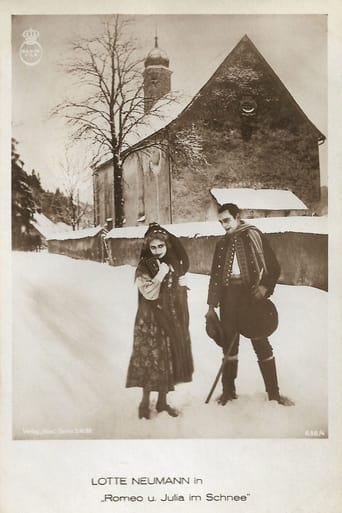
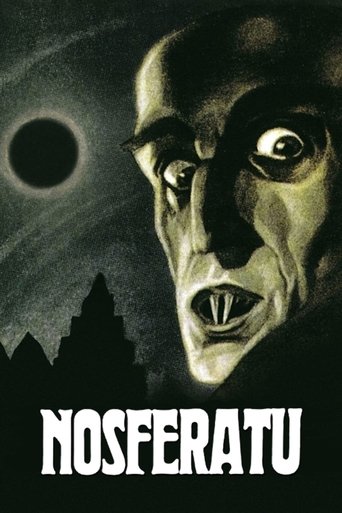


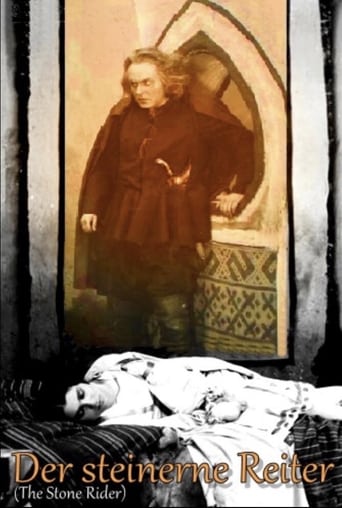
About Gustav von Wangenheim
Prominent German actor, director, and playwright: the most turbulent decades of 20th-century German history. Born into aristocracy, he rose to international fame with his performance as Thomas Hutter in F.W. Murnau's horror masterpiece 'Nosferatu' (1922), which established him as a leading figure in German Expressionist cinema. Throughout the 1920s, he continued acting in numerous silent films while simultaneously developing his skills as a playwright and theater director. With the rise of the Nazi regime in 1933, Wangenheim, a committed communist, fled Germany and worked in exile in the Soviet Union and France, where he began focusing more on directing. After World War II, he returned to East Germany and became a prominent filmmaker at DEFA (Deutsche Film-Aktiengesellschaft), directing several politically charged films that aligned with socialist ideals. His most notable directorial work, 'Der Kampf' (1936), was created during his exile period and reflected his anti-fascist convictions. Wangenheim's career exemplifies the intersection of art and politics during Germany's most transformative decades, making him not just a significant figure in German cinema but also a symbol of artistic resistance.
The Craft
On Screen
Wangenheim's acting style was quintessentially Expressionist, characterized by exaggerated gestures, intense emotional expression, and dramatic physicality that perfectly suited the stylized atmosphere of German Expressionist cinema. In 'Nosferatu,' his performance as the naive protagonist Thomas Hutter demonstrated his ability to convey mounting terror and psychological breakdown through minimal means, relying heavily on facial expressions and body language rather than dialogue. His approach to acting emphasized psychological realism within the heightened reality of Expressionist settings, creating a bridge between theatrical tradition and cinematic naturalism that influenced subsequent generations of German actors.
Behind the Camera
As a director, Wangenheim developed a distinctly political and socially conscious filmmaking approach, particularly evident in his post-war East German works. His directing style emphasized clear narrative structures designed to convey socialist ideals and critique capitalist and fascist systems. Wangenheim employed realist techniques combined with occasional expressionist visual elements, creating films that were both ideologically committed and artistically engaging. His direction often focused on collective rather than individual narratives, reflecting his communist beliefs about the importance of social solidarity and class consciousness in storytelling.
Milestones
- Starred as Thomas Hutter in F.W. Murnau's 'Nosferatu' (1922),
- Acted in over 40 films during the German silent era
- Fled Nazi Germany in 1933 due to his communist political activities
- Directed films while in exile in the Soviet Union and France
- Became a prominent director at East Germany's DEFA studio after WWII
- Founded the Berliner Ensemble theater company with Helene Weigel
Best Known For
Iconic Roles
Must-See Films
Accolades
Won
- National Prize of East Germany, 2nd Class (1950)
- Heinrich Mann Prize (1955)
- Karl Marx Art Prize (1959)
- Fatherland Order of Merit in Silver (1960)
Nominated
- Cannes Film Festival nomination for 'Der Biberpelz' (1949)
Special Recognition
- Honored Artist of the German Democratic Republic
- Member of the Academy of Arts, Berlin
- Named as National Artist of the GDR
Working Relationships
Worked Often With
Studios
Why They Matter
Impact on Culture
Gustav von Wangenheim's cultural impact extends far beyond his iconic performance in 'Nosferatu,' representing the complex relationship between art and politics in 20th-century Germany. His work in German Expressionist cinema helped establish the visual and thematic vocabulary that would influence horror and Gothic filmmaking for decades to come. As a political artist who fled Nazi Germany and later became a cultural leader in East Germany, Wangenheim embodied the role of the artist as social commentator and political activist. His films and plays contributed significantly to the development of socialist art theory and practice, while his earlier work preserved important examples of German Expressionist cinema. Wangenheim's career trajectory—from aristocratic actor to communist cultural leader—mirrored Germany's own turbulent transformation, making him a significant figure in understanding how artists navigated and influenced the major political movements of their time.
Lasting Legacy
Wangenheim's legacy in film history is twofold: as the memorable protagonist of one of cinema's greatest horror films and as a political filmmaker in East Germany. His performance in 'Nosferatu' continues to be studied by film scholars and actors as an exemplary example of silent film acting technique, demonstrating how to convey complex emotions and psychological states through purely physical means. In East Germany, his work at DEFA helped establish a national film industry that produced over 700 films between 1946 and 1992. His plays and films became part of the canon of socialist art, studied by generations of East German artists and scholars. Today, Wangenheim is remembered not only for his artistic contributions but also for his unwavering political convictions, which guided his career choices and artistic output throughout his life.
Who They Inspired
Wangenheim influenced subsequent generations of German actors through his work in Expressionist cinema, particularly his ability to blend psychological realism with stylized performance techniques. His transition from actor to director inspired many German performers to explore filmmaking as a means of expressing their artistic vision. In East Germany, his political approach to filmmaking influenced the development of socialist realist cinema, with his emphasis on collective narratives and social consciousness becoming a model for other directors. His work with Bertolt Brecht and the Berliner Ensemble helped develop new approaches to political theater that combined entertainment with ideological education. Contemporary horror filmmakers continue to draw inspiration from his performance techniques in 'Nosferatu,' particularly his ability to create terror through subtle psychological means rather than overt theatricality.
Off Screen
Wangenheim's personal life was deeply intertwined with his political convictions and artistic career. He married actress Inge von Wangenheim (née Franke) in 1931, and their marriage lasted until his death in 1975. The couple had two children, Friedel and Konrad, both of whom became involved in the arts. His son, Konrad von Wangenheim, became a well-known equestrian who won a gold medal at the 1936 Olympics. Wangenheim's commitment to communism led to his exile from Nazi Germany and shaped his entire career trajectory in East Germany, where he became.
Education
Studied acting under Max Reinhardt at the Deutsches Theater in Berlin
Family
- Inge von Wangenheim (née Franke) (1931-1975)
Did You Know?
- His full aristocratic title was 'Freiherr' (Baron), reflecting his noble birth
- He was a member of the Communist Party of Germany from the 1920s until his death
- During his exile in the Soviet Union, he worked with other German émigré artists including Bertolt Brecht
- His role in 'Nosferatu' was originally offered to other actors before he was cast
- He wrote over 20 plays during his career, many with political themes
- His son Konrad won a gold medal in equestrian events at the 1936 Berlin Olympics
- Wangenheim was one of the few German Expressionist film stars to successfully transition to a directing career
- He was under surveillance by the Gestapo before fleeing Germany in 1933
- His home in East Germany became a gathering place for artists and intellectuals
- He continued acting into his 60s, appearing in both film and television productions
In Their Own Words
Art must not be a mirror reflecting reality, but a hammer shaping it
The actor's task is not to represent, but to transform
In 'Nosferatu,' we created not just a horror film, but a meditation on the darkness within human society
Political commitment is not a choice for the artist, but a responsibility
Theater and film are weapons in the class struggle, and we must learn to wield them effectively
Frequently Asked Questions
Who was Gustav von Wangenheim?
German actor, on YTB.my.W. Murnau's classic horror film 'Nosferatu' (1922). He was also a prominent political filmmaker in East Germany after World War II and a committed communist whose active years covered from the silent era through the 1960s.
What films is Gustav von Wangenheim best known for?
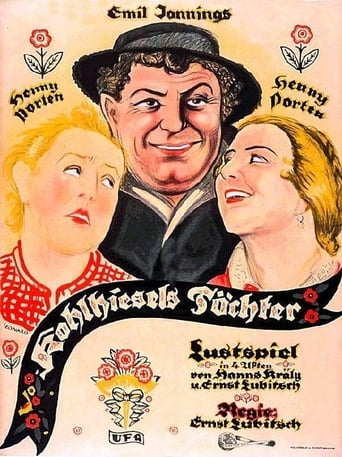
Titles linked here include Nosferatu (1922), Kohlhiesel's Daughters (1920).
When was Gustav von Wangenheim born and when did he die?
Born February 18, 1895; died August 5, 1975.
What awards did Gustav von Wangenheim win?
Wangenheim received several prestigious awards including the National Prize of East Germany (1950), the Heinrich Mann Prize (1955), the Karl Marx Art Prize (1959), and the Fatherland Order of Merit in Silver (1960). He was also named an Honored Artist of the German Democratic Republic.
What was Gustav von Wangenheim's acting and directing style?
As an actor, Wangenheim employed Expressionist techniques with exaggerated gestures and intense emotional expression, particularly evident in 'Nosferatu.' As a director, he developed a politically conscious style emphasizing social themes and collective narratives, often blending realist techniques with Expressionist visual elements to convey socialist ideals.