
A Reckless Romeo
"Caught on screen — caught at home"
Keys: Space play/pause · ←/→ 10s · F fullscreen · M mute · </> speed
About this film
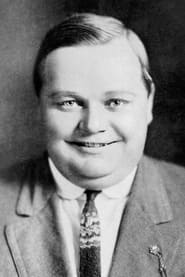
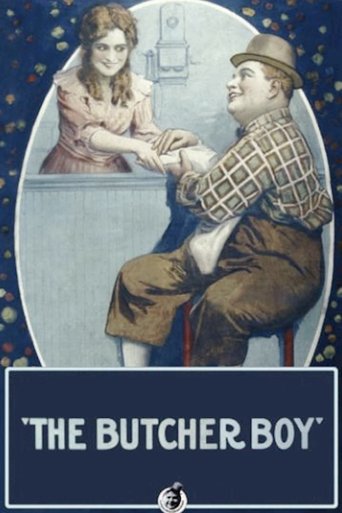
Fatty Arbuckle flirts in the park, then takes wife and mother-in-law to the movies where his indiscretion appears on screen. Roscoe's Keystone farce exploits the meta-gag of cinema catching adultery.
Cast & crew
More films like this

More Comedy films
View all →







More from Roscoe 'Fatty' Arbuckle
View all →
More about this film
About the production
Release dateMay 28, 1917
Box officeUnknown - but successful as part of Arbuckle's popular comedy series
ProductionComique Film Corporation
Filmed inLos Angeles, California, Echo Park area (park scenes), Local movie theater (interior scenes)
This film was part of Arbuckle's highly successful Comique series produced for Paramount Pictures. The film utilized the then-novel concept of movies within movies, playing with the audience's awareness of cinema as a medium. The newsreel footage was actually filmed separately to create the authentic feel of documentary-style footage within the narrative. The park scenes were shot on location rather than on studio sets, which was somewhat unusual for the time and added to the film's realistic quality.
Themes
Marital infidelity and temptationThe invasive nature of modern technologyPublic vs. private behaviorThe battle of the sexesCinema as a mirror of society
Themes & topics
infidelitynewsreelmovie theaterflirtingcaught on cameramother-in-lawmarriageparkcomedy of errorsexposurepanicdeception
Historical background
A Reckless Romeo (1917) reflects wartime appetite for park flirtation and cinema-in-cinema jokes.
Why this film matters
Arbuckle's escalating embarrassment template influenced Sennett and later sitcom confession scenes.
Making of
The production of 'A Reckless Romeo' exemplified the efficient working methods of the Comique Film Corporation under Arbuckle's leadership. The film was shot in just two days, a typical schedule for their two-reel comedies. Arbuckle was known for his collaborative directing style, often improvising scenes with his cast and crew. The newsreel footage presented a particular technical challenge, as it needed to look authentic while still serving the comedy. The cinematographer, George Peters, used different film stock and camera movements to distinguish the newsreel footage from the main narrative. The theater sequence required careful choreography to time Arbuckle's frantic attempts to block the screen with the actual projection of the newsreel footage. Agnes Neilson, who played the mother-in-law, was a veteran character actress who had perfected the stern, disapproving matriarch role in numerous comedies. The film's success led to several similar 'caught on camera' comedies from other studios in the following years.
What critics said
Nickelodeon crowds laughed at the projection gag; historians group it with Keystone's urban park cycle.
Did you know?
- the production was one of the first to use the 'movie within a movie' concept as a central plot device
- Roscoe Arbuckle not only starred in but also directed and wrote the scenario for the production
- The film was released during World War I, a time when movie attendance was soaring as people sought escape from wartime concerns
- The newsreel camera shown in the film was an actual Bell & Howell 2709 model, commonly used by newsreel photographers of the era
- This was one of over 30 short comedies Arbuckle made for Comique in 1917 alone
- The film's premise of being caught on camera in a compromising situation was particularly novel in 1917 when cameras were still relatively rare in public spaces
- Corinne Parquet, who played the young woman in the park, was a former Mack Sennett Bathing Beauty
- The movie theater scenes were filmed at the historic Million Dollar Theater in Los Angeles
- the production was considered somewhat risqué for its time due to its themes of marital infidelity, though handled in a comedic manner
- The film's title was a play on Shakespeare's 'Romeo and Juliet,' capitalizing on the cultural literacy of the era
Visual style
The cinematography in 'A Reckless Romeo' was handled by George Peters, who employed different visual styles to distinguish between the narrative and newsreel footage. The main story used standard static shots typical of the era, with careful composition to frame Arbuckle's physical comedy. The newsreel sequences, however, featured handheld camera movements and different film stock to create an authentic documentary feel. Peters used slightly overexposed footage for the newsreel portions to mimic the look of actual newsreels of the period. The theater scenes required innovative lighting to simulate the projection of the newsreel while keeping the actors visible. The film also made effective use of deep focus in the park scenes, allowing for complex staging of Arbuckle's flirtation in the foreground while the newsreel cameraman operates in the background. The cinematography successfully balanced the need for clear visual storytelling in silent film with the technical requirements of the film's meta-narrative structure.
Innovations
While not technically groundbreaking, 'A Reckless Romeo' demonstrated several innovative techniques for its time. The film's most notable technical achievement was its seamless integration of footage shot in different styles to create the illusion of newsreel material within the narrative. This required careful matching of film stocks and developing processes. The film also employed sophisticated editing techniques for the comedy sequences, particularly in the theater scenes where rapid cuts between Arbuckle's reactions and the screen footage enhanced the comedic effect. The production team used innovative lighting techniques to simulate the effect of film projection in the theater scenes, a technical challenge that many films of the era avoided. The location shooting in public spaces also presented technical difficulties that the crew solved through portable lighting equipment and careful planning around natural light. These technical elements, while individually not revolutionary, combined to create a polished and effective comedy that pushed the boundaries of what was typical in short comedy production of 1917.
Music
As a silent film, 'A Reckless Romeo' was originally accompanied by live musical performance. The typical score would have been provided by a theater organist or small orchestra, following the musical cues suggested in the film's cue sheets. The music would have included popular songs of 1917, classical pieces adapted for comedic effect, and original stock compositions. During the park scenes, lighter, romantic music would have played, while the newsreel footage might have been accompanied by more dramatic or military-style marches. The frantic theater sequences would have featured increasingly frantic music to match Arbuckle's escalating panic. Some theaters might have used specific popular songs of the day, such as 'I'm Always Chasing Rainbows' or 'For Me and My Gal,' which were hits in 1917. The musical accompaniment was crucial to conveying the film's comedic timing and emotional shifts to the audience.
Famous quotes
Fatty (to the pretty girl): 'My dear, you make the flowers look plain by comparison!' (as shown through intertitles)
Mother-in-law (disapprovingly): 'A married man should know better than to flirt in public!'
Fatty (panicked): 'There must be something wrong with the projection! Let's get the manager!'
Wife (suspiciously): 'Dear, why are you suddenly so interested in the ceiling?'
Newsreel narrator (intertitle): 'Caught on film! A moment of indiscretion in the park!'
Memorable scenes
- The opening park scene where Fatty engages in increasingly elaborate flirtations while trying to appear casual, completely unaware he's being filmed
- The moment in the theater when Fatty realizes what's about to be shown on screen, his face going from relaxed enjoyment to sheer panic
- Fatty's frantic attempts to block his wife and mother-in-law's view of the screen, including pretending to faint and creating diversions
- The climactic chase sequence as Fatty tries to escape the theater while being pursued by his angry wife and mother-in-law
- The final resolution where Fatty tries to explain his way out of the situation, only to dig himself deeper into trouble
What audiences thought
Audiences in 1917 responded enthusiastically to 'A Reckless Romeo,' finding both humor and relatability in Fatty's predicament. The film was a box office success, playing to packed houses in major cities across the United States. Contemporary newspaper accounts reported that audiences laughed continuously throughout the theater sequences, particularly enjoying Arbuckle's increasingly desperate attempts to hide the screen from his wife and mother-in-law. The film's theme of being caught in an embarrassing situation resonated strongly with viewers of the era. Many theater owners reported that the film was particularly popular with couples, who found humor in the marital dynamics portrayed. The film's success contributed to Arbuckle's growing popularity and helped establish the Comique brand as a reliable source of quality comedy. In letters to trade publications, exhibitors praised the film's broad appeal and its ability to generate consistent laughs from diverse audiences.
Film connections
Influenced by
- Earlier Mack Sennett comedies
- Chaplin's mutual films
- French comedy films of Georges Méliès
- Stage farce traditions
- Vaudeville comedy routines
This film influenced
- Later 'caught on camera' comedies
- Buster Keaton's 'The Cameraman' (1928)
- The Three Stooges' 'Movie Maniacs' (1936)
- Modern meta-comedy films
- Television sitcom episodes with similar premises
Film restoration
The film is preserved in several archives including the Library of Congress and the Museum of Modern Art. A complete 35mm print exists and has been digitally restored. The film is also available through various public domain collections. While some wear and deterioration is visible in existing prints, the film is considered to be in good preservation condition for a film of its age. The restoration work has helped stabilize the image quality and ensure the film's continued availability for study and viewing.
Where to watch
- YouTube (public domain uploads)
- Internet Archive
- Kino Lorber DVD collections of Arbuckle films
- Flicker Alley streaming service
- Various silent film festival screenings
- University film archives
- Classic comedy streaming platforms