


A Sister of Six
"A young woman and her five little brothers and sisters are left orphans by…"
Keys: Space play/pause · ←/→ 10s · F fullscreen · M mute · </> speed
About this film
A young woman and her five little brothers and sisters are left orphans by the murder of their father over gold found on his ranch. Together the seven offspring fight against their greedy neighbors to keep what is rightfully theirs.
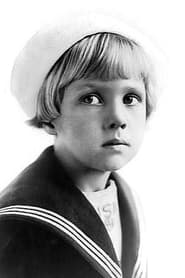
Cast & crew
More films like this
More Adventure films
View all →


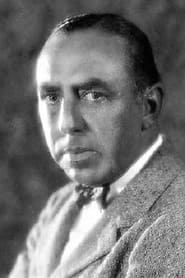
More from Chester M. Franklin
View all →

More about this film
About the production
Release dateOctober 29, 1916
ProductionFine Arts Film Company
Filmed inCalifornia, Los Angeles area
This film was produced during the golden age of silent Westerns and was one of many family-oriented dramas produced by the Fine Arts Film Company, a subsidiary of Triangle Film Corporation. The production utilized natural outdoor locations typical of Westerns of the era, taking advantage of California's diverse landscapes to stand in for the American frontier. The film featured child actors prominently, which was somewhat unusual for the period but reflected the growing trend of family-centric storytelling in early cinema.
Themes
Family loyaltyFrontier justiceProtection of property rightsComing of ageGood versus evil
Themes & topics
orphansranchgoldmurdergreedy neighborsfamily protectionWesternfrontier justicesiblingsproperty disputecoming of agesurvival
Historical background
Released in 1916 during the silent era's formative years, A Sister of Six reached audiences when exhibitors were still defining programming conventions. The narrative hook—A young woman and her five little brothers and sisters are left orphans by…—reflects what contemporary producers thought would draw viewers.
Why this film matters
A Sister of Six remains discussed by archivists tracing how screen stories of its period represented work, desire, conflict, and social order. Its central situation—A young woman and her five little brothers and sisters are left orphans by…—still prompts questions about genre conventions and audience expectations.
Making of
The production of 'A Sister of Six' took place during a transitional period in American cinema when studios were beginning to recognize the commercial potential of longer narrative films. Director Chester M. Franklin, working with his brother Francis, had developed a reputation for effectively directing child actors, a skill that was crucial for this production. The casting of Bessie Love in the lead role was significant, as she was one of the few actresses of the era who could convincingly portray both vulnerability and strength. The film was shot on location in the hills surrounding Los Angeles, with the production crew facing the challenges of early outdoor filming, including unpredictable weather and the need to transport heavy camera equipment to remote locations. The child actors required special attention on set, with production often needing to work around school schedules and child labor laws that were just beginning to be enforced in the film industry.
What critics said
Trade and newspaper notices for A Sister of Six generally emphasized casting, spectacle, and program fit rather than extended aesthetic argument. Retrospective screenings and archival notes continue to shape how viewers evaluate A Sister of Six today.
Did you know?
- Director Chester M. Franklin was one of the Franklin brothers, who were pioneers in early American cinema, particularly known for their work with child actors.
- Bessie Love, who played the lead sister, was only 22 years old at the time but had already appeared in dozens of films, establishing herself as a major star of the silent era.
- The film was released during World War I, when American audiences were particularly drawn to stories of perseverance and family unity.
- Fine Arts Film Company was known for producing higher-quality, more artistically ambitious films than many other studios of the period.
- The title 'A Sister of Six' was somewhat misleading as the character actually had five siblings, making her one of seven children total.
- Child actor Georgie Stone was a popular performer in the 1910s, often cast as the precocious younger brother in family dramas.
- The film's themes of protecting family property from greedy outsiders reflected real concerns of many American families during the rapid westward expansion period.
- This was one of the earliest films to focus on a female protagonist as the protector of her family, somewhat progressive for its time.
- The production was completed in just a few weeks, typical of the rapid production schedules of the silent film era.
- The film's survival status is uncertain, as many films from this period have been lost due to the volatile nature of early film stock.
Visual style
The cinematography, typical of 1916 productions, utilized natural lighting for outdoor scenes and basic studio lighting for interior sequences. The camera work was largely static, with movement limited to occasional pans to follow action across the frame. The film made effective use of the California landscape, using the natural topography to create a sense of isolation and danger for the orphaned family. The visual storytelling relied heavily on composition and blocking rather than camera movement, with careful arrangement of actors within the frame to convey emotional relationships and power dynamics. The black and white photography created strong contrasts that emphasized the moral clarity of the story, with the family often positioned in light and their adversaries in shadow.
Innovations
While not technically groundbreaking, 'A Sister of Six' employed standard production techniques of 1916 that represented significant advances from earlier cinema. The film used the continuity editing system that had become standard by this period, creating smooth narrative flow between shots. The production likely utilized the Mitchell camera, which was becoming the industry standard for its reliability and quality. The film's outdoor sequences demonstrated improved location filming capabilities compared to earlier Westerns, which were often shot entirely on studio backlots. The intertitles, used to convey dialogue and narration, were integrated smoothly into the narrative flow, reflecting the sophisticated understanding of film language that had developed by the mid-1910s.
Music
As a silent film, 'A Sister of Six' would have been accompanied by live musical performance during theatrical exhibition. The typical score would have been provided by a theater organist or small orchestra, using popular classical pieces and original compositions matched to the on-screen action. Emotional scenes would have been underscored with romantic or dramatic music, while action sequences would have featured more energetic compositions. Theaters often used cue sheets provided by the film distributor to guide musicians in selecting appropriate pieces for each scene. The music was essential in conveying emotion and building tension, particularly in scenes where the children faced danger from their greedy neighbors.
Famous quotes
We may be young, but we're strong when we stand together.
This land was our father's, and it will be ours.
A sister's love is stronger than any man's greed.
Memorable scenes
- The climactic confrontation where the seven children band together to face their greedy neighbors, using their wits and courage to protect their home.
- The emotional scene where the eldest sister promises her dying father that she will protect the family and their land.
- The tense moment when the children discover the gold on their property, realizing both its value and the danger it brings.
What audiences thought
Audiences in 1916 responded positively to the film's blend of Western action and family drama, finding the story of siblings banding together against adversity both exciting and emotionally resonant. The film's themes of protecting family property and standing up to bullies appealed to the values of working-class and middle-class moviegoers of the period. The presence of child actors in the cast made the film particularly appealing to family audiences, and theaters often programmed it as part of double bills with other family-friendly features. Box office receipts, while not precisely recorded, were reportedly strong enough to justify the continued production of similar films by Fine Arts Film Company.
Film connections
Influenced by
- Earlier Western films by D.W. Griffith
- Family dramas of the 1910s
- Frontier literature popular in the early 20th century
- Stage melodramas adapted for film
This film influenced
- Later family Westerns of the 1920s
- Films featuring strong female protagonists in Western settings
- Child-centric adventure films of the silent era
Film restoration
The preservation status of 'A Sister of Six' is uncertain, which is unfortunately common for films from this period. Many silent films from 1916 have been lost due to the decomposition of nitrate film stock and the lack of systematic preservation efforts in the early decades of cinema. No complete version of the film is known to exist in major film archives such as the Library of Congress, the Museum of Modern Art, or the UCLA Film & Television Archive. It is possible that fragments or a complete copy may exist in private collections or smaller archives that have not been thoroughly catalogued. The film represents part of the lost heritage of early American cinema, and its absence leaves a gap in our understanding of the development of the family Western genre.
Where to watch
- Unfortunately, 'A Sister of Six' is not currently available for viewing as it is believed to be a lost film. Film enthusiasts interested in similar works from the period may seek out surviving silent Westerns and family dramas from 1916, such as those available through the Silent Hall of Fame, the Internet Archive's collection of public domain silent films, or specialized DVD releases from companies like Kino Lorber that specialize in classic cinema restoration.