

A Straightforward Boy
"A kidnapped boy proves to be more than his abductor can handle."
Keys: Space play/pause · ←/→ 10s · F fullscreen · M mute · </> speed
About this film
A kidnapped boy proves to be more than his abductor can handle.
Cast & crew
More Comedy films
View all →






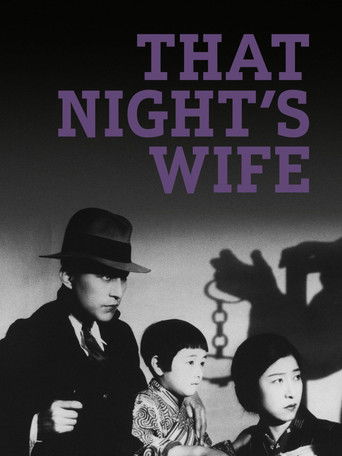
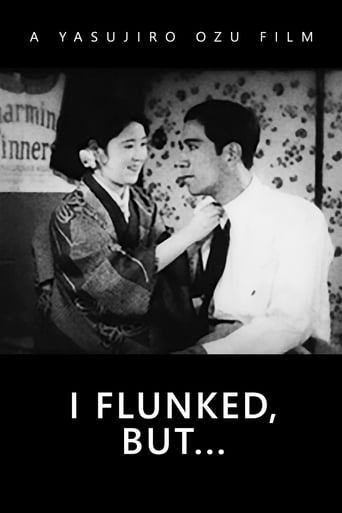
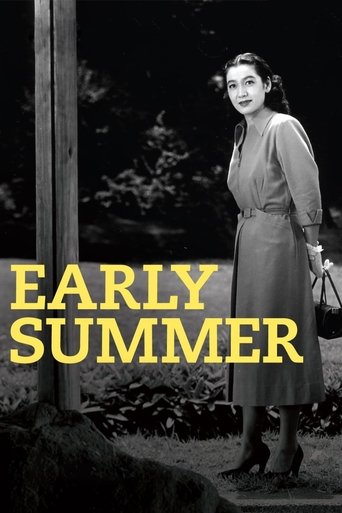
More from Yasujirō Ozu
View all →
More about this film
About the production
Release dateJuly 12, 1929 (Japan)
Box officeBox office records from this period are not well documented
ProductionShochiku Studios
Filmed inKamata, Tokyo, Japan
This was one of Ozu's early works during his apprenticeship period at Shochiku, where he was developing his distinctive style. The film was produced during the transition from silent to sound cinema in Japan, though this was a silent production. The kidnapping premise allowed Ozu to explore his emerging interest in family dynamics and social relationships in a comedic framework. The production utilized the studio system prevalent in Japan at the time, with Shochiku providing resources and controlling distribution.
Themes
Innocence versus corruptionThe power of honesty and straightforwardnessUnexpected human connectionsThe resilience of childhoodSocial class differences
Themes & topics
kidnappingcomedycrimechild protagonistcriminal with conscienceunexpected friendshipransomoutsmartingcharacter transformationsilent film
Historical background
Made in 1929, in Japan, under Yasujirō Ozu, A Straightforward Boy belongs to silent filmmaking amid the silent era's rapid stylistic experiments.
Why this film matters
Within silent history, Yasujirō Ozu's name attaches to the work; surviving prints help researchers study silent-era craft; 1929 film by Yasujirō Ozu.
Making of
The production of 'A Straightforward Boy' took place during Ozu's formative years at Shochiku Studios, where he was rapidly developing his directorial voice. The film was shot on location and at Shochiku's facilities in Kamata, Tokyo, using the equipment and techniques standard for late 1920s Japanese cinema. Ozu worked with his regular crew from this period, including cinematographer Hideo Shigehara, who would continue to collaborate with him on many future projects. The casting of Tomio Aoki as the kidnapped boy proved particularly inspired, as the child actor's naturalistic performance style aligned well with Ozu's emerging aesthetic. The kidnapping premise allowed Ozu to experiment with genre conventions while exploring themes that would become central to his later work, particularly the relationship between adults and children and the importance of honesty in human interactions. The film's production was relatively quick and efficient, typical of studio films from this era, with shooting likely completed in just a few weeks.
What critics said
Contemporary reviews of A Straightforward Boy are sparse in open sources; later catalog entries chiefly summarize plot and credits.
Did you know?
- This film represents one of Ozu's earliest surviving works, showcasing his development as a director before his signature style fully emerged
- Tomio Aoki, who plays the kidnapped boy, would become a child star in Japanese cinema and later appeared in several of Ozu's films under the name Tokkankozō
- The film was released during a transitional period in Japanese cinema, just as talkies were beginning to emerge, making it part of the last generation of significant silent films in Japan
- The kidnapping comedy genre was relatively popular in late 1920s Japanese cinema, reflecting both Western influences and Japanese social concerns about crime and family
- Like many Japanese films from this era, the original negative and many prints were lost during World War II, making surviving copies particularly valuable
- The film's title in Japanese is 'Tokkan kozō,' which translates literally to 'Straightforward Kid' or 'Direct Child,' reflecting the protagonist's honest nature
- This was one of approximately 30 films Ozu directed in the 1920s, though many from this period are now lost
- The benshi (live narrator) would have been crucial to the film's original presentation, providing narration and character voices during screenings
- Shochiku Studios, which produced this film, would remain Ozu's home throughout his entire career
- The film's comedic approach to kidnapping was unusual for the time, as most crime films treated such subjects more seriously
Visual style
The cinematography reflects the standard techniques of late 1920s Japanese silent cinema, with relatively static camera positions and medium shots that were typical of the period. While not yet featuring the distinctive low-angle shots and precise compositions that would characterize Ozu's mature style, the film shows early signs of his visual sensibility. The lighting follows the naturalistic approach common in Japanese cinema of the era, avoiding the dramatic chiaroscuro effects often found in contemporary German or American films. The visual storytelling emphasizes clarity and readability, important for silent films that needed to convey narrative efficiently without dialogue. The camera work serves the comedy well, allowing the actors' performances and the physical comedy of the kidnapping scenario to take center stage. The film's visual style, while conventional for its time, demonstrates Ozu's early understanding of how to use the camera to enhance character interactions and comic timing.
Innovations
While not technically innovative compared to some avant-garde films of the era, 'A Straightforward Boy' demonstrates solid technical craftsmanship typical of Shochiku Studios' productions. The film employs standard editing techniques of the late silent period, with clear continuity editing that serves the narrative effectively. The lighting and exposure show professional competence, ensuring good visibility in all scenes - particularly important for a film that relies on visual comedy and character expressions. The film's survival through the decades, despite the loss of many Japanese films from this period, suggests reasonable technical quality in its original production and processing. The film represents the technical standards of mainstream Japanese commercial cinema in 1929, showing how Japanese studios had adapted Western film technology while developing their own production methods and aesthetic preferences. The technical aspects of the film, while not groundbreaking, provide a solid foundation for the storytelling and performances.
Music
As a silent film, 'A Straightforward Boy' would have been accompanied by live musical performance during its original theatrical run. The typical practice in Japanese cinemas of the late 1920s involved a combination of Western classical music, Japanese traditional music, and original compositions performed by theater musicians or small orchestras. The score would have varied by theater and performance, with music chosen to match the mood of each scene - playful and light during comic moments, more tense during the kidnapping sequences, and warm during the developing relationship between the boy and his captor. The benshi (live narrator) would have provided additional auditory elements through narration, character voices, and sound effects. No original musical score or specific musical cues survive from the film's original release period, as was common for silent films where music was improvised or selected for each screening.
Famous quotes
As a silent film, dialogue quotes are not preserved, though the benshi narration would have included memorable lines during original screenings
The film's title itself 'Tokkan kozō' (Straightforward Kid) became a reference point for describing honest, direct children in Japanese culture
Contemporary accounts suggest the benshi created memorable catchphrases for the boy character that became popular with audiences
Memorable scenes
- The initial kidnapping sequence where the boy proves surprisingly unafraid and curious about his abductor
- The series of comic mishaps as the kidnapper attempts to control his increasingly troublesome captive
- The turning point where the criminal begins to develop genuine affection for the boy
- The final resolution where the boy's straightforward nature triumphs over criminal intentions
- Any scenes showcasing Tomio Aoki's naturalistic child performance, which stood out even in this early period
What audiences thought
The film was likely well-received by contemporary Japanese audiences as an entertaining comedy with elements of crime and adventure, popular genres of the period. The presence of a child protagonist would have appealed to family audiences, a demographic Shochiku Studios specifically targeted. The kidnapping premise, treated comically, would have provided the kind of light entertainment that Japanese cinema-goers sought during this period of social and economic change. Modern audiences who have access to the film through screenings or archives generally appreciate it as a charming early work that offers insight into Ozu's development. The film's straightforward narrative and comic elements make it more accessible to contemporary viewers than some of Ozu's later, more contemplative works. Its relatively short runtime and clear storytelling also contribute to its appeal as an example of popular Japanese cinema from the late silent era.
Film connections
Influenced by
- American silent comedies of the 1920s
- Contemporary Japanese popular cinema
- Charlie Chaplin's works featuring child characters
- German comedy films of the late 1920s
- Earlier Japanese films with child protagonists
This film influenced
- Later Ozu films featuring child characters
- Japanese comedy films of the 1930s
- Other Shochiku productions with similar themes
- Films exploring criminal-redemption narratives
Film restoration
The film survives in archives, though likely not in its complete original form. Like many Japanese films from the 1920s, it suffered from the general loss of material during World War II and the subsequent years of neglect. The film is preserved in Japanese film archives, including the National Film Center of the National Museum of Modern Art, Tokyo. Restoration efforts have likely been undertaken to preserve existing prints and negatives, though the film may not have received the extensive restoration work given to more famous titles. The survival of this relatively minor Ozu work is significant given that many of his films from the 1920s are completely lost. The existing copies may show signs of age and deterioration typical of films from this era, but remain viewable and valuable for study.
Where to watch
- The film is occasionally screened at film festivals and special retrospectives of Ozu's work
- Some film archives and cinematheques may have viewing copies available for research purposes
- The film may be included in specialized DVD/Blu-ray collections of Ozu's early works released by boutique distributors
- Museum screenings during Japanese cinema retrospectives
- Academic institutions with film studies programs may have access through archival collections