
A Tough Winter
"Fire in the gang"
Keys: Space play/pause · ←/→ 10s · F fullscreen · M mute · </> speed
About this film
The gang creates a huge mess after they get into a taffy-pulling contest.
Cast & crew
More films like this
More Comedy films
View all →







More from Robert F. McGowan
View all →

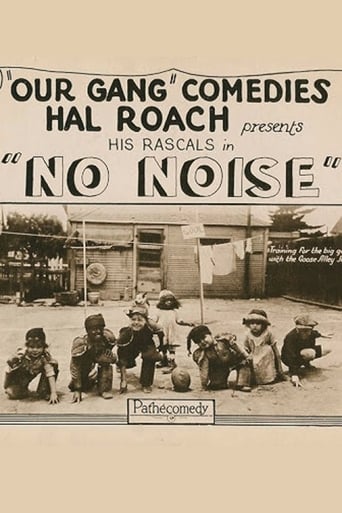
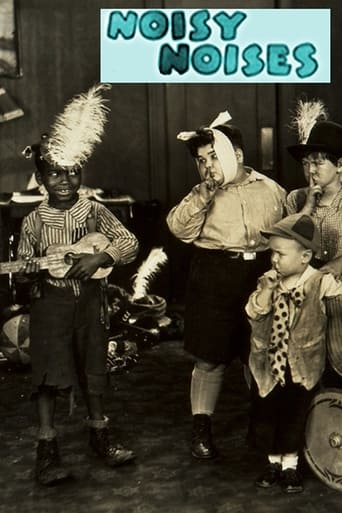
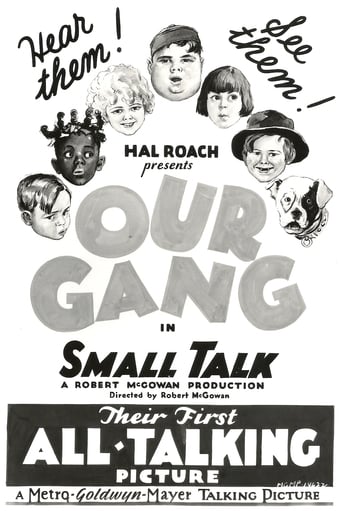
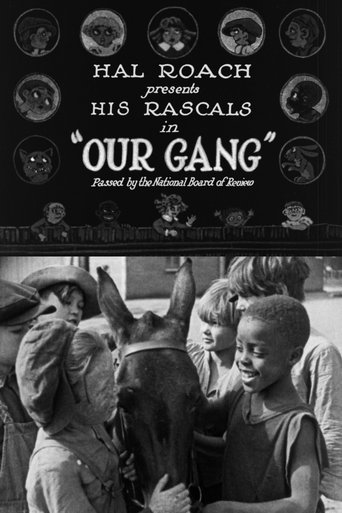
More about this film
About the production
Release dateJune 21, 1930
BudgetApproximately $30,000 (Estimated for Our Gang two-reelers of the era)
ProductionHal Roach Studios, Metro-Goldwyn-Mayer (MGM)
Filmed inHal Roach Studios, Culver City, California, Hal E. Roach Ranch, Los Angeles, California
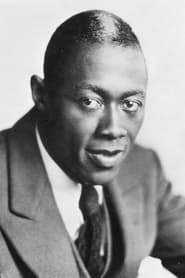
The film was produced during a transitional period for the studio as it fully embraced sound technology. Director Robert F. McGowan found the transition to 'talkies' difficult, as he could no longer shout directions to the children during takes. This specific short was intended to serve as a pilot for a spin-off series starring Stepin Fetchit, but the project never materialized. Production took place over 18 shooting dates between January 27 and February 15, 1930.
Themes
Childhood innocence vs. adult responsibilityDomestic chaosTechnological failureThe consequences of misunderstanding instructions
Themes & topics
taffy pullsticky messcrossed wireswinterradio recipedomestic disasterchildhood mischief
Historical background
Made in its country of production around 1930, A Tough Winter belongs to the early sound era. Its story of the gang creates a huge mess after they get into a taffy-pulling contest spoke to audiences of the day through familiar genres and topical settings.
Why this film matters
Archivists and historians still cite A Tough Winter when tracing how the early sound era filmmakers staged gang and creates on screen.
Making of
The production of 'A Tough Winter' was marked by the studio's attempt to capitalize on the popularity of Stepin Fetchit. Hal Roach was a great admirer of Fetchit's comedic timing and signed him to a nine-episode contract, though this was the only film they completed together before Fetchit moved on to other work. Behind the camera, the crew struggled with the technical requirements of the 'crossed wires' sequence, which required elaborate practical effects to make household appliances behave erratically. Additionally, the child actors had to be carefully managed during the taffy scenes to ensure they didn't actually get stuck or injured by the heavy, glue-like prop taffy.
What critics said
Reviews from 1930 weighed A Tough Winter on pacing, performance, and novelty. Later criticism reads its emphasis on gang, creates, huge through modern standards of craft and representation.
Did you know?
- This was the 99th 'Our Gang' short produced and the final entry of the 1929-1930 season.
- The film features the first 'Pete the Pup' (Lucenay's Peter), who tragically died of poisoning shortly after filming was completed.
- It is one of the few Our Gang shorts to feature a full orchestral score throughout, rather than the jazz-influenced Leroy Shield cues that became standard later.
- The short was produced in three languages: English, French (as 'Temps d’Hiver'), and German (as 'Winter Wetter').
- Beverly Parrish, who appears in the film, died suddenly at the age of six just over a week after filming concluded.
- The 'taffy' used on set was a real, incredibly sticky substance that caused genuine difficulty for the child actors during filming.
- The film was officially removed from the 'Little Rascals' television syndication package in 1971 due to racial stereotyping.
- The radio announcer in the film is played by Lyle Tayo, a frequent Hal Roach supporting actress.
- The letter Stepin Fetchit receives is dated January 12, 1929, likely a clerical error by the prop department as it was filmed in 1930.
Visual style
Photographed by Art Lloyd, the film utilizes the standard bright, high-key lighting of 1930s comedies. Notable camera work includes the use of close-ups to emphasize the children's frustration with the sticky taffy and the clever use of practical effects to simulate electrical malfunctions.
Innovations
The film is notable for its elaborate practical 'mechanical' gags during the climax. The synchronization of sound with the visual gags of the 'vacuuming phone' and 'exploding bulbs' was a sophisticated technical feat for 1930.
Music
The soundtrack is a mix of orchestral arrangements of popular tunes and early experimental scoring. It features 'That Old Gang of Mine' as the theme song and marks one of the first times Leroy Shield's jazz-style background music was integrated into the series.
Famous quotes
Stepin Fetchit: 'I learned to read in night school, and I can't read nothin' in the daytime!'
Memorable scenes
- The 'Taffy Disaster' where the kids become hopelessly entangled in a massive web of sticky candy that covers the entire kitchen.
- The 'Crossed Wires' sequence where Stepin Fetchit's attempt to fix the plumbing leads to the refrigerator playing music and the gas heater spraying water.
What audiences thought
Contemporary audiences in 1930 found the film hilarious, particularly the surreal climax where the house 'goes haywire.' It was a popular matinee draw. In later decades, television audiences enjoyed it until the civil rights movement prompted a re-evaluation of its content.
Film connections
Influenced by
- Vaudeville slapstick routines
- The 'Bad Boy' literary tradition
- Early silent comedies of Buster Keaton (specifically the 'mechanical house' tropes)
This film influenced
- The Little Rascals (1994 remake, specifically the kitchen mess scenes)
- Home Alone (thematic elements of children defending/managing a home)
Film restoration
The film is preserved and exists in its original 35mm format. A high-definition restoration was completed by ClassicFlix in 2021 as part of 'The Little Rascals: The ClassicFlix Restorations, Volume 1.'
Where to watch
- The Little Rascals: The ClassicFlix Restorations Volume 1 (Blu-ray/DVD)
- Public Domain archives (Internet Archive)
- YouTube (various unofficial uploads)