Assunta Spina
"assunta — desire"
Keys: Space play/pause · ←/→ 10s · F fullscreen · M mute · </> speed
About this film
Years of silent era life, assunta and Michele are in love, but others come between them and jealousy arises. Assunta Spina stands out as an early landmark of naturalistic acting and a blueprint for the Italian Neorealist films to come.
Cast & crew
More films like this
More Drama films
View all →







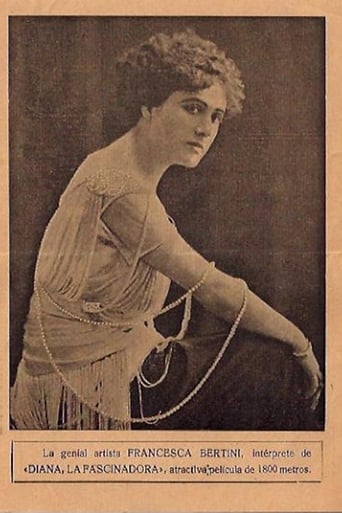
More from Francesca Bertini
View all →

More about this film
About the production
Release date1915
Box officeUnknown
ProductionCaesar Film, Film d'Arte Italiana
Filmed inNaples, Italy, Studio locations in Rome
The film was notable for its extensive location shooting in authentic Neapolitan neighborhoods, which was revolutionary for its time. Francesca Bertini, the star, reportedly had significant creative control and may have co-directed portions of the film, though Gustavo Serena is officially credited as director. The production faced challenges from authorities due to its realistic depiction of working-class life and its controversial themes of sexuality and corruption.
Themes
Class struggle and social oppressionFemale agency and sexualityJealousy and possessive loveHonor and reputation in working-class cultureCorruption of power and authority
Themes & topics
Naplesworking classforbidden lovejealousyimprisonmentcorruptionsacrificetragedysocial dramafemme fataleknife fighthonor killingpovertysexual politicsurban realism
Historical background
By 1915, cinema had matured into a mass medium; Assunta Spina reflects the tastes and anxieties of that silent era moment. Outside Italy, it is sometimes known as Sangue Napolitano ("Neapolitan Blood").
Why this film matters
Archivists and historians cite Assunta Spina when discussing the evolution of screen storytelling in the silent era.
Making of
The making of Assunta Spina marked a significant shift in Italian cinema from historical epics to contemporary social dramas. Francesca Bertini, already a major star, fought for creative control and insisted on location shooting in authentic Neapolitan settings rather than studio sets. The production team faced numerous challenges, including hostile local residents who objected to filming in their neighborhoods, and authorities who were concerned about the film's controversial content. Bertini's approach to acting was revolutionary - she studied real Neapolitan women and incorporated their gestures and mannerisms into her performance, rejecting the theatrical style that dominated silent cinema. The film's realistic violence and implied sexuality caused controversy, but also contributed to its enormous success with audiences who were hungry for more authentic representations of contemporary life.
What critics said
Contemporary notices praised Assunta Spina for meeting audience expectations of the silent era; today it is studied as part of the period canon.
Did you know?
- Francesca Bertini was one of the first divas of Italian cinema and reportedly earned the equivalent of a modern-day movie star's salary for this role
- The film was based on a successful stage play by Salvatore Di Giacomo, which had been a hit in Italian theaters
- Bertini performed many of her own stunts, including scenes in dangerous Neapolitan street locations
- The film's realistic approach to acting was revolutionary - Bertini reportedly refused to use the exaggerated gestures common in silent films of the era
- Some historians credit Bertini as the film's co-director, making her one of the first female directors in cinema history
- The original negative was believed lost for decades before being rediscovered and restored in the 1990s
- The film was banned in several countries for its controversial content and realistic portrayal of sexuality
- Bertini's naturalistic acting style influenced generations of actors and is considered a precursor to method acting
- The knife fight scene was so realistic that some audience members reportedly fainted during early screenings
- The film was remade multiple times, including versions in 1930 and 1948, but the 1915 original is considered the definitive version
Visual style
The cinematography of Assunta Spina was revolutionary for its time, combining studio techniques with extensive location shooting in authentic Neapolitan settings. The film's visual style emphasized natural lighting and real environments, a stark contrast to the artificial lighting and painted backdrops common in contemporary productions. The camera work was notably dynamic, with movement and composition that served the narrative rather than simply recording the action. Close-ups were used strategically to emphasize emotional moments, particularly in Bertini's performance, while wider shots established the social context of the story. The visual texture of the film, with its gritty urban locations and naturalistic details, created a sense of documentary realism that would influence generations of filmmakers. The cinematographer's ability to capture the atmospheric quality of Naples - its narrow streets, crowded markets, and working-class neighborhoods - added depth and authenticity to the narrative.
Innovations
Assunta Spina pioneered several technical innovations that would become standard in later cinema. Its extensive use of location shooting was groundbreaking, demonstrating that authentic environments could enhance narrative realism. The film's editing techniques, particularly its use of cross-cutting to build tension during dramatic sequences, were sophisticated for their time. The production also experimented with natural lighting techniques on location, overcoming the technical challenges of filming in real urban environments. The film's realistic violence, particularly the knife fight sequence, was achieved through innovative stunt coordination and camera work that created genuine tension without sacrificing safety. The preservation of the film's negative and its subsequent restoration also represent technical achievements in film conservation, allowing modern audiences to experience the film's visual quality nearly as it was originally intended.
Music
As a silent film, Assunta Spina was originally accompanied by live musical performances, typically featuring piano or organ in smaller theaters and full orchestras in larger cinemas. The score would have been compiled from existing classical pieces and popular songs, with specific musical cues matched to the emotional tone of each scene. For the film's restoration, contemporary composers have created new scores that attempt to capture the Neapolitan atmosphere and dramatic intensity of the original. Modern screenings often feature live musical accompaniment, with some performances incorporating traditional Neapolitan instruments and melodies to enhance the film's cultural authenticity. The original musical selections are not documented, but contemporary accounts suggest that the music played a crucial role in amplifying the emotional impact of key scenes, particularly the tragic climax.
Famous quotes
I would rather die with you than live without you" - Assunta declaring her devotion to Michele
Honor is everything to a woman of the people" - Assunta explaining the importance of reputation in her community
In Naples, love and blood flow together" - Narration describing the passionate nature of Neapolitan life
A woman's body is her only weapon against power" - Assunta's realization of her limited options
Even in prison, you are more free than I am" - Assunta to Michele, reflecting on her social constraints
Memorable scenes
- The opening sequence showing Assunta working as a laundress in the crowded Neapolitan streets, establishing the film's realistic style and social context
- The knife fight between Michele and his rival, filmed on location with remarkable realism and tension that shocked contemporary audiences
- Assunta's emotional breakdown in prison after visiting Michele, showcasing Bertini's revolutionary naturalistic acting style
- The climactic confrontation scene where Assunta faces both Michele and Don Federigo, culminating in tragic violence
- The final scene of Assunta walking alone through the empty streets of Naples at dawn, symbolizing her isolation and the film's critique of social oppression
What audiences thought
Assunta Spina was a tremendous commercial success upon its release, breaking box office records in Italy and throughout Europe. Audiences were particularly drawn to Francesca Bertini's charismatic performance and the film's realistic portrayal of working-class life. The film's controversial elements, including its violence and implied sexuality, generated significant buzz and word-of-mouth promotion. In Naples, where the film was set, it became a cultural phenomenon, with audiences reportedly weeping openly during screenings and Bertini being mobbed in the streets. The film's success launched Bertini to international stardom and made her one of the highest-paid actresses of her era. Modern audiences, primarily through festival screenings and restored versions, continue to be moved by its emotional power and technical innovation, with many noting how contemporary its themes and style remain despite being over a century old.
Film connections
Influenced by
- Salvatore Di Giacomo's stage play (source material)
- Italian verismo literature tradition
- French naturalist literature (Zola, Maupassant)
- Early American social realist films
- Neapolitan theatrical tradition
- Italian diva film genre (subverted)
This film influenced
- Bicycle Thieves (1948)
- Umberto D. (1952)
- La Terra Trema (1948)
- Rome, Open City (1945)
- Shoeshine (1946)
- The Street (1954)
- Mamma Roma (1962)
- The Gospel According to St. Matthew (1964)
- Rocco and His Brothers (1960)
- The Conformist (1970)
Film restoration
The film was believed lost for decades but a complete print was discovered in the 1990s and subsequently restored by the Cineteca Nazionale in Rome. The restored version has been screened at major film festivals including Cannes and Venice, and is now preserved in several film archives worldwide including the Museum of Modern Art in New York and the British Film Institute. The restoration process involved digital cleaning and color tinting based on historical records of the film's original presentation. While some scenes remain damaged or incomplete, the restored version represents approximately 90% of the original film and is considered the most complete version available.
Where to watch
- The Criterion Collection (Blu-ray/DVD)
- MUBI streaming service
- Kino Lorber DVD collection
- Film Movement streaming platform
- Various European film archive streaming services
- Occasional screenings at film museums and cinematheques
- University film studies collections
- The Criterion Channel (during special programming)
- BFI Player (UK)
- Mubi (selected countries)