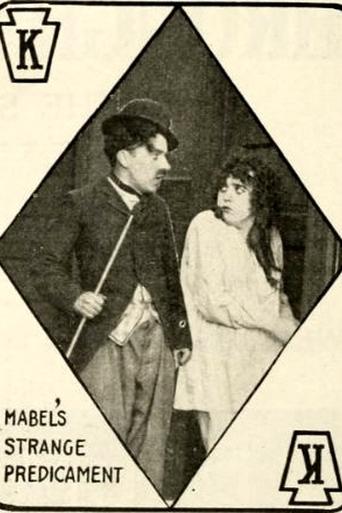
Barney Oldfield's Race for a Life
"Barney Oldfield races the railroad"
Keys: Space play/pause · ←/→ 10s · F fullscreen · M mute · </> speed
About this film
Rejected villain ties Mabel to railroad tracks until bashful suitor summons racer Barney Oldfield. Mack Sennett's iconic rescue parody with a real-life speed demon.
Cast & crew
More films like this
More Comedy films
View all →







More from Mack Sennett
View all →

More about this film
About the production
Release dateOctober 1913
ProductionKeystone Film Company
Filmed inLos Angeles, California, Keystone Studios
the release was one of the earliest examples of celebrity crossover in cinema, featuring real racecar driver Barney Oldfield as himself. The production utilized actual racing cars and railroad tracks, creating authentic action sequences. The film was shot in a single day, typical of Keystone's rapid production schedule, with minimal script and heavy reliance on improvisation and physical comedy.
Themes
Celebrity and fameTechnology and progressHeroism and rescueParody and satireRomance and rejection
Themes & topics
racecar driverrailroad tracksdamsel in distressrescuecelebrity cameoparodychaseautomobilevillainromantic rejection
Historical background
Barney Oldfield's Race for a Life (1913) reached audiences during the nickelodeon era, when exhibitors mixed shorts and features on the same program.
Why this film matters
Historians retain Barney Oldfield's Race for a Life as a record of how filmmakers in 1913 addressed popular genres.
Making of
The production of 'Barney Oldfield's Race for a Life' exemplified the Keystone Studios philosophy of rapid, energetic filmmaking. Mack Sennett discovered Barney Oldfield at a racing event and immediately conceived the idea of featuring him in a film. The railroad sequence was particularly challenging to film, requiring careful coordination between the actors, the train operator, and Oldfield's racing car. Mabel Normand, who was Sennett's romantic partner both on and off screen, performed her own stunts, including being tied to the tracks. The film's success was largely due to the authentic presence of Oldfield, whose natural charisma translated well to the screen despite having no acting experience.
What critics said
Trade coverage from 1913 treated Barney Oldfield's Race for a Life as program material; later writers evaluate it through preservation and genre context.
Did you know?
- Barney Oldfield was widely known racecar drivers of his era, known for being the first person to drive a mile a minute in 1903
- the release is considered one of the earliest examples of a celebrity athlete appearing in a motion picture
- The railroad track scene was a parody of the overly dramatic melodramas popular at the time
- Mack Sennett not only directed and starred in the film but also founded Keystone Studios
- The film was released during the golden age of silent comedy and helped establish many tropes that would become standard in the genre
- Barney Oldfield was paid $500 for his appearance, a substantial sum for 1913
- The racing car used in the film was Oldfield's actual racing vehicle, a Knox
- This was one of the first films to feature a real automobile in a central role
- The film's success led to several other collaborations between Keystone and celebrity athletes
- The railroad track sequence was filmed on an actual disused railway line near Keystone Studios
Visual style
The cinematography, typical of Keystone productions of the era, was straightforward but effective in capturing the fast-paced action. The camera work during the racing sequences was particularly noteworthy for its time, using tracking shots to follow Oldfield's car. The railroad track scene utilized multiple camera angles to build tension, including close-ups of Mabel's terrified expression and wide shots showing the approaching train. The film's visual style emphasized clarity and action over artistic experimentation, reflecting the studio's focus on entertainment value.
Innovations
The film's most significant technical achievement was its successful integration of real racing footage with narrative storytelling. The production team developed innovative camera mounting techniques to capture the speed of Oldfield's car without endangering the equipment. The railroad sequence required precise timing and coordination between multiple elements, demonstrating sophisticated planning for a 1913 production. The film also pioneered the use of celebrity authenticity in fictional narratives, a technique that would become increasingly important in film marketing.
Music
As a silent film, 'Barney Oldfield's Race for a Life' would have been accompanied by live musical performance during theatrical exhibition. Typical theater orchestras or pianists would have provided appropriate musical accompaniment, likely including popular songs of the era and classical pieces adapted for action sequences. The racing scenes would have been accompanied by fast-paced, energetic music, while the romantic moments would have featured more melodramatic themes. No original composed score exists for the film, as was standard practice for productions of this period.
Famous quotes
Help! Barney Oldfield! Save me!
The fastest man on Earth must save the woman I love!
No train can beat my racing car!
Memorable scenes
- The climactic race sequence where Barney Oldfield speeds along the railroad tracks in his racing car to rescue Mabel, with the train visible in the background, creating genuine tension and excitement for 1913 audiences.
What audiences thought
The film was enormously popular with audiences of 1913, who were thrilled to see the famous racecar driver on screen. The combination of comedy, romance, and genuine suspense proved to be a winning formula. Contemporary reports indicate that theaters showing the film experienced increased attendance, particularly among young male audiences who admired Oldfield. The film's success at the box office demonstrated the commercial viability of featuring real celebrities in fictional narratives, a strategy that would become increasingly common in Hollywood.
Film connections
Influenced by
- The Great Train Robbery (1903)
- Contemporary stage melodramas
- D.W. Griffith's Biograph shorts
- European comedy traditions
This film influenced
- The Keystone Cops series
- Later Charlie Chaplin comedies
- Buster Keaton's The General (1926)
- Harold Lloyd's speed-themed comedies
Film restoration
The film is preserved in the Library of Congress collection and has been restored by several film archives. While not considered lost, some sequences show signs of deterioration typical of nitrate film from this era. The film is available through various archival sources and has been included in several collections of early American cinema.
Where to watch
- Library of Congress National Film Registry
- Museum of Modern Art Film Collection
- UCLA Film & Television Archive
- Various DVD compilations of early Keystone comedies
- Internet Archive (public domain)